Ria Formosa Beyond Cacela Velha: Birdwatching, Boat Routes, and the Barrier Islands
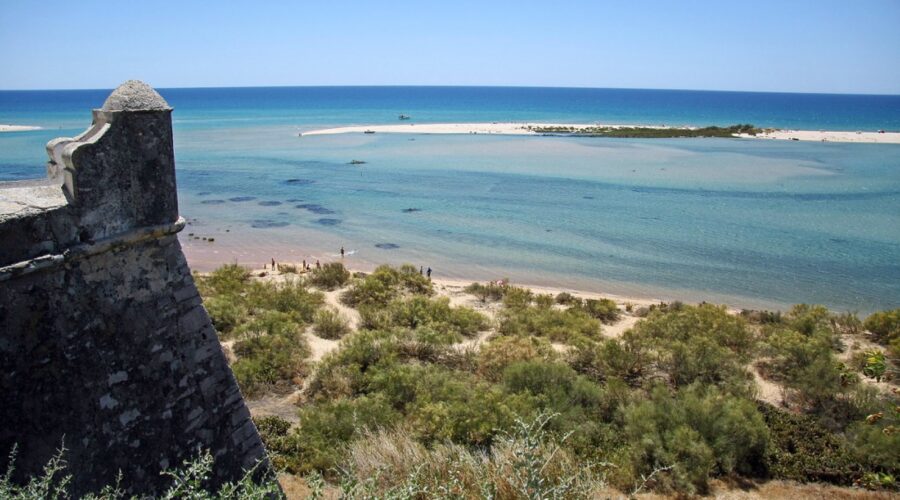
Photo: Portuguese_eyes · Flickr · CC BY-SA 2.0
Cacela Velha gets much of the attention: the ruined church, the view across the channel to the barrier island, and the crossing at low tide. The viewpoint is useful, but Ria Formosa is a 250 km² lagoon system with several distinct access points. This guide compares practical options near Cacela Velha, Tavira, Olhão, Faro, and Quinta do Lago.
The barrier islands: what they are and why they matter
The barrier islands are the string of sandy islands that separate the lagoon from the Atlantic. From east to west, the chain includes Ilha de Cabanas, Ilha de Tavira, Ilha da Armona, and Ilha da Culatra. Wave and wind action formed the islands over thousands of years. They protect the lagoon from Atlantic swell and help create the sheltered channels, mudflats, and saltmarsh used by wetland birds.
Some islands support permanent communities, while others are primarily protected landscapes or low-density seasonal settlements. Access routes vary, so check current ferry destinations and timetables before setting out.
Near Faro and Quinta do Lago: Ludo and the lagoon boardwalk
Near Faro and Quinta do Lago, the lagoon narrows into channels flanked by saltmarsh and reed beds. The shallow water can concentrate waders and provide feeding areas for flamingos.
Ludo nature trail: This roughly 4 km circuit crosses saltmarsh near Faro Airport, in Faro municipality. Access is from the road linking Faro and Quinta do Lago. Viewing points overlook reed beds and channels. Mornings generally offer more bird activity, while afternoons can be quieter. Confirm current access signs and parking arrangements locally.
Quinta do Lago boardwalk: The publicly accessible boardwalk at Quinta do Lago crosses a narrow channel zone beside the lagoon. The confined channel can provide close views of waterbirds. Spoonbills and little egrets may be present in spring, although sightings vary with tide, weather, and disturbance.
Olhão and the Culatra route
Olhão is a working fishing port beside Ria Formosa. Its public waterfront provides a direct view of the harbour, fishing activity, and the lagoon channels used by ferries.
Public ferries connect Olhão with Ilha da Culatra. Culatra is a lived-in island with fishing boats, solar panels, a school, and permanent residents. It is a community rather than an isolated nature reserve.
The crossing follows a main channel between the barrier islands and the mainland. Flamingos and other waders may be visible in the shallows, particularly in calm conditions. The ferry is regular public transport, so wildlife sightings are incidental and cannot be guaranteed. Check the current route and timetable before travelling.
Ilha da Armona: getting there
Public ferries to Ilha da Armona depart from Olhão. Armona has a permanent community as well as seasonal housing, but parts of the island retain open sandy and lagoon-edge habitats.
The crossing passes through lagoon channels where terns and other waterbirds may be seen. Bird activity is usually less concentrated than around saltpans, but the route gives a water-level perspective on the lagoon system.
Services operate throughout the year, with fewer departures outside the main visitor season. Check the current Olhão ferry timetable before planning the trip.
Saltpans near Tavira
The saltpans near Tavira, in Tavira municipality, contain large shallow pans used by flamingos, stilts, spoonbills, and other waterbirds. Areas farther along the salina road can be quieter and offer longer sightlines. Allow enough time to reach the more distant viewing points on foot, and follow posted access restrictions.
Audouin’s gulls may use low islands within the saltpan system during spring and summer. Viewing depends on seasonal conditions and access. Keep to established paths and avoid approaching nesting areas.
What the Cacela Velha viewpoint does not cover
Cacela Velha provides one elevated view across the eastern part of the lagoon toward the barrier island. It does not provide:
- A clear sense of the full barrier-island chain
- Access to the communities on Culatra and Armona
- A water-level view of the main lagoon channels
- The concentrated birdwatching conditions found around some western channels and saltpans
- A close look at the salt-production landscape now used by wetland birds
The ferry crossings from Olhão provide context for the islands and channels. The Ludo trail provides closer access to saltmarsh and reed-bed habitats. Choose between them according to whether your priority is island geography, walking access, or birdwatching.
Logistics and timing
Tavira saltpans: Allow around 1.5 to 2.5 hours, depending on the route and how long you spend at viewing points. Earlier visits can mean cooler conditions and less disturbance.
Ludo trail: Allow around 2 to 3 hours for the full circuit. Bird activity varies with the tide, season, and weather.
Olhão and an island crossing: Allow roughly half a day for a return crossing and time on either Culatra or Armona. Confirm the destination, return departure, and seasonal timetable before boarding.
The lagoon can be approached from three practical areas: Tavira for saltpans and access to Ilha de Tavira, Faro and Quinta do Lago for Ludo and the boardwalk, and Olhão for ferries to Culatra or Armona. Pick one area based on your starting point and whether you want a walking route, an island visit, or concentrated birdwatching.