Portimão Beyond the Beach: Industrial Heritage and the Riverfront Walk
Photo: lele3100 · Flickr · CC BY 2.0
Portimão is a working city on the Arade River. Many visitors pass through on the way to Praia da Rocha or other parts of the Algarve coast, but the riverfront is useful for understanding the city’s fishing and canning history.
The route is not a conventional scenic walk. Its interest comes from the former industrial buildings, working boats, public quays and the contrast with Ferragudo across the river.
The Walk
The riverside route runs for roughly 2 kilometres between the Museum of Portimão area and Marina de Portimão. The museum is farther upstream, while the marina is downstream near Praia da Rocha. The surface is mostly flat, with a mixture of paving, cobbles and concrete.
You can start at either end. Allow around 30 to 40 minutes for continuous walking. With stops at the museum area, quays and viewpoints, allow about an hour to 90 minutes.
What You Will See
- Museum of Portimão: The museum occupies a former canning factory beside the river. The exterior and surviving industrial form establish the context for the walk. Check the museum’s official information for current opening hours and admission prices.
- Former industrial waterfront: Around the museum and older quays, the scale and shape of the buildings reflect Portimão’s canning and fishing economy. Look for broad factory elevations, loading areas and the close relationship between the buildings and the river.
- Working river activity: Fishing boats, maintenance work and port infrastructure remain part of the waterfront. Activity varies by day and season, so treat it as a working area rather than a scheduled attraction.
- Public quays and promenade: Benches and open sections provide places to stop, but shade is limited. Some surfaces can be uneven.
- Marina de Portimão: The marina marks the downstream end of the route. It is a practical turnaround point if you plan to return along the same path.
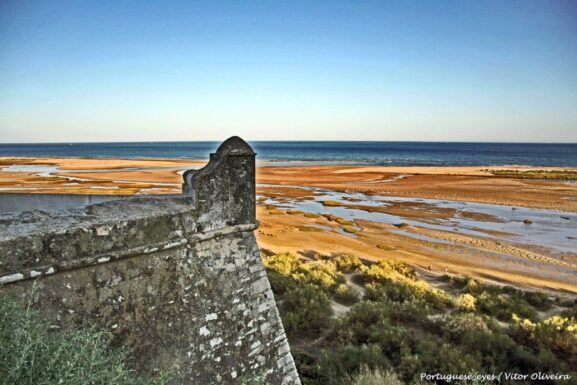
- Fort of Santa Catarina: The fort stands above the river mouth near Praia da Rocha and the marina. Reaching it requires a short climb. Access conditions can change, so check locally before relying on entry.
The View Across to Ferragudo
Ferragudo is on the opposite bank of the Arade River, in Lagoa municipality. From the Portimão waterfront, you can see its white buildings rising from the river edge toward the church.
The contrast is straightforward: Portimão presents the larger urban and industrial waterfront, while Ferragudo has the scale of a smaller settlement. The view does not require crossing the river. The higher ground near the Fort of Santa Catarina provides another angle over the river mouth and both banks.
When to Walk
Morning: Choose the morning if you want cooler conditions and a better chance of seeing routine river activity. It is also the more practical period in summer, when exposed sections become hot later in the day.
Late afternoon: Choose late afternoon for lower light across the water and buildings. Check the return time if you are using public transport.
Midday: The route remains walkable, but heat and limited shade can make it uncomfortable in summer. Carry water and avoid treating the promenade as a shaded route.
Half Day or Full Day
| Plan | Half day | Full day |
|---|---|---|
| Walking | Complete the riverfront route and return | Add time around the older centre and Praia da Rocha |
| Museum | Use the exterior to understand the industrial setting | Visit the interior if current opening hours fit your schedule |
| Ferragudo | View it from the Portimão bank | Consider a separate visit if transport and time allow |
| Pace | Focus on the museum, quays and marina | Allow longer stops and explore beyond the promenade |
| Best fit | A practical stop for travellers interested in the city beyond the beach | A slower visit focused on local history and the river |
Getting There
- From Lagos: Regional trains and buses connect Lagos with Portimão. The railway station is not directly on the riverfront, so allow additional time to walk or use local transport. Check current timetables before travelling.
- From Albufeira or Carvoeiro: Driving is usually the most direct option, although buses may be available. Parking conditions and charges change, so check signs and current rates when you arrive.
- From Faro or Tavira: Portimão is possible as a day trip, but the return journey takes a substantial part of the day. Check current rail and bus schedules before deciding whether the travel time suits your plan.
Combining the Walk with Other Stops
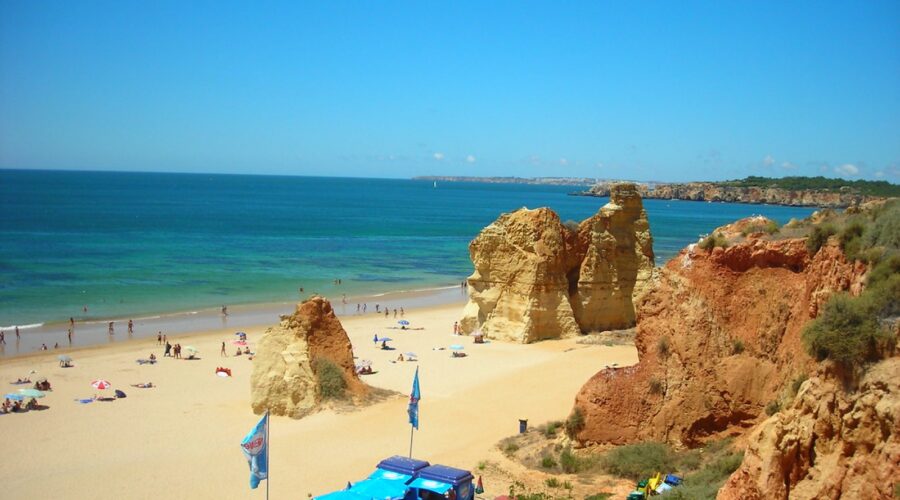
Praia da Rocha is near the downstream end of the route, making it the simplest coastal stop to combine with the riverfront on foot.
Carvoeiro and Benagil require a separate road journey. If you plan to combine them with Portimão, check current driving conditions and allow enough time for parking and access. Lagos is also a separate journey by road or public transport.
Decision Guide
If you are based in Lagos: Choose Portimão when industrial history and a working riverfront interest you. Check the return timetable and allow for the connection between Portimão station and the river.
If you are based in Portimão or nearby: Treat this as a practical local walk. A weekday morning may provide cooler conditions and more working activity, but the route does not depend on a particular day.
If you are based in Albufeira, Vilamoura or Quarteira: Plan it as a half day rather than a quick diversion. The journey makes more sense if the museum and industrial waterfront are the reason for going.
If you are coming from Faro or Tavira: Compare the return travel time with the time you will have in Portimão. It is better suited to a full day than a casual morning trip.
What to Bring
- Comfortable shoes for paving, cobbles and concrete
- Water, particularly during warm weather
- Sun protection because shade is limited
- A light layer for cooler or windy conditions beside the river
Portimão’s riverfront is a civic and working space rather than a staged visitor attraction. Walk it for the relationship between the city, the former canning industry and the Arade River. If your priority is a beach or cliff route, choose a coastal walk instead.