The Salt Pans of the Algarve: Where the Atlantic Becomes White Gold
A Landscape Made by Hand
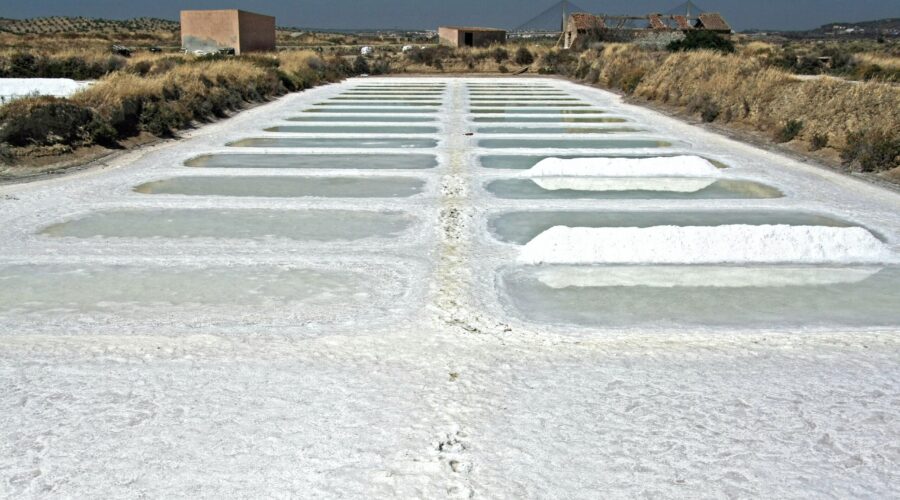
Between the marshlands of Castro Marim and the slow tidal rhythm of the Guadiana estuary, the Algarve’s salt pans glitter like scattered mirrors in the August sun. These are not natural lakes. They are the product of centuries of patient engineering — Roman in origin, perfected by the monks of the medieval São Bentário order, and still worked today by a handful of families who learned the craft from their grandparents.
The salt pans of Castro Marim and the adjacent Sapal area represent one of the most important salina ecosystems in southern Iberia. The combination of shallow lagoons, intense summer heat, and slow evaporation concentrates seawater into brine, precipitating first gypsum, then the prized flor de sal — a delicate mineral crust harvested at dawn by raking the surface before the wind can break it.
What the Salt Pans Mean Ecologically
The Castro Marim Salt Pans are part of the Castro Marim Marsh Natural Reserve. Their ecological importance is disproportionate to their size. In summer, when the water level drops and salinity rises, the pans become a critical habitat for:
- Greater flamingos (Phoenicopterus roseus) — hundreds nest and feed here, their pink plumage reflected in the still water
- Black-winged stilt (Himantopus himantopus) — elegant waders that prefer the shallow pan edges
- Slender-billed gull (Chroicocephalus genei) — a Mediterranean specialty found in significant numbers here
- Audouin’s gull (Ichthyaetus audouinii) — one of Europe’s rarest gulls, with significant populations in the salt pan lagoons
- Kentish plover (Charadrius alexandrinus) — nesting on the pan margins
The transition from water to salt crust creates distinct zones of salinity, each supporting different communities of halophyte plants — salt-tolerant species that paint the pan edges in greens and golds through the summer.
Visiting the Salt Pans
Access Points
The salt pans are best accessed from Castro Marim village (37.2247° N, 7.4436° W), a quiet hilltop town overlooking the marshland. Several unmarked dirt tracks lead to viewing points along the pan edges, with pull-off areas for cars about 2km south of the village on the CV1 road toward the Monte Francisco / VR1 intersection.
Key viewing points:
– Monte Francisco salt pannes (37.215° N, 7.448° W) — closest to Castro Marim village, with wooden viewing platforms
– Reserva Natural de Castro Marim boardwalk — a 1.2km elevated walkway through the marsh edge with information panels on salina ecology
– Quatro Águas viewpoint (37.198° N, 7.415° W) — overlooks the transition between freshwater marsh and tidal pans
Best Seasons
- Spring (March-May): Flamingos arrive to breed. The water levels are still high, and the pan edges bloom with samphire and sea lavender. Excellent for bird photography.
- Summer (June-August): The harvesting season. Early morning (6-9am) is when the salt workers rake the flor de sal and the flat light creates mirror-like reflections. August is peak heat — bring water and a hat.
- Autumn (September-October): Post-harvest pans are flooded again for winter bird populations. Fewer visitors, good for quiet birding.
- Winter (November-February): Reduced activity, but the marshland attracts large numbers of wading birds and wildfowl.
Practical Information
Entry: Free. The Castro Marim Natural Reserve has a small visitor centre near the church in Castro Marim village (open daily 9am-5pm, closed Mondays November-March).
Foot access: The boardwalk is wheelchair-accessible. Off-boardwalk terrain is uneven and can be muddy after rain.
Photography tips: Early morning or late afternoon for the best light. The flamingos are most active at dawn and dusk. A 200mm+ lens is useful for bird photography. Polarizing filter helps cut glare from the water surface.
Parking: Free parking in Castro Marim village car park near the church. The salt pan tracks require a car; no public transport.
The Salt Itself
The Algarve’s sea salt — sal marinho — is fundamentally different from mined salt. The flor de sal (flower of salt) is the most prized: a thin crust of pure sodium chloride that forms on the surface of the brine on calm, hot nights. It is raked by hand, never touching the sediment below. It has a slightly moist, mineral character that industrial evaporated salt cannot replicate.
The red salt (sal vermelho) gets its colour from the clay added to some pans — the same clay that gives the surrounding soil its hue. It is sold as a finishing salt for grilled fish and roasted meats.
You can buy authentic Castro Marim salt from the cooperative near the village square or from small vendors along the VR1 road in summer. A small bag makes a meaningful souvenir of a landscape that has survived unchanged for two thousand years.
Why It Matters
The salt pans exist at the intersection of ecology, economy, and culture. They are one of the few working traditional landscapes in Europe where the original product — in this case, salt — is still harvested by essentially the same methods used in Roman times. Their survival depends on continued traditional management: the seasonal flooding and drying cycles, the specific construction of the pan walls, the timing of the harvest.
Climate change and freshwater diversion from the Guadiana river threaten the delicate water balance the salinas require. Several pans have been abandoned in the past two decades. Those that remain active are a testament to the stubbornness of a small number of families who refused to let the tradition die.
Getting There
From Tavira, take the EN270 north toward Castro Marim (approximately 12km). From the Spanish border crossing at Vila Real de Santo António, the CV1 road west leads to Castro Marim in about 8km. The salt pans are signed from the village square.
GPS: 37.2247° N, 7.4436° W (Castro Marim church square)
Local tip: The small restaurant on Castro Marim’s main square (closed Mondays and Tuesdays November-March) serves grilled fish with house-made salt. It is the only place in the village that uses the local salt as an ingredient rather than a condiment — a small act of continuity that matters more than it seems.