The Barrocal Zone: Where the Algarve Reveals Its Secret Heart
The Zone Between Zones
Most visitors to the Algarve stay on the coast or climb into the mountains. The wisest ones head to the Barrocal — the limestone transitional zone that separates the sandy coastal plains from the granite peaks of the Serra de Monchique. It’s the region Portuguese call their “real” Algarve: rolling hills dotted with almond orchards, traditional whitewashed villages, and a botanical richness found nowhere else in Europe.
The Barrocal runs from the Caldeirão mountains in the east through the central Algarve to the Monchique foothills in the west. It sits roughly between 15km and 40km from the coast. In spring, it’s carpeted in wildflowers, fragrant with lavender and rockrose, and cool enough for long walks that coastal heat would make miserable.
What Makes the Barrocal Different
The geology is the story. The Barrocal’s limestone bedrock creates a different landscape from both the sandy coastal platform and the acid soils of the mountain granite. This alkaline earth supports an extraordinary diversity of plants — many found only here or in similar regions of the Mediterranean.
The result: a landscape of olive groves, almond orchards, carob trees, and wild herbs that has defined Algarve rural life for centuries. The villages — São Brás de Alportel, Almodôvar, Cachopo — retain a pace of life that coastal tourism never reached.
The Best Barrocal Walks
São Brás de Sapinho to Cortegada
A 7km route through traditional farmland and wildflower meadows. The trail starts in the village of São Brás de Sapinho (37.2833° N, 7.9167° W) and winds through shaded lanes to the small hamlet of Cortegada. Look for: orchids in the meadow margins, migrating hoopoes in March-April, and the golden shimmer of lavender in late spring.
Best timing: Late morning when dew has cleared
Difficulty: Easy
Parking: Small car park at São Brás de Sapinho church
Fonte da Queiriga Circuit
The village of Cachopo (37.3500° N, 7.9667° W) sits at the heart of the Barrocal and offers several circular walks. The Fonte da Queiriga circuit (approximately 8km) passes through shaded areas and open meadow. The village has a small café serving local specialties — the asparagus in spring is notable.
Best timing: Morning for photography; afternoon for the café
Difficulty: Moderate
Why it’s special: The village has no tourist infrastructure — this is working rural Portugal
Between Panoias and Monchique
The route from Panoias to the Picota peak (the second-highest in the Serra de Monchique) descends through Barrocal terrain before reaching the mountain. The transitional vegetation is the point — watch the olive groves give way to cork oak, then to heather and gorse.
Best timing: Early morning to catch the light on the limestone
Difficulty: Moderate (mountain sections)
Start: Panoias village (37.2333° N, 8.5500° W)
What to Look For
Botany
- Endemic orchids: The Barrocal hosts species found only in this limestone corridor
- Almond blossoms: February-March bloom; by April the nuts are forming
- Lavender and rockrose: The air is aromatic in spring warmth
- Carob trees: Ancient, gnarled specimens in old groves
Wildlife
- Birds: The transitional habitat attracts both coastal and mountain species
- Butterflies: The Barrocal is a butterfly hotspot in March-April
- Herptiles: Lizards and snakes sun themselves on limestone rocks
Traditional Architecture
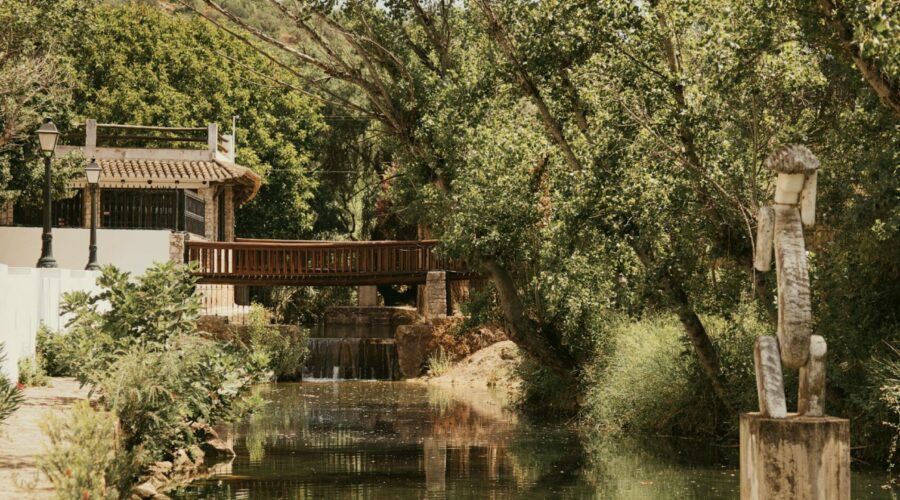
- The region’s whitewashed houses with terracotta roofs sit perfectly in the limestone landscape
- Pre-Roman archaeological sites scattered throughout
- Old water fountains and wash-houses still maintained by local communities
Practical Information
- Nearest major town: São Brás de Alportel has the best services (restaurants, petrol station, small supermarket)
- Driving: Roads are quiet and winding — the N2 and N270 cut through the Barrocal with minimal traffic
- Weather: Can be 3-5°C warmer than the coast; bring water
- No marked trails for some routes — offline GPS maps essential
- No facilities in the small villages — carry supplies
Why This Matters Now
The Barrocal sits outside the tourist map. No brochures push it. No TripAdvisor rankings feature it prominently. Which means the walks described here — and dozens more not yet written about — remain genuinely unspoiled. That won’t last forever. Already, rural tourism is growing in the region. The window to experience the Barrocal on its own terms is narrow.
Go in spring. The wildflowers will tell you everything about why this forgotten zone is worth finding.