Silves: The Inland Town That Outlasted the Algarve’s Coastal Fame
Silves — The Inland Town That Outlasted the Algarve’s Coastal Fame
Most visitors to the Algarve arrive, rent a car, and drive straight to the coast. That’s understandable — the beaches are extraordinary. But 15 kilometres inland, sitting above the Arade River, is a town that predates every resort on the Algarve by a thousand years. Silves is the region’s oldest settlement, home to a Moorish castle that’s the finest surviving example of Arab military architecture in Portugal, a cathedral built on the footprint of a mosque, and a quiet, orange-fragrant historic centre that’s almost entirely free of tour buses in April and May.
If you’re spending three or four days on the Algarve and haven’t been to Silves, you’re missing the most concentrated slice of regional history in the entire coast.
Getting There and Getting Oriented
Silves sits roughly 15 km inland from the coast, north of the Arade River, and about 20 km northeast of Portimão. From Portimão, take the IC1 north for about 15 minutes. From Lagos, it’s roughly 30 minutes by car. There’s no direct train — you need a car or a taxi. Faro airport is 62 km to the east (about 50 minutes by car).
Parking is available at the base of the castle, near the old town. Free on-street parking fills up by mid-morning in peak season; arrive before 10 am to guarantee a spot.
The entire historic centre is walkable on foot — the full walk from the castle down to the riverside and back takes about two hours at a leisurely pace.
The Castle: Start Here
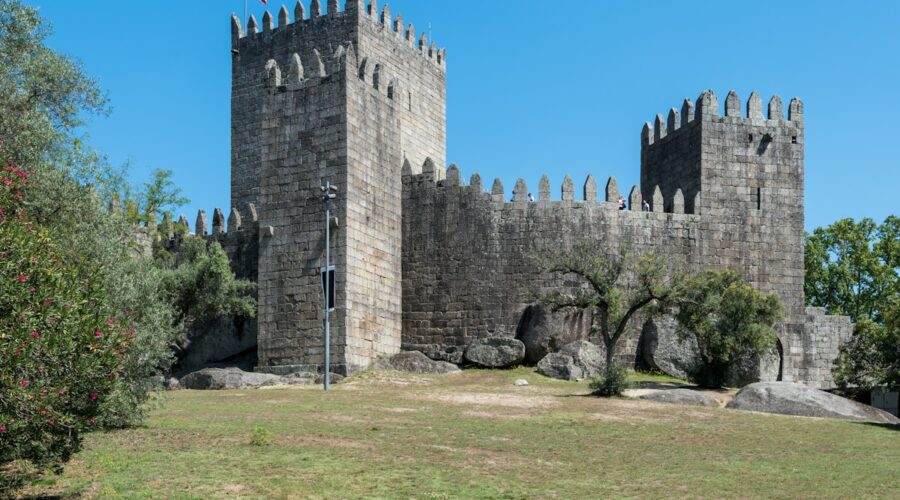
Silves Castle occupies 12,000 square metres and was built in the 8th century, with archaeological layers showing Iron Age material six metres deep beneath the walls. The current structure is largely a reconstruction of the 11th-13th century Moorish period, built from the region’s distinctive red sandstone (grès de Silves).
Walk the perimeter walls for views over the town and the Arade Valley. The towers are spaced for sight lines across what would once have been the town’s primary defence. Allow 45 minutes inside the walls if you’re reading the information boards; 30 minutes if you’re moving through.
Practical note: The castle is at the top of the historic town. Approach from the east (coming from Portimão) and you walk gradually uphill into it — a much more pleasant arrival than descending from the main road.
The Cathedral
Silves Cathedral (Sé de Silves) was built in 1189, the year after the Christian reconquest of the city, directly on the footprint of the old mosque. The architecture is a deliberate statement: Gothic pointed arches and a bell tower built to look like a minaret repurposed.
Inside, the Baroque interior was added later and includes tombs of local bishops, regional dignitaries, and at least one Crusader knight. The combination is unusual — you can read the layers of different periods in the stonework.
The cathedral is free to enter but donations are appreciated. Allow 20 minutes inside.
The Walk Between Them
The path from the castle gate to the cathedral is roughly 400 metres and descends through the old town’s commercial heart. This part of Silves has changed less than almost anywhere else on the Algarve — the streets are narrow, the buildings are low, and there are a handful of small shops and cafés with no particular tourist focus.
Beyond the Castle and Cathedral
A few things worth knowing are often missed:
- Igreja da Misericórdia — A 16th-century church with a striking Manueline-style doorway. Worth five minutes even if you don’t go inside.
- The Roman Bridge — Crosses the Arade River at the eastern edge of the old town. Not dramatic, but a concrete connection to Silves’s Roman predecessor (Ossonoba).
- The Arade Riverfront — The river is tidal here. At low water you can walk along the banks; at high water it’s a pleasant stop for a coffee. There’s a small esplanade area that locals use.
- The Municipal Archaeological Museum (Museu Municipal de Arqueologia) — Opened in 1990, it covers Silves from prehistory through the Moorish period. Small but well-labelled. Good if you want context for what you saw at the castle.
- Cruz de Portugal — A carved stone cross presented by the town of Caminha in the north of Portugal, part of a national exchange programme. It’s mounted on the town wall near the cathedral.
The Orange Route (Rota da Laranja)
Silves is still surrounded by citrus groves. The municipality has developed a loose “Orange Route” — partnerships with local producers that allow visitors to walk through active orchards and see the journey from grove to packaging. It’s informal and self-guided; ask at the tourist office or look for signs near the town centre.
The orange season in the Algarve runs roughly November through March, so in April the trees are in leaf but not heavy with fruit. The almond trees bloom in January-February. Timing your visit to Silves to combine with the citrus season adds another reason to go inland.
Practical Planning: Half-Day or Full Day?
Half a day covers the castle, cathedral, and a slow walk through the old town. Add the archaeological museum and the riverside, and you’re comfortably at full-day territory. There’s no strong reason to rush.
Best time to visit: Weekday mornings in April and May. Silves market (fairground on the east side of town) is held on Thursdays — it’s a local market, not tourist-oriented, and worth timing a visit around if you can.
Combine with: The glass studio area near the Portimão direction has a handful of working studios open to visitors. Silves makes a logical stop between the coast (Lagos, Portimão) and the interior.
Avoid: Weekend afternoons in August, when Silves does get significant visitor traffic from coach tours.
What’s NOT Here
You won’t find resort hotels in Silves, large beach facilities, nightlife, or international restaurants. What you will find is a working Portuguese town with a historic centre that’s genuinely historic, not reconstructed for visitors. That’s the point.
Logistics Summary
| Distance from Portimão | 20 km, ~15 minutes by car |
| Distance from Lagos | ~30 km, ~30 minutes by car |
| Distance from Faro airport | 62 km, ~50 minutes |
| Parking | Free on-street near castle; fills before 10 am in peak season |
| Castle visit time | 30–45 minutes |
| Full walk (castle to riverside) | ~2 hours at leisurely pace |
| Best months | April, May, October, November |
| Market day | Thursday (fairground, east of town) |
| Accessibility | Historic centre has cobblestones and hills; moderate mobility required |
| Cost | Castle entry for a modest fee (check current pricing locally); cathedral free; museum ~€2 |