The Algarve After Dark: Evening Light, Night Sky, and What Changes After Sunset
Most visitors to the Algarve experience it between 10:00 and 17:00. The region after sunset belongs to a different category of traveller — and it is, in many ways, more honest.
The tourist Algarve is a bright, crowded, optimistically Mediterranean thing. The Algarve at dusk is quieter, stranger, and more itself.
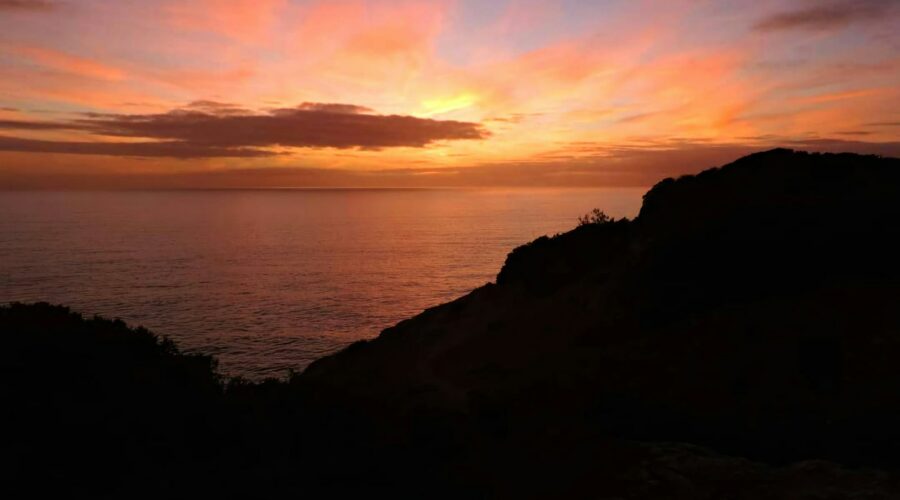
The Light Window
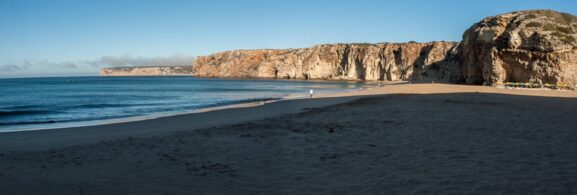
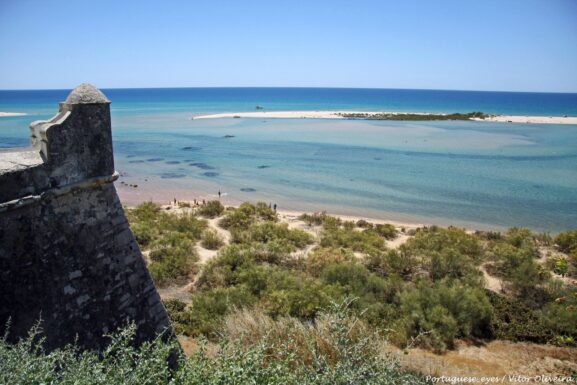
The ninety minutes before and after sunset are not merely the end of the day — they are the time when the Algarve’s landscape makes its strongest visual argument. The cliff faces at Cabo de São Vicente turn the deep orange of old iron. The Ria Formosa wetlands catch the last horizontal light and hold it, flamingo-pink against grey water, for a few extraordinary minutes around 19:30 in late March. The Serra de Monchique peaks go purple as the sun drops behind them, then black against a sky that does not fully darken until 20:00.
This window is not discovered by accident. It requires intention — being in the right place rather than driving back from the beach, staying at a location rather than rushing to dinner. But it is free, entirely accessible, and available every single day.
The best sunset locations that are genuinely quiet: the viewpoint above Praia do Castelejo on the west coast (not the main parking, the smaller pull-off 800m further north), the sea wall at the harbour in Lagos old town, and the minor road that runs along the clifftop east of Carrapateira village.
Night Sky
Light pollution maps show the Algarve’s interior — particularly the area between Ourique, Castro Marim, and the eastern border zone — as among the darkest land in southern Portugal. On a clear night in late March, before the summer moon is bright, the Milky Way is visible to the naked eye from these areas.
The practical challenge is access. The best dark-sky locations are not marked tourist sites. They are back roads, agricultural tracks, the areas around the Via Algarviana’s remote eastern sectors. You need a car, you need to be willing to drive unpaved tracks in daylight to identify a location, and you need to return after dark.
The Cercal do Alentejo area — technically Alentejo but reached via the Algarve’s southern coast — has minimal light pollution and clear horizons in all directions. The interior around Alcoutim and Castro Marim is similarly dark.
You do not need a telescope. The sky itself, on a moonless March or April night, is sufficient. The Pleiades are visible. The Orion Nebula is accessible with binoculars. The Milky Way core begins to appear in April.
What Changes After Dark
The coast after sunset is a different soundscape. The Atlantic surf on the west coast is louder and more insistent at night — waves you did not hear during the day become audible from 200 metres inland. The daytime wind drops. The temperature falls. In March and April, the evening air on the coast can be cool enough to require a jacket by 20:30.
Wildlife shifts accordingly. The nocturnal species — genets, foxes, several bat species — begin to move. The coastal cliffs above Sagres are one of the best places in Portugal to hear scops owls calling after dark. The night heron appears on wetlands. These are not guided experiences. They are things you encounter if you are simply present after sunset.
Practical Notes
In late March, civil twilight ends around 19:45 UTC. Nautical twilight — when the sky is fully dark — is around 20:20. For stargazing, plan to be at your location by 20:00.
The west coast (Sagres, Carrapateira, Odeceixe) has the clearest Atlantic-facing horizons. The eastern coast (Tavira, Castro Marim) has the darkest inland skies but more residual light pollution from Faro.
A red-light headlamp preserves night vision while providing enough light to walk on uneven terrain. White light, even dim, resets your adaptation to darkness for twenty minutes.
Dress for the temperature you would wear in early autumn, not the temperature of the afternoon. The difference between 15:00 and 21:00 in late March on the coast is 10-12°C.
No commercial relationships, affiliate arrangements, or paid stargazing experiences are associated with any location mentioned in this guide. All locations described are publicly accessible.