
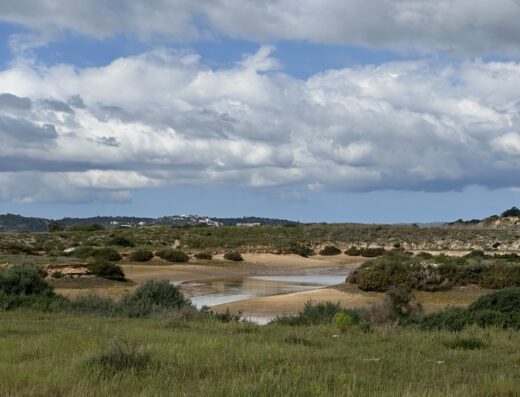
The Ria de Alvor is the central Algarve’s quiet counterweight: a tidal lagoon of flats, channels, salt pans and dune edge held between Alvor and the Meia Praia spit, where the drama is horizontal instead of vertical. Nothing here towers. Instead you get water that goes mirror-still, small boats sitting at angles on the mud, and light that doubles itself whenever the wind drops.
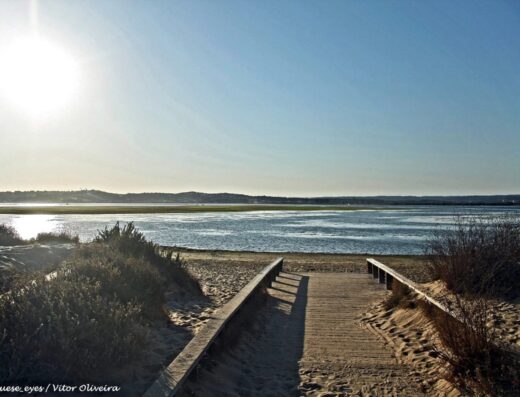
The estuary runs on the tide. High water floods the flats and floats the moored boats into clean reflections; low water pulls the sea back and turns the ria into a plain of ribbed mud, channels and working birds. Both states photograph well; they are simply different pictures, and knowing which one you are arriving to is most of the craft here.
When to go: winter is the underrated peak. The flamingos that feed in the lagoon and salt pans are at their most numerous in the colder months, the air is clearest, and calm mornings come more often than summer’s wind patterns allow. Year-round, the first and last hours of light are when the flats come alive.
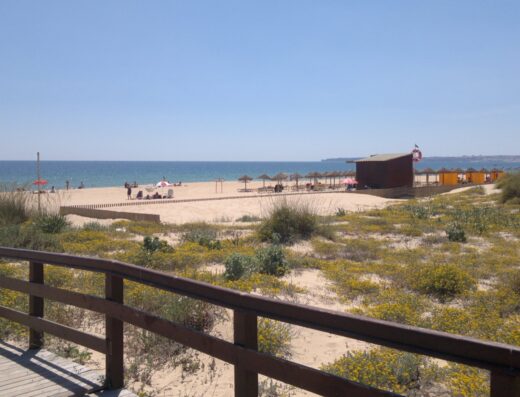
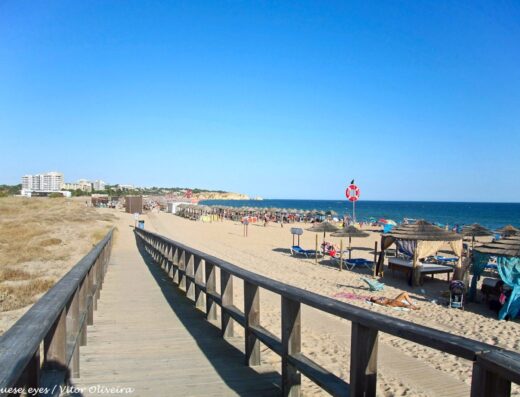
Practical texture: access is unglamorous and easy: from Alvor village and its boardwalks on the western side, or from the Meia Praia side for the long view back across the lagoon. Mud is part of the deal; stay on established paths and boardwalk edges rather than testing the flats, which are softer than they look.
Who it’s for: bird photographers: this is one of the western Algarve’s best wetlands. Minimalists who prefer boats, mud and sky to cliffs and caves. Anyone based around Alvor, Portimão or Lagos who wants a sunrise habit close to home. Not for anyone who needs the sea to perform; the ria whispers.
About This Spot
-
General AreaNear Alvor, Portimão
-
Coverage BadgeArchive
-
Best SeasonWinter
-
Difficulty1 Easy
Getting There & Access
-
Getting ThereApproach from Alvor village and its boardwalks on the western side, or from the Meia Praia side for the long view back across the lagoon.
-
Access TermsFree Public
-
Crowd LevelQuiet
Photography Notes
-
Shooting NotesHigh tide floats the moored boats into clean reflections; low tide turns the ria into ribbed mud, channels and feeding birds: two different pictures, so know which you are arriving to.
-
Light & Sun NotesFirst and last light bring the flats alive; calm winter mornings give the most frequent mirror conditions.
-
ConditionsThe flats are softer than they look. Stay on established paths and boardwalk edges. Wind kills the reflections; check the forecast for calm.
Visitor photos


Location
Log in free to see the exact pin and directions.

Leave a Reply
Been here? Add your shots.
Photos you add appear on this page with your name on them, next to the community gallery. Tell the next photographer what you found: the light, the crowds, whether it was worth the trip.
A free account also unlocks the exact pin, how to get there and the best time of day, on every spot.