
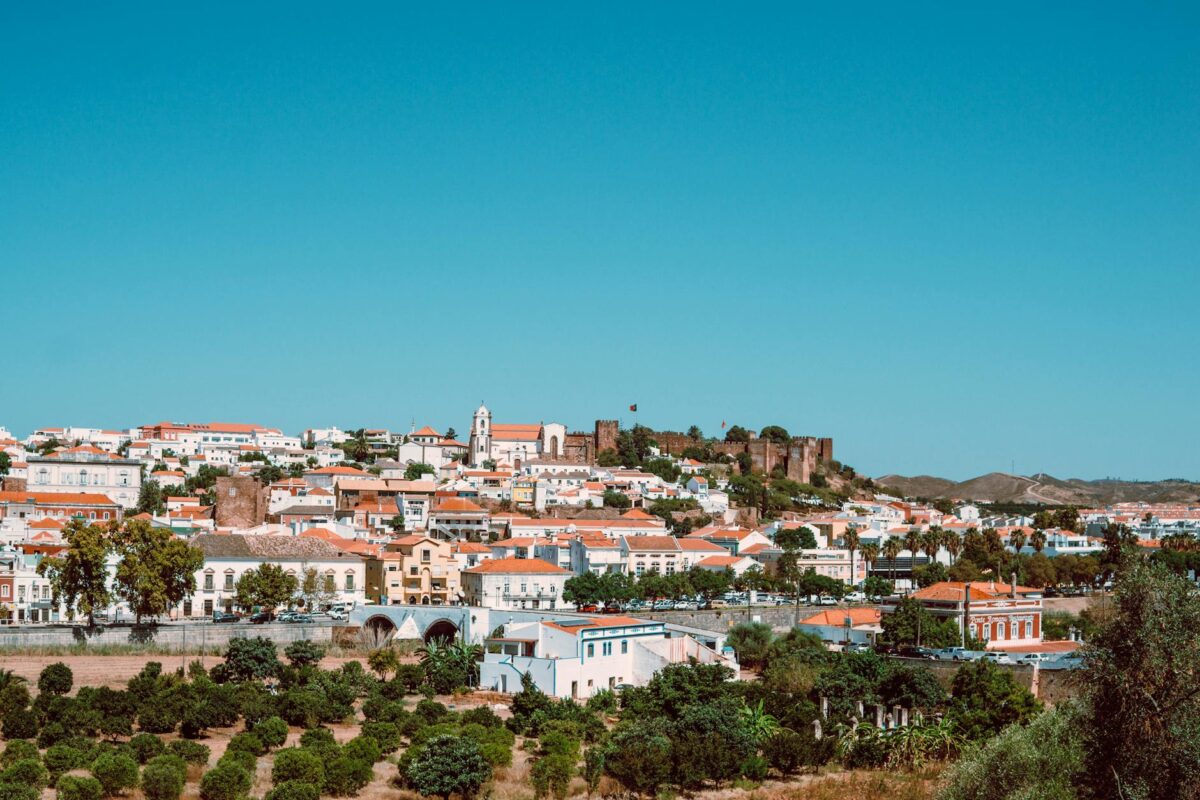
The castle at Silves does not look like it belongs in the Algarve. Where the rest of the region is defined by low coastal cliffs, whitewashed villages, and the blue of the Atlantic, Silves sits 15 kilometres inland on a hill of red sandstone, and its castle — massive, rust-coloured, built from the same stone as the hill it crowns — looks like something from the interior of Morocco or Andalusia. This is not an accident. In the 11th and 12th centuries, when Silves was the capital of the Moorish Algarve, it was one of the most important cities in the western Islamic world: a place of scholars, poets, and merchants, connected by trade routes to North Africa, to Córdoba, and to the wider Mediterranean.
The castle that remains today is primarily from this Moorish period — built, rebuilt, and expanded between the 8th and 13th centuries — though what you see was substantially restored after the Christian reconquest and further work in the 20th century. The restoration is evident in places, but the scale is not: the walls enclose an area of approximately 1.5 hectares, and at their highest point they rise 18 metres above the hilltop. From the ramparts, on a clear day, you can see the Atlantic to the south and the Serra de Monchique to the north. In the 11th century, the view would have told you you were at the centre of something. Today it tells you why Silves mattered.
What the Castle Tells You
The Moorish city of Shilb — as it was known — sat at the intersection of two important regional routes: the coastal path that connected the western Algarve to the eastern settlements, and the inland route that ran north toward the Alentejo. The castle was both fortress and administrative centre: the seat of the wali (governor) and the stronghold from which the surrounding agricultural hinterland — the ribla or fertile lowlands — was controlled.
What made Silves prosperous was not just its position but its water. The Arade River, which flows past the base of the hill, was navigable to this point in the medieval period, meaning that goods from the interior could be loaded onto river boats and shipped to Lagos and on to the Atlantic beyond. The city was surrounded by orchards and gardens irrigated from wells and the river — a green island in the dry summer landscape that sustained a population of several thousand within the walls.
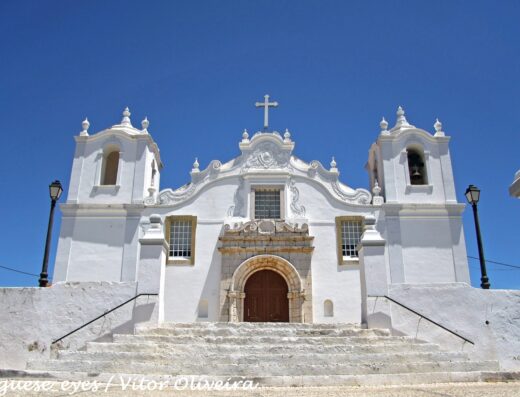
The Christian conquest came in 1189, when King Sancho I of Portugal besieged and took the city. The Moors retook it in 1191, only to lose it permanently in 1242. What followed was a gradual transition: the mosque was converted to a cathedral (the Sé de Silves, still standing at the base of the hill), the castle was maintained as a military structure, and Silves became a provincial administrative centre rather than a capital. The decline that followed — accelerated by the silting of the Arade River, which made it no longer navigable — is written in the relative quiet of the modern town.
Visiting the Castle Today
The castle is open daily and has a modest admission charge. Allow 45 minutes to an hour for a full visit. The interior is partly excavated — sections of the Moorish city are visible as low stone outlines and information panels explain what you are looking at. The archaeological work here has been gradual, and there is more under the ground than above it.
What is most rewarding is the rampart walk: a circuit of the walls that gives you the full 360-degree view and a genuine sense of the castle’s defensive logic — how the walls followed the natural contours of the hill, how the gates were positioned to control approach routes, how the whole structure was designed to be seen from below as a statement of power.
The cistern — a deep underground reservoir fed by rainwater collected from the ramparts — is one of the most complete features. The engineering is simple and effective: steps lead down to a vaulted chamber where water was stored for sieges. The cistern was in use until the 19th century.
At the highest point of the rampart, a Portuguese flag flies and there is a small viewing platform. This is the view that rewards the climb: west toward the Monchique hills, south toward the coastal strip you cannot quite see but can sense, east toward the cork oak forests of the Barrocal. On a clear morning, the light comes from the east and the castle stones glow orange-amber.
Combining With Silves Itself
Silves is a small town that repays a slower visit than most people give it. The castle takes an hour. The cathedral — the Sé de Santa Maria — takes 20 minutes and is worth seeing primarily for its unusual position within the Moorish walls (most Portuguese cathedrals in the Algarve replaced mosques but were later moved outside the walls; Silves cathedral is inside them). The small local museum, housed in a 17th-century building near the cathedral, has a modest collection of Roman and Moorish artefacts found in the region.
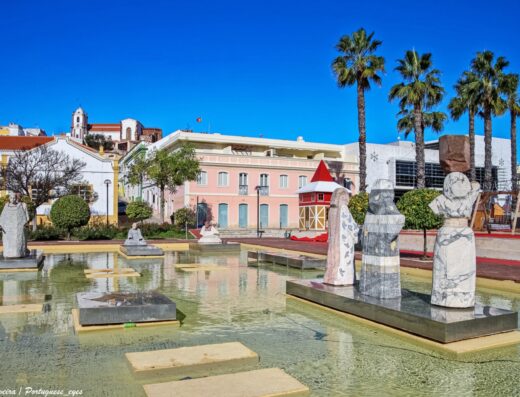
The Arade River embankment, a short walk from the castle gate, is the pleasantest part of the town for an hour of wandering. The river is not what it was — no boats, no trade — but the old stone bridge and the riverside path give a sense of why this location was chosen. The gardens along the embankment are well-maintained and popular with local families in the evening.
For lunch: Silves has a small cluster of restaurants near the cathedral and along the river, none of them expensive, most of them serving honest Portuguese food. The local cataplana (a seafood stew cooked in a copper pot) is the regional dish here, and several places do it well.
Practical Notes
Admission: Modest charge. Combined ticket with the Silves museum is available.
Access: The castle hill is steep. The paths within the walls are uneven. Sensible shoes are strongly recommended. The site is not fully accessible for wheelchair users due to the rampart steps.
Best time: Spring and autumn for temperature and light. Summer can be very hot on the exposed ramparts. Early morning is best for photography — the east-facing walls catch the morning light and the site is quieter before tour groups arrive.
What to combine with: The cathedral (20 minutes), the river embankment (30 minutes), and the town for lunch. Silves is also approximately 30 minutes from the Monchique hot springs and an hour from the coast at Portimão and Lagos, making it a natural half-day stop on a route between the interior and the coast.
About This Spot
-
General AreaNear Silves, Silves
-
Coverage BadgeArchive
-
Difficulty1 Easy
Getting There & Access
-
Getting ThereSilves is on the EN124 road, approximately 15km north of Portimão. The castle is signed from the town centre; the main entrance is on the east side, from where a steep path leads up through the walls to the interior.
-
Access TermsPaid Entry
-
ParkingPublic car park near the castle entrance, with additional parking in the town centre. The town is small enough to walk everywhere once you are there.
-
Best TimeMorning
-
Crowd LevelVaries
Photography Notes
-
Shooting NotesThe rampart circuit gives the full 360-degree view — the highest-point platform looks west to the Monchique hills, south toward the coastal strip, east over the cork oak forests of the Barrocal.
-
Light & Sun NotesEarly morning is best — the east-facing walls catch the morning light and on a clear morning the castle stones glow orange-amber.
-
ConditionsThe exposed ramparts can be very hot in summer; the castle hill is steep and the paths within the walls are uneven — sensible shoes strongly recommended.
Visitor photos


Location
Log in free to see the exact pin and directions.

Leave a Reply
Been here? Add your shots.
Photos you add appear on this page with your name on them, next to the community gallery. Tell the next photographer what you found: the light, the crowds, whether it was worth the trip.
A free account also unlocks the exact pin, how to get there and the best time of day, on every spot.