
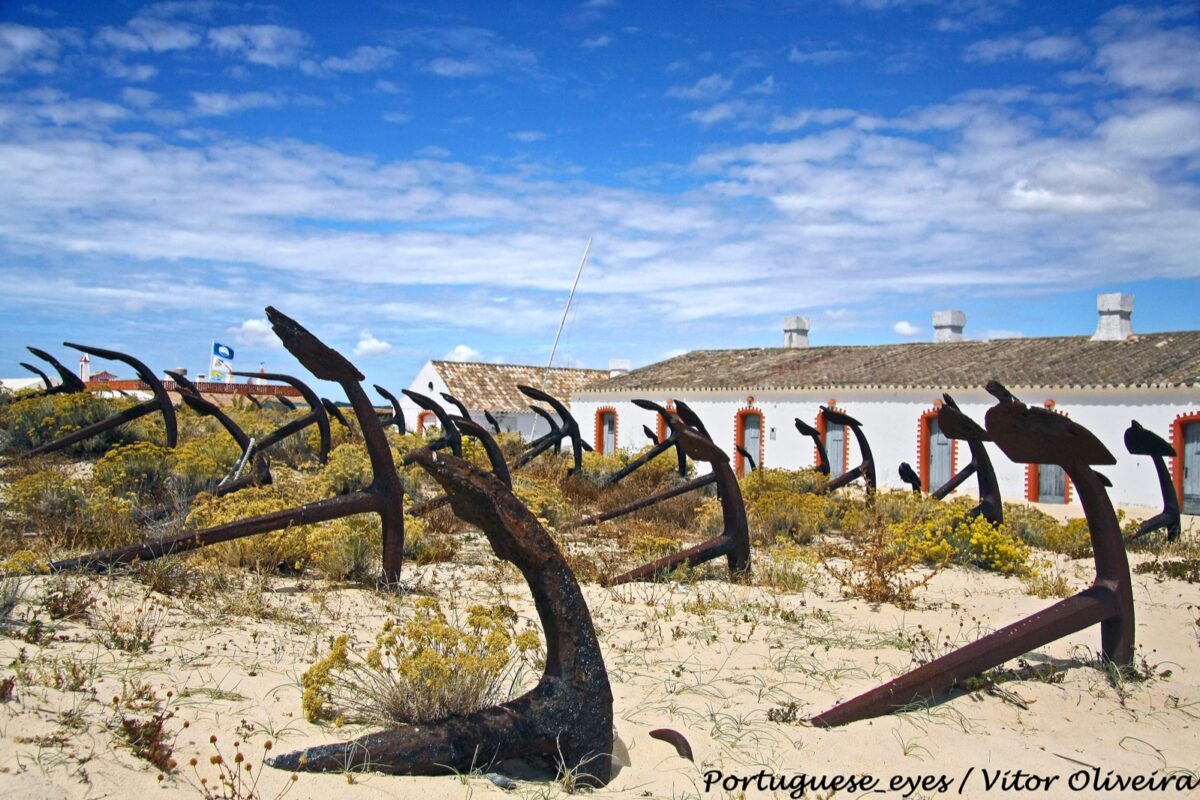
Hundreds of rusted anchors lie in ordered rows in the dunes at Praia do Barril, and nobody arranged them for the photograph. They’re the leftovers of the tuna fishery that once worked this coast: when the industry collapsed, the great anchors that held the nets were hauled up the beach and left, and the dunes have been slowly claiming them ever since. The result is the eastern Algarve’s signature image: iron flukes against white sand and marram grass, laid out like a war memorial, which in a sense is what it is.
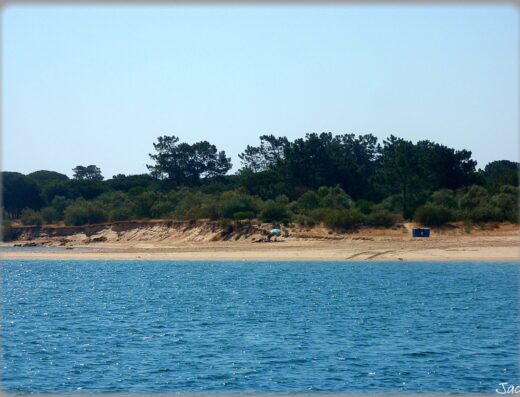
The beach behind the anchors is a fine, broad barrier-island strand in its own right, with the old fishermen’s cottages now working as cafés and the little tourist train trundling in from the footbridge. But the anchors are why photographers come, and they reward slow work: isolate a single fluke against the dune grass, or step back with a longer lens and let the rows recede toward the horizon.
When to go: early or late. Midday sun flattens the rust and fills the beach with towels; low sun rakes texture out of the corroded iron and leaves you sharing the dunes with dog walkers. Winter gives you the anchor field alone under dramatic skies: arguably its best mood.
Getting there is part of the experience: you cross the lagoon on a footbridge from Pedras d’el Rei, just outside Santa Luzia, then either walk the flat path along the old rail line or ride the miniature train that replaced the fishery’s donkey carts.
Who it’s for: photographers first: this is one of the few genuinely iconic man-made subjects on the Algarve coast. History-minded visitors who like a beach with a story attached. Families do well here too: flat access, calm bathing and cafés at the old cottages.
About This Spot
-
General AreaNear Santa Luzia, Tavira
-
Coverage BadgeArchive
-
Difficulty1 Easy
Getting There & Access
-
Getting ThereFrom Pedras d'el Rei, just outside Santa Luzia, cross the footbridge over the lagoon and follow the flat path along the old rail line, or ride the miniature tourist train that runs the same route in season.
-
Access TermsFree Public
-
ParkingParking at Pedras d'el Rei, on the mainland side of the footbridge.
-
Crowd LevelVaries
Photography Notes
-
Shooting NotesWork the rows: a long lens compresses the anchors into ranks; going wide and low isolates a single fluke against dune grass and sky.
-
Light & Sun NotesLow raking light at either end of the day pulls the texture out of the rusted iron; midday flattens it.
-
ConditionsOpen dune field: wind-blown sand is routine, and salt air will find its way onto gear on breezy days.
Visitor photos


Location
Log in free to see the exact pin and directions.

Leave a Reply
Been here? Add your shots.
Photos you add appear on this page with your name on them, next to the community gallery. Tell the next photographer what you found: the light, the crowds, whether it was worth the trip.
A free account also unlocks the exact pin, how to get there and the best time of day, on every spot.