
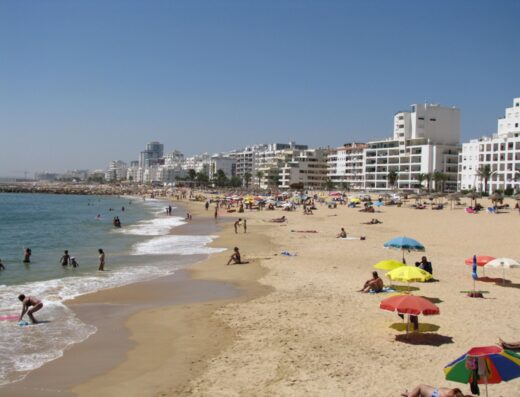
Walk east from Quarteira’s promenade and the towers stop, the crowds thin, and the coast reverts to what it was: low ochre cliffs, farmland behind, and a beach with a two-thousand-year-old secret. Loulé Velho takes its name from the Roman settlement that stood here: at low tide, especially after winter storms strip the sand back, remains of Roman fish-salting tanks surface along the shore. You are, quite literally, sunbathing on an archaeological site.
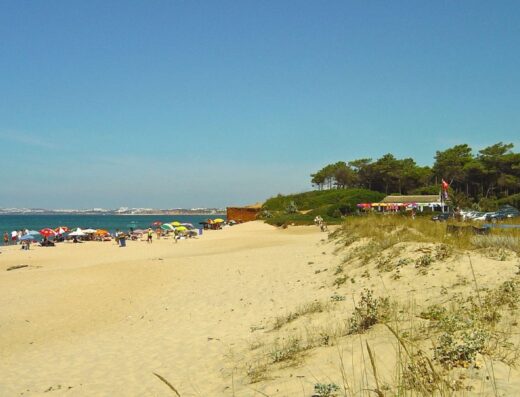
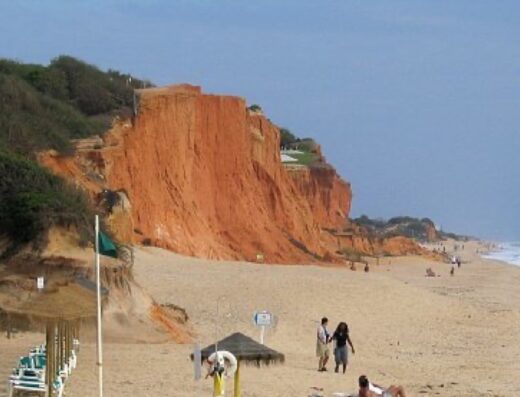
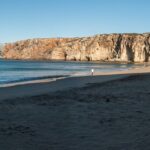
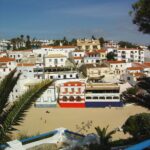
The beach itself is a long, quiet band of sand under soft, crumbling cliffs. And the crumbling is the honest part. This stretch erodes actively, so give the cliff base respectful distance and don’t set up under overhangs. There are no bars, no sunbeds and no supervision along most of it; the emptiness is the offer.
When to go: low tide, for the width of the sand and any chance of the Roman remains showing; winter and early spring after big seas are when the archaeology is most likely to be exposed. In summer it works as the escape valve when Quarteira and Vale do Lobo are heaving.
Who it’s for: walkers doing the Quarteira to Vale do Lobo shoreline; anyone who likes their beach with history under it and almost nobody on it; photographers after the red-cliff-and-empty-sand frame the busier beaches nearby can’t give.
About This Spot
-
General AreaNear Quarteira, Loulé
-
Coverage BadgeArchive
-
Difficulty2 Moderate
Getting There & Access
-
Getting ThereEasiest on foot: walk east along the sand from the end of Quarteira's promenade. Dirt tracks also come down through the farmland behind.
-
Access TermsFree Public
-
Crowd LevelQuiet
Photography Notes
-
Shooting NotesAfter storms, work the low-tide line for the exposed Roman tank outlines: a frame almost nobody else has.
-
ConditionsThe soft cliffs here are actively eroding, so keep clear of the base and overhangs. No facilities on the beach itself.
Visitor photos


Location
Log in free to see the exact pin and directions.

Leave a Reply
Been here? Add your shots.
Photos you add appear on this page with your name on them, next to the community gallery. Tell the next photographer what you found: the light, the crowds, whether it was worth the trip.
A free account also unlocks the exact pin, how to get there and the best time of day, on every spot.