Cork Oak Forest Walks: The Algarve’s Hidden Green Cathedral
What This Guide Covers
- Where to find cork oak forest walks in the Algarve
- Trail options for different fitness levels
- When to go and what to expect
- Practical information: access, parking, facilities
- What makes cork oak forests ecologically significant
Introduction
Between the coast and the mountains lies a landscape that most visitors to the Algarve never sees. It’s not dramatic like the cliffs of Lagos or picturesque like the whitewashed villages. It’s quiet. It’s green. And it’s one of the most ecologically important ecosystems in Europe.
The cork oak forests (sobreirais) of the Algarve represent one of the last great cork oak woodlands in the world. They’re not glamorous. They don’t appear on Instagram. But they represent a way of life and a ecological relationship that dates back centuries.
Walking through a cork oak forest in spring is a different experience than anything the Algarve coast offers. The light filters through the canopy. The air is cooler. The silence is profound. And if you pay attention, you’ll notice a richness of life that the beach resorts can’t match.
Understanding Cork Oak Forest
Why It Matters
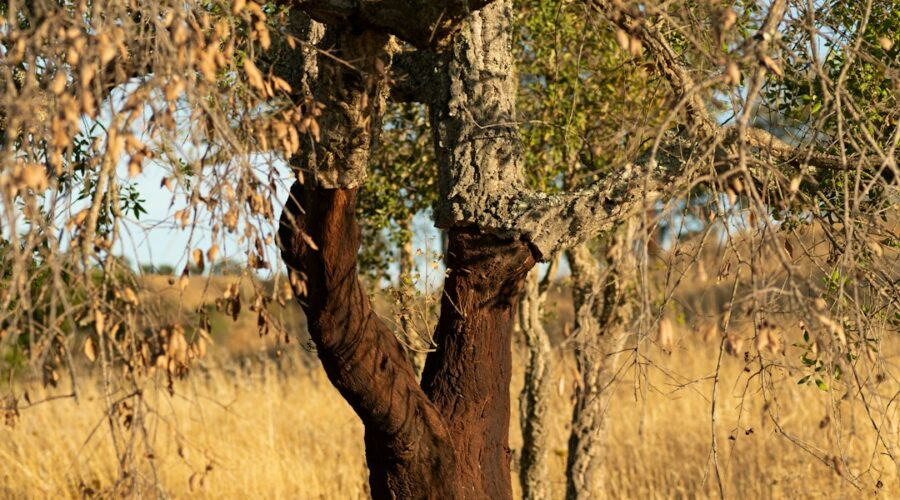
Portugal produces more than 50% of the world’s cork. Most of it comes from the Alentejo and Algarve interior. The cork oak (Quercus suber) is an remarkable tree — it can live for 200 years, and its bark can be harvested every nine years without harming the tree.
But beyond the economic value, cork oak forests are ecological powerhouses. The understory supports a unique community of plants and animals. The canopy creates a microclimate. The leaf litter feeds the soil. It’s a functioning ecosystem, not just a crop.
In the Algarve, the best preserved cork oak forests are found in the Barrocal and lower Sierra de Monchique. They’re not national parks — most are privately owned and actively managed. But public access is permitted, and several excellent walking routes exist.
Trail Options
1. Paxá to Messines: The Forest Circuit
Distance: 8 km (circular)
Difficulty: Moderate
Time: 2.5-3 hours
Access: Start at the small village of Paxá (between São Bartolomeu de Messines and Silves). Free parking in the village.
This is one of the most accessible and rewarding cork oak forest walks in the Algarve. The route follows minor roads and tracks through a landscape that feels completely removed from the tourist coast.
The walk:
- From Paxá, follow the signs toward São Bartolomeu de Messines on the old road
- After 2 km, turn left onto a dirt track (usually signposted as a walking route)
- The track enters the cork oak forest immediately
- Continue through the forest for approximately 4 km, then loop back via a different route
What you’ll see:
- Mature cork oak trees with their distinctive ridged bark
- Understory of Mediterranean shrubs: rosemary, lavender, Cistus rockrose
- Possible sightings of hoopoes, hoopoes, and roller birds
- In spring, wild orchids in the clearings
Practical notes:
- No facilities in Paxá — bring water and snacks
- Some road sections have limited traffic but walk on the left facing traffic
- The forest provides excellent shade — comfortable even on warm days
- Best in spring (March-April) when wildflowers are present
2. Monchique to Picota: The Mountain Forest
Distance: 12 km (circular, but can be shortened)
Difficulty: Moderate to challenging
Time: 4-5 hours (full circuit)
Access: Start at the Parochial House in Monchique town (parking available). Or start from the Fóia road.
This walk climbs from the town of Monchique (approximately 400m elevation) up through cork oak forest to the Picota peak (773m), then returns via a different route. The views from the top are spectacular, and the forest transitions from cork oak to eucalyptus (planted) to native scrub as you climb.
The walk:
- From Monchique church, follow the signs toward Picota
- The first 3 km climb steadily through mixed forest
- At approximately 500m, the cork oak forest gives way to more open terrain
- The summit climb is rocky but well-marked
- Return via the same route (or arrange a shuttle for a one-way descent)
What you’ll see:
- Transition from cork oak to eucalyptus (unfortunately) to native mountain scrub
- Panoramic views from Picota — on clear days, see the coast and the Sierra de Aracena in Spain
- Spring wildflowers in the meadows
- Possible glimpse of rare birds of prey
Practical notes:
- Much of the climb is exposed — bring sun protection
- The final section to Picota requires sure footing
- Start early — the afternoon winds can be strong
- Monchique has cafes for pre- and post-walk refreshments
- Can be shortened: turn back at any point
3. Silves to São Marcos: The Historical Route
Distance: 7 km (one way)
Difficulty: Easy to moderate
Time: 2 hours
Access: Start in Silves (parking near the castle), end in São Marcos (or reverse).
This walk follows an old country road between Silves and the small village of São Marcos da Serra. It passes through some of the most continuous cork oak forest in the central Algarve.
The walk:
- From Silves, follow the road (EN264) toward São Marcos da Serra
- After 3 km, the road enters the cork oak forest
- Continue for another 4 km to São Marcos
- Optional: continue another 2 km to the reservoir (barragem) for a longer walk
What you’ll see:
- Relatively intact cork oak forest with good canopy cover
- Traditional agricultural landscape with occasional farms
- Excellent birdlife — bee-eaters, hoopoes, golden orioles in spring
- Views toward the Silves castle in the distance
Practical notes:
- The road has moderate traffic — walk facing oncoming vehicles
- No services between Silves and São Marcos — carry water
- The village of São Marcos has one small café
- Can be done as a there-and-back or with two vehicles
4. Barragem do Arade: The Reservoir Loop
Distance: 5 km (circular)
Difficulty: Easy
Time: 1.5 hours
Access: Start at the dam (barragem) parking area on the road between Silves and the reservoir.
This is the easiest option — a gentle walk around a reservoir, through cork oak woodland. It’s suitable for families and accessible to most fitness levels.
The walk:
- From the parking area, follow the track around the reservoir
- The path is flat and well-defined
- Allow 1.5 hours for a complete circuit at a leisurely pace
What you’ll see:
- Reservoir views with mountain backdrop
- Cork oak forest on the eastern shore
- Water birds — coots, moorhens, occasional purple heron
- Good for photography
Practical notes:
- Very easy terrain — suitable for wheelchairs (firm surface)
- No shade in places — sun protection essential
- Popular with locals on weekends
- Best at weekends when you might find a small café open
When to Go
Season by Season
- Spring (March-May): Best overall. Wildflowers in bloom, comfortable temperatures, active wildlife. The cork oak forest feels alive.
- Autumn (September-October): Second-best season. Temperatures cooling, fewer visitors, still green from summer rains.
- Summer (June-August): Too hot for comfortable walking. The forest provides shade but temperatures can still exceed 35°C.
- Winter (November-February): Quieter but less scenic. Some paths may be muddy. Can be beautiful after rain — the forest turns green.
Time of Day
- Morning (8-11 AM): Best for wildlife and comfortable temperatures
- Midday: Too hot in summer; fine in winter
- Afternoon (3-6 PM): Good light for photography; comfortable in spring/autumn
What to Bring
- Water: At least 1.5 liters per person, more in warm weather
- Sturdy shoes: Some tracks are rocky; trail shoes or hiking boots recommended
- Sun protection: Even in spring, midday sun can be strong
- Insect repellent: Ticks are present — check yourself after walking
- Camera: The forest is beautiful in spring light
Why This Matters
The cork oak forests of the Algarve represent more than a pretty walk. They’re a living remnant of the traditional Portuguese landscape, an ecological system that took centuries to develop, and a source of livelihood for rural communities.
When you walk through these forests, you’re experiencing something that predates tourism, that survived the boom years, and that continues — barely — in pockets between the resorts and the coast.
That alone makes it worth the short drive from the beach.
Summary Table
| Trail | Distance | Difficulty | Time | Highlights |
|---|---|---|---|---|
| Paxá to Messines | 8 km | Moderate | 2.5-3h | Intact forest, wildflowers |
| Monchique to Picota | 12 km | Moderate-Challenging | 4-5h | Summit views, forest transition |
| Silves to São Marcos | 7 km | Easy-Moderate | 2h | Historical route, birdlife |
| Barragem do Arade | 5 km | Easy | 1.5h | Reservoir, accessible |
The cork oak forests offer a different Algarve — quiet, green, and ecologically significant. A short drive from the coast, worlds away from the resort.