Shore-Based Marine Life Watching
—
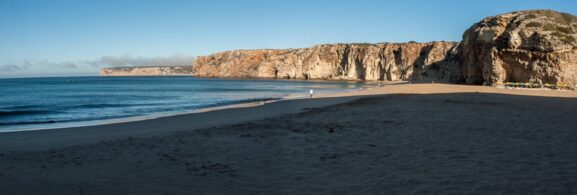
The Other Beach Experience
Everyone goes to the beach in the Algarve. But most people never see what’s actually there.
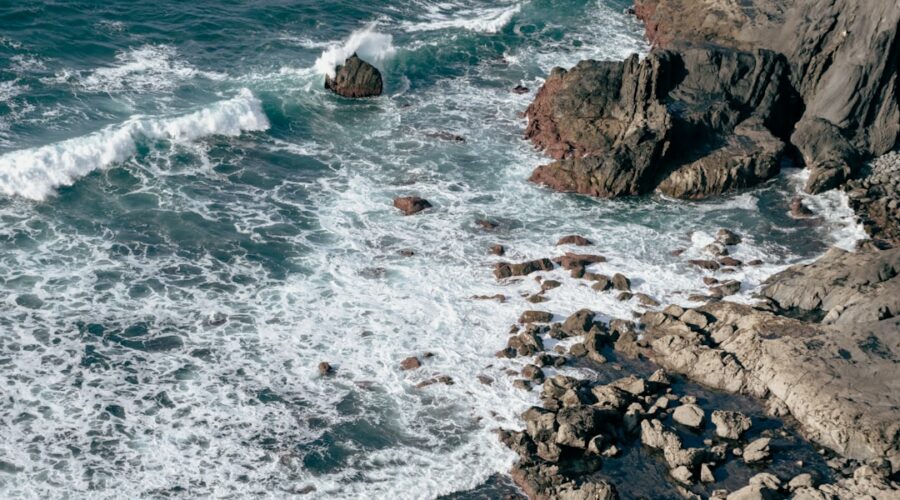
They lay on their towels, swim in the blue water, maybe rent a paddleboard. But they never look down. They never crouch at the water’s edge at low tide. They never watch the rock pools fill and empty with each wave.
That’s where the secret lives. The Algarve’s shores are teeming with life — creatures so bizarre and beautiful that most people walk past without a glance. Starfish. Sea urchins. Anemones that look like alien flowers. Octopus hiding in crevices. Schools of fish so tight they move as one.
You don’t need a boat. You don’t need scuba gear. You just need low tide, a little curiosity, and the willingness to get your feet wet.
—
Understanding the Algarve’s Shores
Why the Coast Is Alive
The Algarve’s coastline is a geological wonder. The limestone and sandstone rock creates endless tidal pools, crevices, and sheltered coves. The Atlantic is nutrient-rich, pulled up from deep waters by the powerful currents. And the temperature gradient — warm surface water meeting cooler depths — creates perfect conditions for marine diversity.
What this means for you: the shore is an aquarium. Every low tide reveals a hidden world.
The Low Tide Window
Timing is everything. The Algarve has semi-diurnal tides — two high and two low tides per day, approximately 50 minutes later each day.
For shore exploration:
- Spring low tides (when the moon is new or full) expose the most area
- Lowest tides in March-April typically occur in early morning or late afternoon
- Check tide tables before you go — there’s nothing more disappointing than arriving at low tide to find the water still knee-deep
The practical rule: if the tide is below 1.0 meters, you’re in business. Below 0.5 meters, and you’ll see things that are normally hidden.
—
The Best Spots
1. Praia da Rocha (Portimão)
Don’t let the tourist crowds fool you — the eastern end of Rocha beach, near the rocks, is a marine life hotspot. The rocky outcrops here create deep tidal pools that retain water even at moderate tide.
What to look for:
- Purple sea urchins — abundant in the rocky areas, their spines create a living carpet
- Common starfish — usually orange or purple, clinging to rocks just below the surface
- Barnacles — thousands of them, sealed shut when dry, filter-feeding when submerged
- Anemones — the beadlet anemone is common, red or green, looking like tiny underwater flowers
Access: Standard beach access. Walk to the far right (east) end of the beach toward the rock formations.
—
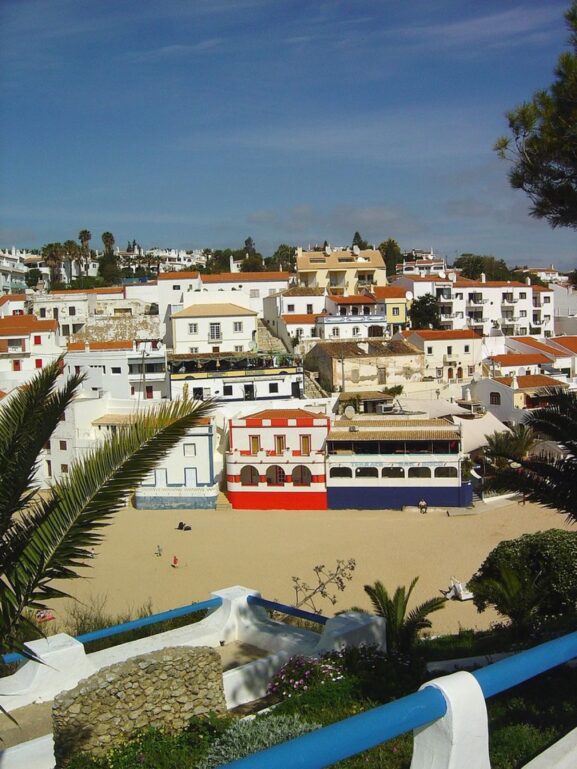
2. Praia do Carvoeiro (The Cliffs)
The rocky beach at Carvoeiro — smaller and less visited than its bigger neighbors — offers excellent tide pooling. The limestone cliffs create a maze of pools and channels.
What to look for:
- Limpet shells — conical shells that cling to rocks, each one a tiny ecosystem
- Winkles and periwinkles — small snails everywhere, different species in different zones
- Broad-clawed porcelain crabs — hiding under rocks, they’ll flee if you disturb them
- Snakelocks anemones — purple anemones with long, snake-like tentacles
Access: Park in Carvoeiro village and walk toward the beach. The rocky sections are at either end of the main sand.
—
3. Lagos: Ponta da Piedade
The dramatic rock formations at Ponta da Piedade extend far enough offshore that at low tide, you can walk out to sea caves that are normally inaccessible. This is the most dramatic tide pooling in the Algarve.
What to look for:
- Giant goby — large, speckled fish that lurk in the deeper pools
- Cuttlefish — occasionally seen in the deeper channels, their alien eyes watching
- Jellyfish — moon jellyfish are common, translucent and gentle
- Cormorants — diving into the deeper pools to hunt
Access: Pay-and-display parking at the viewpoint. Steps lead down to the beach. At low tide, you can explore far beyond the normal beach area.
Safety note: The rocks here are slippery. Wear secure footwear. Check your escape route — don’t get trapped by a rising tide.
—
4. Tavira: Ria Formosa Channel Islands
The eastern Algarve offers something different — the tidal flats and channels of the Ria Formosa. Here, it’s not about rock pools but about mudflats and sand bars that reveal an incredible array of shorebirds and marine life.
What to look for:
- Hermit crabs — dozens of them, swapping shells constantly
- Razorpod mollusks — razor-thin shells in the mud
- Shore birds — oystercatchers, curlews, flamingos at the water’s edge
- Seahorses — occasionally spotted in the seagrass beds (rare but possible)
Access: Walk from Tavira island beach toward the channel, or explore the sand bars exposed at low tide near Cabanas.
—
5. Aljezur: Praia da Amoreira
The northern west coast offers wilder conditions but better-kept secrets. Praia da Amoreira, where the river meets the sea, has extensive sand and rock areas that are excellent for exploration.
What to look for:
- Sand dollars — flat, round relatives of sea urchins, sometimes found in the sand
- Ghost crabs — fast-moving pale crabs that disappear into holes
- Surf clams — buried just below the surface, detected by small holes
- Green shore crabs — the common crab of the Algarve, surprisingly colorful
Access: Beach parking (paid in summer, free in winter). Walk toward the river mouth.
—
How to Explore Responsibly
The Code
- Look, don’t touch. Marine creatures are fragile. Your hands carry oils and bacteria that can harm them. Observe only.
- Leave nothing behind. Take all trash. Even organic waste like food scraps disrupts the ecosystem.
- Turn rocks back. If you lift a rock to look, put it back exactly as you found it. Creatures underneath are vulnerable to predators and sun.
- Stay in your lane. Stick to the shore. Don’t walk on coral, seagrass beds, or sensitive areas.
- No souvenirs. Taking shells, starfish, or other creatures destroys the ecosystem. Take photos instead.
—
The Experience
Here’s what happens: you arrive at low tide, walk to the edge of the water, and look down. At first, it just looks like rocks and water. But then you see movement. The anemone tentacles sway. A crab scuttles sideways. A fish darts under a rock.
You crouch closer. The water is crystal clear, maybe two inches deep, but it contains an entire ecosystem. Sea snails graze on algae. Tiny shrimp pick through the substrate. Everything is alive, moving, interacting — and completely ignored by the beachgoers twenty meters away.
This is the secret world hiding in plain sight. The Algarve’s marine life is there for anyone who cares to look. It requires no equipment, no expertise, no booking. Just curiosity.
And that’s the tragedy — millions of people visit these beaches every year, and almost none of them ever see it.
—
Practical Tips
- Check tide tables: Search “tide table Lagos” or “tide table Faro” for accurate times
- Go early or late: Low tide at midday gives you the most viewing time
- Wear old shoes: Rocks are slippery and sharp. Aqua shoes or old trainers are perfect
- Bring a camera: Many creatures are small — a phone macro mode works surprisingly well
- Get wet: Some of the best pools are only accessible by wading. Accept that your feet will get wet
- Don’t go alone: Safety in numbers, especially in more remote areas
—
What You’ll See (Eventually)
With practice, your eyes will learn to spot:
- Fish: Gobies, blennies, and mullet are common. Occasional cuttlefish and squid.
- Crabs: Shore crabs, hermit crabs, and occasionally spider crabs in deeper water.
- Mollusks: Winkles, limpets, cockles, and nautilus shells.
- Echinoderms: Starfish, sea urchins, and brittle stars.
- Anemones: Multiple species, in colors from green to purple to red.
- Plants: Seagrass beds, algae forests, and phytoplankton blooms.
The diversity is remarkable. After a few visits, you’ll start recognizing species. You’ll learn where to look for octopus (deep, dark crevices). You’ll discover where the starfish congregate. You’ll develop your own favorite pools.
And then the beach will never be the same.
—
The Algarve’s shores hide a world that most visitors never see. All it takes is curiosity, a little timing, and the willingness to look down.