Low-Tide Walks: Discovering the Algarve’s Hidden Intertidal World
Most visitors see the Algarve’s coast at high tide — waves crashing against cliffs, beaches compressed to narrow strips, the sea in perpetual motion. But twice daily, the ocean withdraws, revealing a parallel world: tide pools teeming with life, exposed rock platforms carved by millennia of wave action, and seafloor textures that transform the familiar coastline into something unrecognizable.
This is the intertidal zone. And in April, with comfortable walking temperatures and relatively low tourist pressure, it’s the perfect time to explore it.
Understanding Algarve Tides
The Algarve experiences semi-diurnal tides — two high tides and two low tides per day. The difference between high and low water can exceed 3 meters on spring tides, dramatically altering the coastline. Low tides occur approximately 6 hours apart, and the timing shifts about 50 minutes each day.
Key concept: spring tides (not related to the season) occur around the full and new moon, producing the lowest low tides and highest high tides. Neap tides, occurring around the quarter moons, produce more moderate differences.
For coastal exploration, you want negative tides — when the predicted low tide falls below the average low water mark, exposing more seabed than usual. Check tide tables before any low-tide excursion.
Best Low-Tide Exploration Spots
Ponta da Piedade (Lagos)
The dramatic rock formations at Ponta da Piedade are spectacular at any tide, but low tide reveals sea caves accessible from the cliff path, tide pools filled with anemones and crabs, and exposed rock platforms where you can walk toward sea stacks normally surrounded by water.
Best for: Sea cave exploration, photography, dramatic rock formations
Practical: Check tide tables. The caves are unsafe at any tide if waves are large — never turn your back on the sea.
Portinho de Lagos
The small beach west of Lagos harbour features a rocky headland that separates it from the main beach. At low tide, a natural swimming pool forms in the rocks — calm, protected, and filled with small fish. The adjacent cliffs expose fossil-rich limestone.
Best for: Safe swimming in natural pools, fossil hunting, family-friendly exploration
Practical: Small paid parking. Best visited on weekday mornings when less crowded.
Praia da Marinha (Carvoeiro)
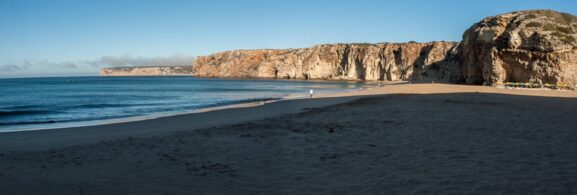
One of Portugal’s most iconic beaches reveals its full extent at low tide. The towering cliffs that frame the beach contain multiple sea caves, and the beach itself expands dramatically. A path from the cliff top allows access to the western end where tide pools cluster.
Best for: Dramatic scenery, beach walking, tide pool biodiversity
Practical: Parking at clifftop (€3) or beach (€5). Downhill walk to beach, uphill return.
Armação de Pêra
The broad sand beach west of the resort town features extensive rock platforms at its southern end. At low tide, these platforms become a natural laboratory — barnacles, limpets, mussels, anemones, and occasional octopuses. The water in tidal pools warms faster than the ocean, creating comfortable swimming conditions.
Best for: Marine life observation, beginner-friendly exploration, photography
Practical: Free parking along the beach road. Less affected by wind than exposed west coast beaches.
Ria Formosa Tidal Channels
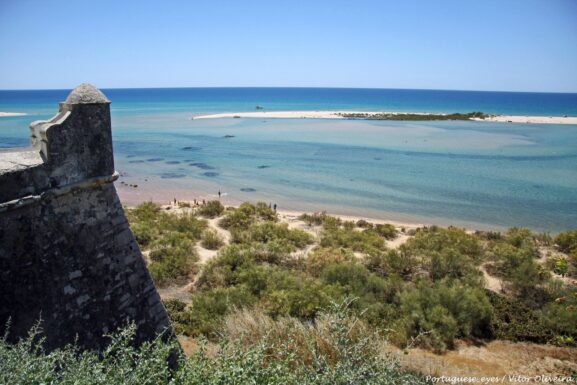
The eastern Ria Formosa near Tavira features extensive mudflats and sand banks exposed at low tide. Walking here is different from ocean coast exploration — it’s about birdwatching (waders, flamingos, herons) and understanding the wetland ecosystem. The tidal channels create intricate patterns visible only at extreme low tides.
Best for: Birdwatching, wetland ecosystem understanding, photography
Practical: Access via Tavira Island ferry or Quinta do Lago boardwalks. Rubber boots essential.
What You’ll Find
Marine Invertebrates
The Algarve’s intertidal zones host diverse communities:
- Acorn barnacles — Black or grey, clinging to rocks above the water line
- Limpets — Cone-shaped shells, grazing on algae
- Mussels — Clustered in mussel beds, food for oystercatchers
- Sea anemones — Anemone species in tide pools, extending tentacles
- Crabs — Hermit crabs in abandoned shells, shore crabs scuttling across rocks
- Starfish — Ochre sea stars and rarer species in deeper pools
- Octopus — Occasionally spotted in deeper crevices
Fish
Tide pools trap small fish — blennies, gobies, and juvenile species seeking shelter. On calmer days, you may see them clearly in shallower pools. Larger predatory fish patrol the pool edges, waiting for an easy meal.
Birds
Wading birds exploit the exposed mudflats: oystercatchers with their orange bills, curlews with their down-curved bills, turnstones flipping stones, and the iconic flamingos filtering the water for shrimp.
Safety Rules
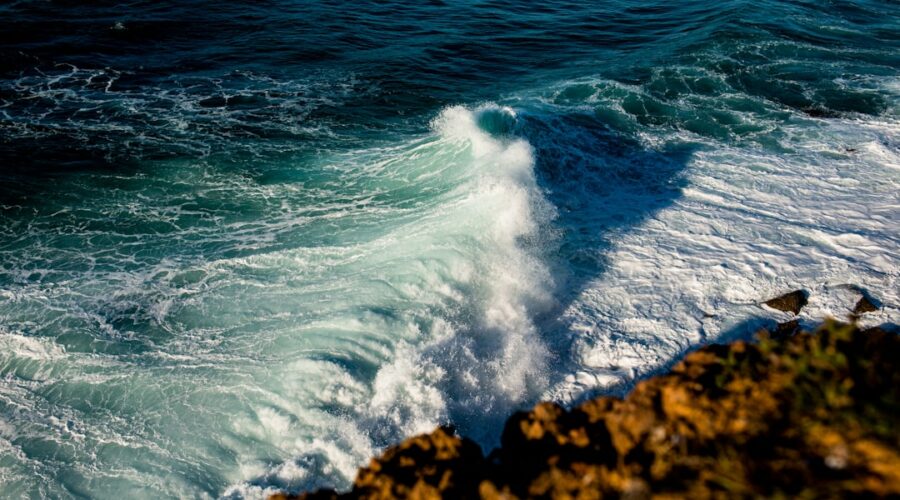
Never turn your back on the sea. Waves can surge unexpectedly, especially on the Atlantic coast. Even on calm days, a “sneaker wave” can catch you.
Check the tide times. What looks like a safe beach at high tide can become inaccessible at low tide. Make sure you know how you’ll return.
Wear appropriate footwear. Wet rocks are slippery. Sturdy water shoes or old sneakers with grip provide essential traction.
Watch for sea conditions. Never enter sea caves if waves are breaking at the entrance. The Portuguese Navy maintains a marine safety app with real-time wave height data.
Sun protection. There’s no shade on most rock platforms. April sun can burn quickly — apply sunscreen and wear a hat.
The Intertidal Ecosystem
The intertidal zone is one of Earth’s most intense ecological battlegrounds. Organisms here must survive twice-daily flooding and drying, wave battering, temperature extremes, and predation. The zones — supratidal, high intertidal, mid intertidal, low intertidal — each host species specifically adapted to those conditions.
Walking through these zones, you literally traverse the boundaries of survival. Above the high tide line, barnacles dominate. In the middle, mussels and anemones compete for space. Below, seaweeds and more delicate invertebrates thrive. It’s a free, ongoing biology lesson — if you know how to read it.
Photography Tips
- Time of day — Early morning or late afternoon provides the best light and fewer tourists
- Tide timing — Shoot incoming low tide (dramatic water movement) or outgoing (calm pools)
- Water angles — Shoot across tide pools to include reflections
- Macro lens — Reveals details invisible to the naked eye
- Polarizing filter — Cuts glare on wet surfaces and deepens blue water
Respect the Ecosystem
The intertidal zone is fragile. Follow these rules:
- Look, don’t touch — Marine life is sensitive to human oils
- Leave nothing — Take all trash, including biodegradable items
- Don’t turn rocks — Organisms underneath are vulnerable to sun and predators
- Observe from distance — Watching without interfering is more ethical and often more informative
The intertidal world reveals itself only to those who time their visits correctly. In April, with comfortable temperatures and lower crowds, the Algarve’s tide-swept margins offer an experience that most visitors to the region never discover.