
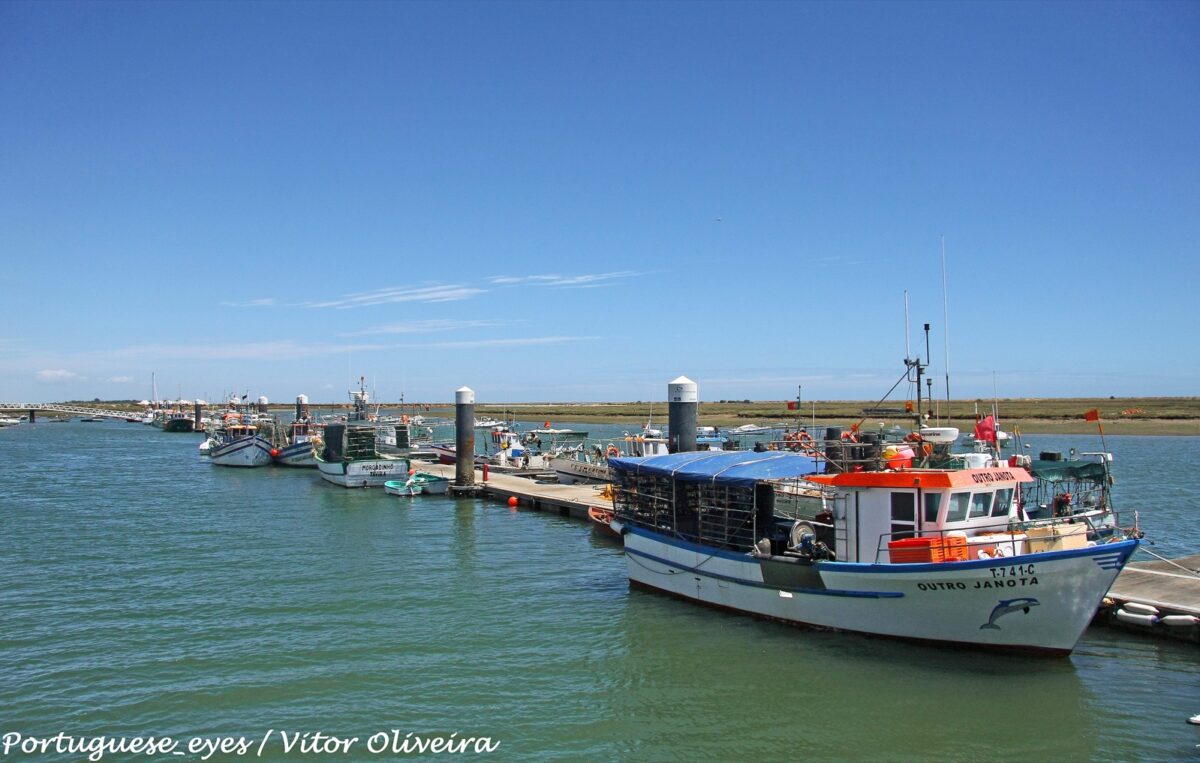
Santa Luzia calls itself the octopus capital of Portugal, and the quays back the claim. This is a working fishing village on the Ria Formosa just along the lagoon from Tavira, and its waterfront is dressed in the tools of one trade: octopus pots stacked by the thousand, striped small boats moored in the channel, nets, buoys and the daily traffic of people who still fish for a living. Nothing here is arranged for visitors, which is exactly why it photographs so well.
The covos (the traditional pots the octopus crawl into) pile up along the quay in walls and rough pyramids, and they’re the shot: repetition, texture, colour, and behind them the flat silver of the lagoon and the barrier island. The village itself is a modest strip of white houses and seafood restaurants that fill with Portuguese families at weekends, all of them here for the polvo.
When to go: morning, when the boats come in and the quay is actually working. You get the catch landed, pots stacked and mended, and soft light off the water before the day heats up. Evenings are quieter and gentler: good for the boats-at-rest mood, with the lagoon going still.
Who it’s for: documentary and street photographers: this is one of the last easily reached working-port scenes on the Algarve coast. Food travellers, obviously: eat the octopus where it lands. Anyone staying in Tavira wanting a flat walk or cycle with a genuine payoff at the end. Not one for beach seekers: for sand, carry on to the Barril footbridge just beyond the village.
About This Spot
-
General AreaNear Santa Luzia, Tavira
-
Coverage BadgeArchive
-
Difficulty1 Easy
Getting There & Access
-
Getting ThereJust along the lagoon from Tavira, an easy, flat drive or cycle. The pots and boats line the waterfront road through the village.
-
Access TermsFree Public
-
Best TimeMorning
-
Crowd LevelQuiet
Photography Notes
-
Shooting NotesThe stacked octopus pots are the signature: shoot them as repeating pattern, or use them as foreground against the moored boats and the lagoon.
-
Light & Sun NotesMorning light comes soft off the lagoon while the quay is at work; late evening flatters the boats at rest.
-
ConditionsA working port: stay clear of landing and loading, and expect the scene to rearrange itself daily with the fishing.
Visitor photos


Location
Log in free to see the exact pin and directions.

Leave a Reply
Been here? Add your shots.
Photos you add appear on this page with your name on them, next to the community gallery. Tell the next photographer what you found: the light, the crowds, whether it was worth the trip.
A free account also unlocks the exact pin, how to get there and the best time of day, on every spot.