Monchique: The Mountain Counterpoint. Why the Serra Is Worth the Drive
Photo: Bextrel · Wikimedia Commons · CC BY-SA 4.0
Most visitors to the Algarve spend their time on the coast. That is reasonable because the coast is what the region is known for. But if you have two or three days and want to see how different the interior feels, drive into the Serra de Monchique and spend half a day around Monchique.
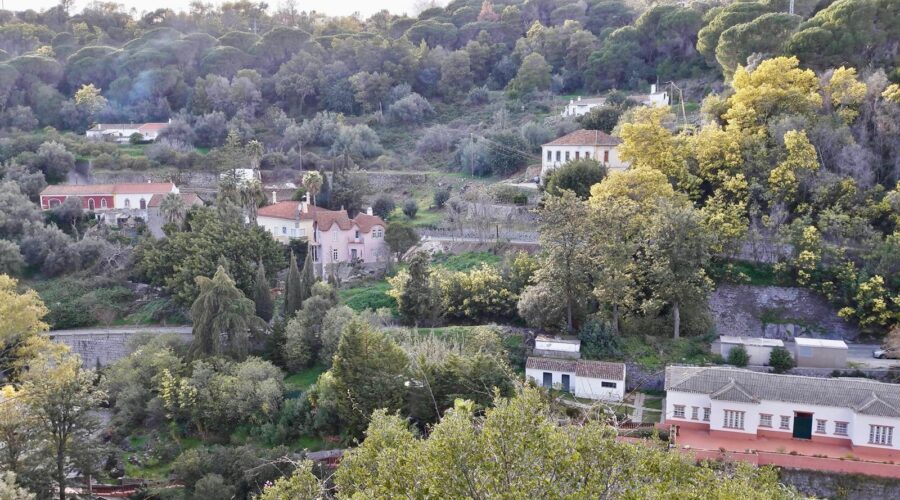
Monchique is an inland market town surrounded by eucalyptus and cork oak forest. Its church, main square, public fountains and surrounding mountain roads make it a practical base for visiting the highest peaks in the Algarve. Fóia, at 902 metres, is the highest point in the region. On a clear day, the summit provides broad views towards the coast.
This guide covers a half day or full day in the mountains from a coastal base.
The drive from Portimão or Lagos to Monchique
The N266 from Portimão is the main route into Monchique, climbing steadily through forest. From Lagos, the approach uses the N120 and N267. Allow around 35 to 50 minutes from the coast, depending on your starting point, traffic and road conditions.
The route has the bends and gradient changes of an inland mountain road. In winter, rain and leaf debris can make the surface slick. Conditions at Monchique and Fóia can also feel cooler than those on the coast, so carry an extra layer.
Monchique town
The centre is compact enough to explore on foot. Focus on the church, main square, public fountains and streets around the centre rather than expecting a long list of conventional attractions.
What to look for in Monchique:
- Fonte Grande: A large spring fed public fountain at the edge of town and part of Monchique’s local water heritage.
- The main square: A useful starting point for orienting yourself and walking through the centre.
- Chestnut season: Chestnuts are associated with the surrounding area in autumn, particularly during September and October.
- Local textile traditions: Weaving and wool work form part of the town’s craft history.
Caldas de Monchique: the springs
Caldas de Monchique is a small thermal spring settlement near Monchique on the N266. The springs have a long history of use, including during the Roman period.
For a visit without commercial stops, use the publicly accessible areas around the settlement and spring source. Park only in designated spaces and follow local signs, as access conditions can change.
Fóia: the summit
From Monchique, follow the signed road towards Fóia. The road climbs steeply in its final kilometres, and there is a public car park at the summit.
The view from Fóia: In clear conditions, the viewpoint looks across the surrounding mountains and towards the southern Algarve coast. Haze, especially in summer, can obscure coastal detail. If the view matters to your decision, check local weather and visibility before driving up.
Picota: The second highest peak, at 773 metres, offers a walking option for visitors who want more effort than the drive to Fóia. Check the route and current trail conditions locally before setting out.
What this half day adds to an Algarve trip
The Serra de Monchique provides a direct contrast to the Algarve’s beaches and cliffs. The forest, altitude, cooler conditions and viewpoints make the journey useful for travellers who want to understand more than the coastal landscape.
If your itinerary is otherwise coastal, Monchique is a practical choice for a day away from the beach.
Comparing Monchique with the Rota Vicentina inland routes
The Rota Vicentina includes the Historical Way, an inland long distance walking route. If you are choosing between a mountain drive and an inland walk, the main differences are effort, transport and time.
| Monchique half day | Rota Vicentina Historical Way | |
|---|---|---|
| Effort required | Low if visiting the town and summit by car | Moderate, with a substantial walk |
| Scenery | Cork oak forest, mountain town and summit views | Rolling inland landscape with cork oak and eucalyptus |
| Transport | A car is the practical option | Requires advance transport planning |
| Combined with the coast? | Suitable for a half day from Portimão or Lagos | Usually better treated as a full day activity |
| Best for | Visitors seeking flexible stops and limited walking | Walkers comfortable with distance |
| Weather dependence | Clear air improves the Fóia view | Rain can make paths muddy |
Choose Monchique if you want a flexible mountain visit with limited walking. Choose the Historical Way if the walk itself is the purpose of the day.
Practical logistics
Getting there: A car is the practical option. Allow around 35 to 50 minutes from Portimão or Lagos, depending on the route, traffic and conditions.
Driving conditions: The N266 to Monchique and the road to Fóia are paved, but expect bends and steep sections. Check current road conditions locally, particularly after heavy rain or during periods of elevated fire risk.
Public stops: Base the visit around Monchique’s centre, Fonte Grande, the publicly accessible parts of Caldas de Monchique and the Fóia viewpoint.
What to bring: Carry layers, water and sun protection. Conditions at Fóia can be cooler and more exposed than those on the coast.
Mobile coverage: Coverage can be inconsistent on mountain roads. Download maps before leaving town.
When to go: Spring and early autumn generally suit walking and viewpoint stops. Summer heat, winter rain and seasonal fire restrictions can affect access, so check local conditions before departure.
Allow: Around four to five hours from a coastal base for a circuit including Monchique, Caldas de Monchique and Fóia. A shorter visit can focus on the town and summit.
Bottom line
Monchique works best as a practical change of landscape. The forest drive, the public spaces in town and the view from Fóia provide a clear contrast with the coast without requiring a full day or a long walk.