The Eastern Algarve Beyond the Beach: Olhão, Loulé, and the Markets and Towns Nobody Sends You To
Photo: Portuguese_eyes · Flickr · CC BY-SA 2.0
The Algarve Beyond the Beach: Olhão, Loulé, Tavira, and Their Markets
Many visitors use Olhão, Loulé, and Tavira as gateways to the coast or pass through without spending time in their town centres. Each offers a different reason to stop: Olhão for its working waterfront, Loulé for its municipal market and craft traditions, and Tavira for its historic streets and riverfront.
This guide focuses on public markets, historic buildings, working waterfronts, and practical choices. These are town visits rather than substitutes for a beach day.
Olhão: The Fishing Town
Location: 37.0275, -7.8061 | In Olhão municipality, on the Ria Formosa lagoon near Faro
Olhão is a working fishing town with a busy waterfront and municipal market. Its centre is functional rather than curated, which makes it useful for visitors interested in the everyday operation of an Algarve coastal town.
What you will find
- Olhão Municipal Market: The waterfront market buildings contain fish, regional produce, herbs, spices, dried goods, and other local products. Visit in the morning if the market is your priority, and check the current opening days and hours before travelling.
- The fishing port: Fishing activity remains part of the town’s daily routine. Observe signs, barriers, and access restrictions because operational areas are not visitor attractions.
- The historic centre: Narrow streets and whitewashed, flat-roofed buildings sit behind the waterfront. A short walk is enough to compare the older centre with the busier commercial streets.
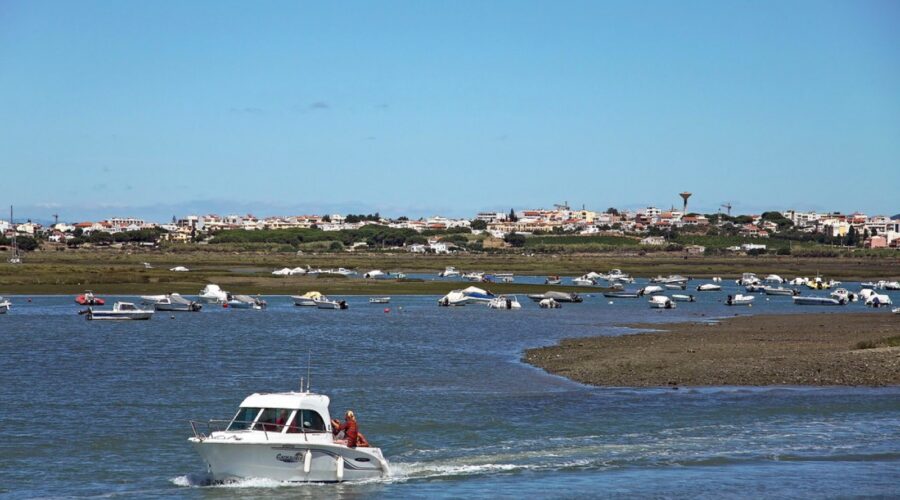
- The waterfront: The promenade follows the Ria Formosa and provides views towards the barrier islands.
What to know before you go
- The market and waterfront are the practical focus of a short visit.
- The port remains a working area, so some sections may be closed to the public.
- Passenger boats connect Olhão with islands in the Ria Formosa. Routes and timetables vary, so check locally before planning an island crossing.
How long to spend: Allow 2 to 3 hours for the market, historic centre, and public waterfront.
Loulé: The Market Town
Location: 37.1397, -7.9725 | In Loulé municipality, in the central Algarve
Loulé is an inland market town serving communities across the surrounding municipality. Its municipal market, castle, churches, and compact centre make it a practical half-day choice from the central Algarve coast.
What you will find
- Loulé Municipal Market: The 1908 market building contains stalls selling produce, fish, bread, dried fruit, herbs, spices, and regional goods. Morning is the useful time to visit, subject to current opening hours.
- Saturday outdoor market: The weekly market expands the range of produce, clothing, plants, pottery, and household goods. Confirm the current location and schedule before setting out.
- Loulé Castle: The surviving walls and towers form part of the historic centre. Public access and museum hours can change, so check locally if the interior is central to your visit.
- Igreja de São Clemente: This medieval church is one of the town’s principal historic buildings. Access may depend on services and local opening arrangements.
- The historic centre: The streets between the market, castle, and church are compact enough to explore on foot.
What to know before you go
- Choose Saturday for the outdoor market or a weekday morning for a quieter visit to the municipal market.
- Loulé is inland and should be chosen for its market, historic centre, and civic buildings rather than coastal scenery.
- The central sights can be covered during a half-day visit, with extra time if museums or interiors are open.
- It is a practical option for visitors based near Quarteira or Vilamoura, but travel time depends on the starting point and traffic.
Tavira: The Historic River Town
Location: 37.1263, -7.6484 | In Tavira municipality, on the Gilão River in the eastern Algarve
Tavira receives more day visitors than Olhão or Loulé, partly because it provides access to the Ria Formosa and nearby beaches. Its compact historic centre also justifies a visit of its own.
The town contains archaeological evidence and buildings from several periods, including Islamic and later Portuguese settlement. The useful approach is to follow the river, cross the old bridge, and continue uphill towards the castle and nearby churches.
What you will find
- Ponte Antiga: The old bridge across the Gilão is commonly called the Roman bridge, but the visible structure reflects later construction and rebuilding. It links the two sides of the historic centre and is closed to normal road traffic.
- Igreja da Misericórdia: This 16th-century church is known for its Renaissance architecture and decorated interior. Check current access before visiting.
- Tavira Castle: The surviving walls occupy a raised position above the river. The enclosed garden and ramparts are the main reasons to enter when the site is open.
- The old town: Cobbled streets, whitewashed buildings, small squares, and distinctive roof forms make this the most coherent historic centre of the three towns.
- The churches: Santa Maria do Castelo, São Tiago, and São Pedro Gonçalves Telmo illustrate different periods in the town’s development. Not every church is open throughout the day.
- The riverfront: Walking both banks of the Gilão gives a clear view of the town’s layout without requiring a fixed route.
What to know before you go
- The historic quarter is compact, while the wider town extends beyond the riverfront.
- Praça da República and the bridge can become busy during summer days. Early morning or late afternoon usually makes walking easier.
- Most central sights can be reached on foot, although the approach to the castle includes an incline.
- Allow half a day for the riverfront, bridge, castle area, and selected churches. An island crossing requires additional time and advance timetable checks.
How the Towns Fit Together
The three towns serve different interests. Combining all of them can make the day rushed, especially when market hours, church access, traffic, and boat timetables are involved.
Option A: Markets and Waterfront
- Morning: Loulé for the municipal market, with the outdoor market added on Saturday.
- Later: Olhão for the municipal market, historic centre, and public waterfront.
Option B: Historic Centres
- Morning: Tavira for the bridge, castle area, churches, and riverfront.
- Later: Loulé for the castle, church, market building, and surrounding streets.
Option C: One Half-Day Stop
- Choose Loulé for markets and an inland town centre.
- Choose Tavira for historic architecture and a river walk.
- Choose Olhão for a working fishing waterfront and access to the Ria Formosa.
Comparison Table
| Town | Primary focus | Useful time to visit | Suggested duration |
|---|---|---|---|
| Olhão | Fishing port, municipal market, waterfront, island connections | Morning for the market | 2 to 3 hours |
| Loulé | Municipal market, castle, church, inland town centre | Saturday morning for both markets, or a weekday morning for the market hall | Half day |
| Tavira | Historic centre, churches, castle, bridge, riverfront | Early morning or late afternoon for quieter streets | Half day, excluding an island crossing |
What These Towns Offer
Olhão, Loulé, and Tavira are not interchangeable. Olhão shows the operation of a fishing town beside the Ria Formosa. Loulé centres on an inland municipal market and civic core. Tavira offers the most extensive historic walk of the three.
Choose according to the activity you want rather than treating each town as another coastal viewpoint.
Getting There
By car: Road access differs for each town. Use current navigation information and check municipal parking signs on arrival. Historic streets may have restricted vehicle access.
By public transport: Regional rail and bus services can be useful for individual visits, but connections between all three towns may require changes. Check current routes and timetables before planning a multi-town day.
On a combined visit: Olhão and Tavira fit naturally into an eastern Algarve itinerary. Loulé is in the central Algarve and works better as a separate stop or as part of a market-focused route. Actual travel times depend on the route, traffic, and service schedule.
Practical Summary
- Olhão is the choice for the fishing port, municipal market, public waterfront, and island connections.
- Loulé is the choice for an inland market town, castle, church, and compact civic centre.
- Tavira is the choice for historic streets, architecture, the riverfront, and a longer walking route.
- Check current market hours, building access, transport schedules, and boat timetables before travelling.
- For a relaxed day, combine two towns at most or give Tavira a half day on its own.