Ruínas de Milreu: The Roman Algarve in Miniature at the Edge of Tavira
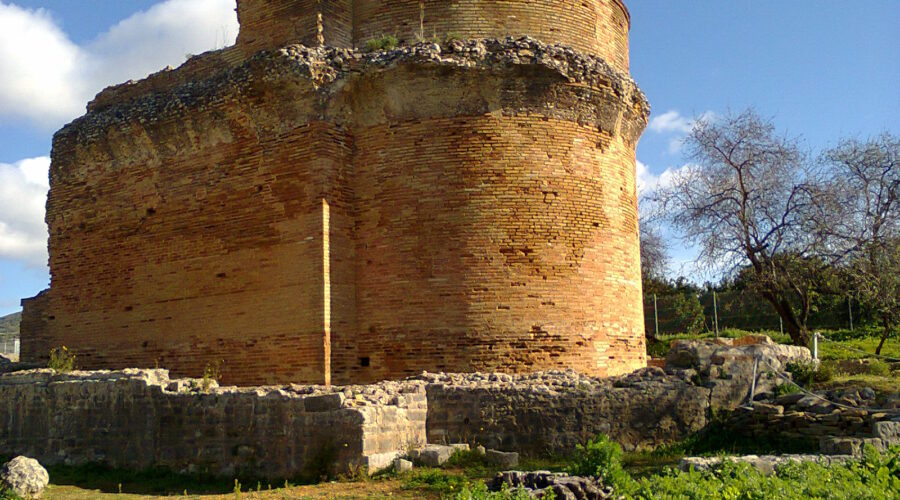
Most visitors to Tavira pass within a few kilometres of one of the most significant Roman archaeological sites in the Algarve without knowing it exists. The Ruínas de Milreu sit on the edge of the town, a short walk from the modern road that heads toward the Ria Formosa lagoon system, and they represent the largest and best-preserved Roman villa complex in southern Portugal. What remains — baths, a temple, mosaic floors, the outlines of an entire settlement that once served as a regional economic hub — is enough to reshape how you think about the Algarve’s Roman history.
The site is small enough to visit in an hour and large enough to reward a slower, more careful visit. It is free to enter, which puts it in a small category of genuinely significant historical sites in Portugal that do not require an admission fee. That alone makes it worth knowing about.
What the Ruins Tell You
Milreu was a Roman agricultural estate — a villa — dating from the 1st century AD, which expanded over the following centuries into a complex settlement that included residential quarters, an elaborate bathing complex, a temple dedicated to the goddess Cybele, and extensive fish-salting tanks on the coastal margin nearby (the remains of which can still be seen close to the Ria Formosa edge). The fish-salting operation is significant: it tells us that Milreu was not merely a country house but an active part of the Roman Algarve’s commercial economy, processing and exporting garum — the fermented fish sauce that Romans everywhere used as a universal condiment — and salt-preserved fish to markets across the empire.
The bathing complex is the most visually coherent part of what survives. You can still see the hypocaust system — the underfloor heating that made Roman baths possible — the changing rooms (apodyterium), the cold plunge (frigidarium), and the hot rooms (caldarium and tepidarium) with their characteristic terracotta tile patterns. The mosaic floors in the residential areas show Geometric and figural motifs, and several panels have been preserved under protective shelters that allow close examination.
The temple platform is on slightly higher ground to the north, and the remaining columns and base structures give a clear sense of the religious centre of the estate. The whole complex was surrounded by a wall, parts of which are still in evidence.
Visiting in Spring 2026
Spring is an ideal time to visit Milreu. The site has limited shade, and summer temperatures in the eastern Algarve regularly exceed 35°C, making the midday hours uncomfortable for a visit that benefits from unhurried exploration. April and May provide warm but manageable temperatures — in the low to mid-20s — with longer daylight that lets you combine the ruins with a Ria Formosa walk or a visit to Tavira island in the same day.
The ruins are at their greenest in spring, with wild herbs and small plants colonising the gaps between the archaeological structures. Photography is improved by this: the contrast between the grey stone ruins and the green growth gives the site a quality that summer’s baked ground and bleached stone cannot match.
Allow approximately 60 to 90 minutes for a full visit, including time to read the information panels, which are in Portuguese and English and provide genuine context for what you are looking at. A visit to the small museum adjacent to the site — included in the same free admission — adds another 20 to 30 minutes and contains artefacts recovered from the excavation, including ceramic fragments, glassware, and a reconstructed mosaic panel.
Combining With Tavira
Milreu is at its best as a half-day combination with Tavira itself, which is one of the most genuinely attractive towns in the eastern Algarve. From the ruins, it is a 10-minute drive or a 30-minute walk into the historic centre, where the Guilhermina Bridge crosses the Gilão River and the castle walls offer views across the town and out to the Ria Formosa.
The sequence that works well: arrive at Milreu early enough to have the site largely to yourself (opening time is 9 am; the first hour before tour groups arrive is the best window), spend 60 to 90 minutes, then walk or drive into Tavira for a late-morning coffee on the river terrace. From there, you can take the ferry across to Tavira Island and the Ria Formosa boardwalks if you have the full day.
Practical Notes
Location: Approximately 2 kilometres north of Tavira centre, on the EM516 road toward the Ria Formosa. Signed from the main road.
Admission: Free. The adjacent museum is also free.
Access: The site is fully accessible for wheelchair users on the main pathways, though the uneven stone surfaces of the archaeological area require care.
Facilities: There are public toilets at the museum entrance. No café on site — the nearest is in Tavira centre.
Best time of day: Morning, before 11 am, for light and for avoiding coach groups that tend to arrive mid-morning.
Local Context
The Ruínas de Milreu are a reminder that the Algarve’s Roman period was not a brief occupation but a sustained, centuries-long integration into the Roman economic world — with fish processing for export, luxury goods for local consumption, and bathing culture that mirrored what was happening in Rome itself. The site is not dramatic in the way that an amphitheatre or a temple column is dramatic. But it is legible, walkable, and genuinely educational, and it costs nothing. In a region where the default assumption is that everything worth seeing requires an admission fee and a car park, that is worth knowing.