
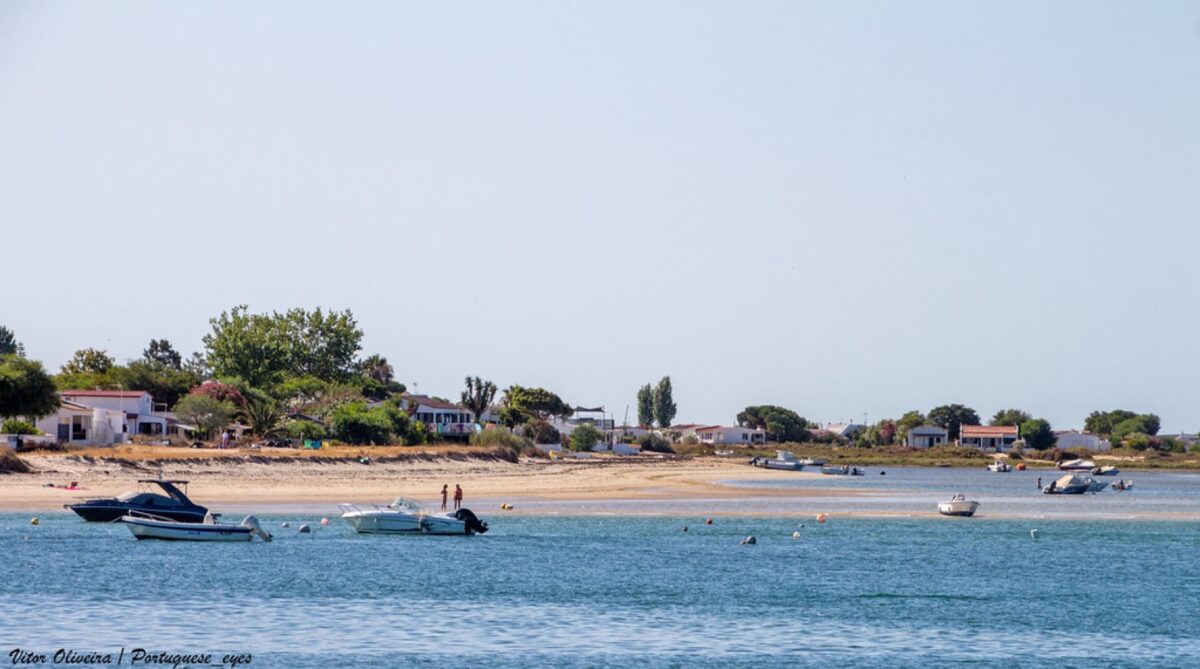
Quinta de Marim is where the Ria Formosa explains itself. Just east of Olhão, the natural park’s headquarters spreads over a quiet estate of umbrella pines, salt marsh and lagoon edge, laced with flat walking trails, and it packs more of the ria’s textures into one loop than anywhere else: pinewood shade, glittering flats, channels, bird hides, and an old tide mill standing over the water where the lagoon narrows. The mill is the signature frame: low, whitewashed, doubled in still water when the tide is in.
It’s a place for patient photography rather than trophies. Waders working the mud, light shifting across the marsh, pine trunks dark against the flats. And, for the sharp-eyed, the Mediterranean chameleon, one of the park’s quiet celebrities, hiding in the scrub. Take the loop slowly; the reward scales with your pace.
When to go: early morning for active birds and calm water, late afternoon for warm light through the pines. The tide matters more than the season here: high tide floods the frames around the mill, low tide turns the lagoon into patterned mud and feeding grounds. Check the tables and decide which picture you’re after.
The reserve is signed off the N125 east of Olhão and run as a managed park centre, with marked trails and an interpretive circuit, with flat, easy walking throughout.
Who it’s for: bird and nature photographers, slow walkers, families with binoculars, and anyone who has only seen the Ria Formosa from a ferry deck and wants to understand what they were floating on.
About This Spot
-
General AreaNear Olhão, Olhão
-
Coverage BadgeArchive
-
Difficulty1 Easy
Getting There & Access
-
Getting ThereSigned off the N125 just east of Olhão; flat, marked trails loop the estate from the entrance.
-
Access TermsPaid Entry
-
Crowd LevelQuiet
Photography Notes
-
Shooting NotesThe tide mill doubled in high-tide water is the signature; bring a long lens for waders on the flats, and check the scrub for chameleons.
-
Light & Sun NotesEarly morning gives calm water and active birds; late sun sends warm light through the pines.
-
ConditionsTide-dependent: high tide floods the mill frames, low tide opens patterned mud and feeding birds. Check the tables before you go.
Visitor photos


Location
Log in free to see the exact pin and directions.
Leave a Reply
Been here? Add your shots.
Photos you add appear on this page with your name on them, next to the community gallery. Tell the next photographer what you found: the light, the crowds, whether it was worth the trip.
A free account also unlocks the exact pin, how to get there and the best time of day, on every spot.