The Last Two Weeks of March: Why This Quiet Window Is the Best Time to Walk the Algarve
The Window Nobody Talks About
Every year the same conversation happens in Algarve hiking circles: “should I go in March or April?” The answer most people miss is that the real window is right now — the last two weeks of March — and it is already half gone.
By mid-March the winter trails have dried sufficiently to walk comfortably. The wildflowers that began in February are still going, particularly in the Barrocal and along the coastal cliffs. The rivers and streams that feed the Rota Vicentina’s inland sections are still flowing. The Rota Vicentina itself is at its quietest before Easter draws the first big crowd. And the temperature — 15–20°C inland, 16–19°C on the coast — is simply the best number for a full day of walking that the year offers.
Then April arrives, the schools break, the flights get expensive, and the trailheads get busy. The window doesn’t slam shut — it slowly fills up. If you are reading this in the second half of March 2026, you are inside it.
Why Late March Specifically
The crowds haven’t arrived yet. Good Friday in 2026 falls on April 3 and Easter Sunday on April 5, which means the pre-Easter rush builds in early April, not the final days of March. But right now — March 23–29 — the trails are genuinely quiet. Portuguese school Easter breaks typically begin in early April. Foreign visitors are still about a week away from their main surge. This is the last stretch of proper solitude on routes like the Fishermen’s Trail and the Via Algarviana’s western sectors.
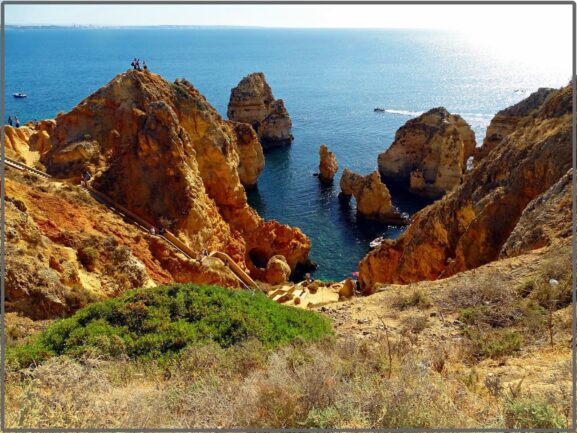
Wildflowers are still at their peak. The display that started in February continues through late March, with orchids, anemones, and the last of the lavender still visible in the Barrocal. By mid-April the blooms thin out noticeably, especially on south-facing slopes. The coastal cliffs between Lagos and Sagres are carpeted with early-season magenta and yellow that won’t repeat until next February.
The rivers are still running. The Rota Vicentina’s inland sections depend on seasonal streams and spring boxes. By late April — and certainly by May — several of these are dry or reduced to a trickle. Right now they are flowing. The river fords on the western inland sectors, which give the walk its wild character, are passable and scenic rather than dangerous or dry.
Temperatures are ideal. 15–20°C is the hiking sweet spot — cool enough for sustained effort, warm enough to be comfortable without full kit. The sun is strong enough for long days but not the punishing force it becomes by May. You can walk from 09:00 to 17:30 without overheating or needing to shelter.
Which Trails Are at Their Best Right Now
The Fishermen’s Trail (Rota Vicentina, western sector) — Carrapateira to Odeceixe is the classic. The Atlantic is wild, the cliffs are green, and the village cafés at Pedralva and Monte Clérigo are open without the summer queues. Tide matters here — check before setting out, as the exposed sections between Praia do Amado and Odeceixe are impassable at high water. The Odeceixe beach crossing is the key timing decision; go two hours either side of low tide.
The Via Algarviana inland sectors — The western sectors between Aljezur and the Odemira plateau are at their best in late March. The Medronho forests around Corte Bixo, the river valleys with water still flowing, and the ridge views south to the coast are all at peak condition. Allow extra time on clay sections if rain has fallen in the previous 48 hours — the limestone can be slick when wet.
Barrocal limestone walks — The zone between Loulé, Salir, and São Brás de Alportel is ideal in late March. Rocha da Pena, the Querença fonte walks, and the small serroes between white roads are all accessible and rewarding. The orchids are still visible, the birds are active, and the almond groves are finishing their last blossom. These are short walks — 4–8km — but dense with interest.
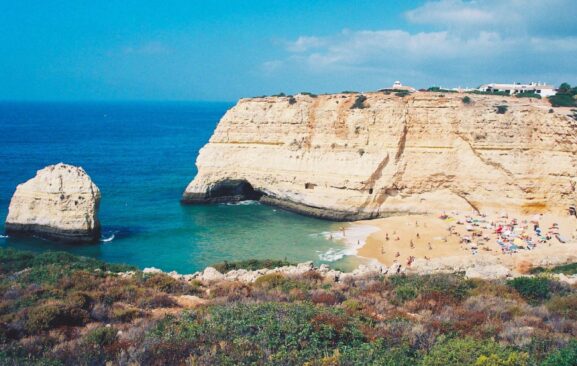
The Seven Hanging Valleys Trail — If you must do the popular route, this is the week. The trail between Benagil and Praia da Marinha is at its most dramatic in late March with the spring vegetation green on the cliff tops and the Atlantic a deep winter blue below. Go before 10:00 or after 15:00 to avoid the growing tourist traffic. The Benagil sea cave is accessible at low tide.
Practical Timing
Sunrise and sunset in late March: Sunrise is around 06:25–06:35. Sunset is around 18:40–18:50. That gives you a solid 12-hour walking window with good light from 07:00 to 18:00. DST kicks in on March 29 — the Sunday before Easter — so the last few days of the month gain an hour of evening light immediately.
Tide considerations for coastal walks: Late March spring tides run high in the early morning and late afternoon. The Fishermen’s Trail between Carrapateira and Odeceixe should be started 2–3 hours after high water. Check the IPMA tide table for Lagos before planning your day. If in doubt, walk inland sectors in the morning and save the coast for the afternoon low.
What to pack: Layers. The morning can start at 10°C and reach 20°C by early afternoon. Windproof is essential on all coastal sections. For the Barrocal and inland routes: carry at least 500ml of water per person, sun protection even on overcast days (UV index 6–7 is typical), and a light snack — there are long stretches with no facilities. Trail shoes with grip are sufficient for most routes; save the boots for the Via Algarviana’s muddier sectors.
Safety and Conditions: What to Watch
Trail conditions after winter rain. March 2026 has been relatively dry after a wet February, but check the IPMA forecast before any serious walk. If more than 15mm of rain falls in the 48 hours before your walk, give the clay sections of the Via Algarviana and Rota Vicentina inland routes an extra day to drain. The limestone paths around Rocha da Pena and Cerro da Cabeça are particularly slippery when wet.
River fords. The Odeceixe river crossing and the small fords on the Rota Vicentina inland section are passable on foot in late March. By mid-April in a dry year they can be either flooded or dry depending on recent rainfall. Right now they are at their most scenic — flowing but walkable. Wear shoes you don’t mind getting wet; the fords are shallow but the riverbed is rocky.
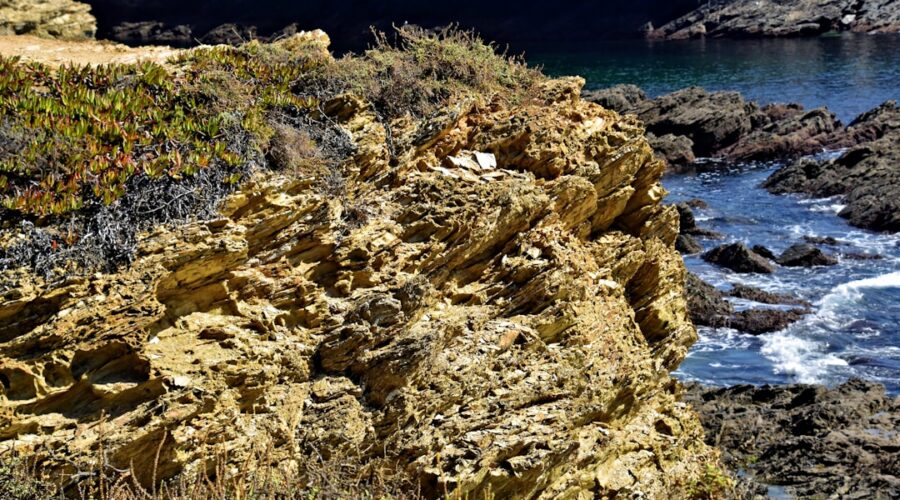
Coastal cliff stability. The winter Atlantic storms of 2025–2026 have done noticeable damage to sections of the Fishermen’s Trail between Sagres and Carrapateira. Municipal repair work is ongoing. Check local notices at trailhead car parks before setting out, and do not walk the cliff-edge sections if the wind is above 30 km/h — the exposure is real and the margin for error is small. This advice applies year-round but feels more pressing in March when the trails are still recovering from storm damage.
Go Now Before the Water Runs Out
Here is the most specific reason to go this week: the seasonal springs and streams that make the Rota Vicentina’s inland route magical are at their best right now and will not be for much longer.
The Rota Vicentina’s inland variant follows traditional water sources — fonte, nascentes, ribeiras — that have been relied upon for centuries. In a dry spring, several of these begin to fail by mid-April. The Fonte da Curveira near Odeceixe, the spring boxes on the Ourique plateau, the Ribeira de Seixe — all are flowing now. By the end of April they are a lottery. By May they are often empty.
This is not a scare story. It is a description of how Mediterranean walking works: the resource is time-limited by definition, and the last two weeks of March represent the peak of that window. The trails are in condition, the water is running, the flowers are out, and the crowds haven’t arrived. That combination does not last past the first week of April.
A Local’s Practical Tip
If you are driving to the Fishermen’s Trail from Lagos or Sagres, be aware that the road through Vila do Bispo to the Carrapateira area narrows significantly and has limited parking at the trailheads. In late March the informal car parks at Pedralva and the Amado turn-off are manageable; by Easter weekend they fill by 09:30. Park at Pedralva village itself — there is informal parking near the café by the church — and walk the 20 minutes to the trailhead along the minor road. It is a quieter way to start, and you will have the route to yourself before the coaches arrive from Lagos.
The other practical note: trail marking on the Rota Vicentina is excellent, but phone signal is unreliable on the inland sectors between Aljezur and Odemira. Download the GPX tracks to your phone before you go — not just for navigation but so you can call for help with coordinates if needed.
The window is open. It closes around the 10th of April. Start early, carry water, and enjoy it while it lasts.