The First Two Weeks of May: When the Algarve Hiking Window Is Almost Perfect
Every year, the same pattern: tourists pour into the Algarve in July and August, baking on beaches and fighting for pool chairs. April gets some love from people who know about wildflowers. But May — specifically the first half of May — is when the Algarve delivers its best hiking conditions of the entire year, and almost nobody is writing about it.
The heat hasn’t arrived yet. The trails are still green from spring rain. The wildflowers are still going in the inland Barrocal zone. The water is beginning to be warm enough for a post-hike swim. And the school-holiday crush is still two weeks away.
This is the Algarve’s best-kept secret — and it’s sitting right there in plain sight.
Why May Beats April for Hiking
April is wonderful, but it’s a transition month. Some trails are still recovering from winter mud. Some of the higher-elevation routes — Fóia in Monchique, the ridges around Rocha da Pena — can still be damp and slippery. May arrives with warmer overnight lows, which means the trails dry faster and the morning starts comfortable rather than cold.
The light in early May is also different from April — slightly higher sun angle, longer days, but not yet the flat, harsh overhead light of midsummer. If you like photography, this is the sweet spot.
What early May gives you that April doesn’t:
- Water temperature at 18-19°C — comfortable for a 10-minute post-hike swim
- Trail conditions fully dried and clear
- Longer days (sunset after 20:15) for evening walks
- Accommodation rates still off-peak
- Beach access at its easiest — no lines, no reserved chairs, no stress
Where to Go: Three Zones for Early May
West Coast Cliffs (Arrifana to Carrapateira)
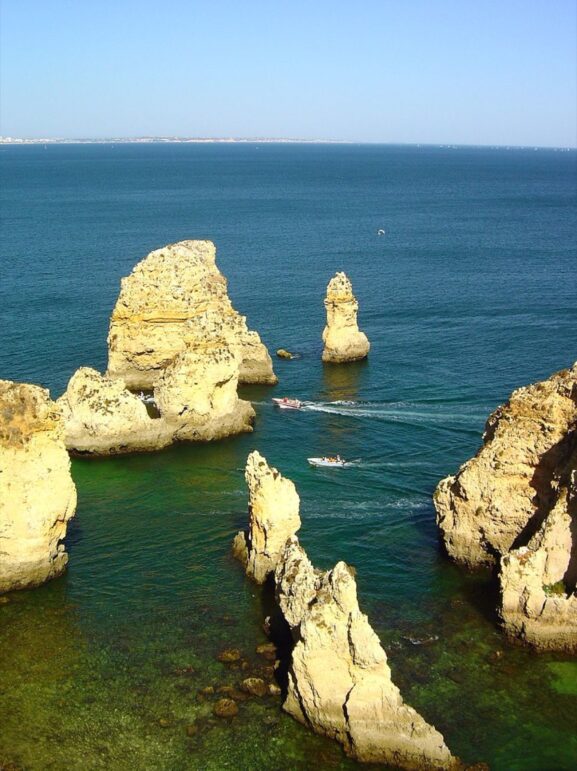
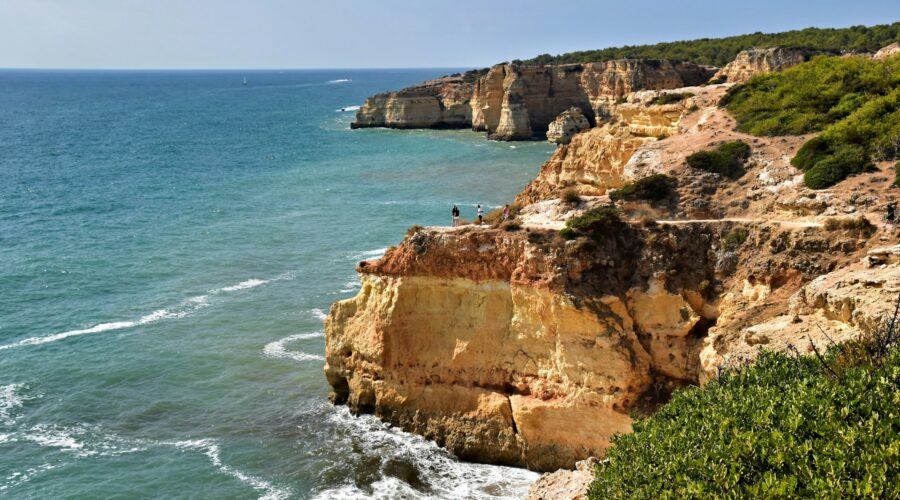
The Seven Hanging Valleys Trail, the walk from Arrifana to Ponta da Atalaia, and the full cliff loop at Pontal da Carrapateira — all are in their prime right now. The grass is green, the wildflowers are still visible in patches, and the wind is manageable. By late May the Serra de Monchique hills start to feel the heat; early May is the last call for comfortable elevation walking.
The bonus: some of the west-coast beaches — Praia do Amado, Praia da Amoreira — have their biggest low-tide windows of the year in May, exposing rock pools and sand that are covered in winter.
The Barrocal Interior
The limestone Barrocal zone between the coast and the mountains is at its most lush in early May. The orchard walks near São Brás de Alportel, the Quercus forest paths around Benafim — these inland routes stay green longest because of the soil moisture. By June they’ll be parched. Early May is the last comfortable window.
The pottery villages of the Barrocal — Porches, Tunes, Santa Catarina — are perfect for a combined walking-and-culture morning. Park in Porches, walk the quiet lanes, visit a working pottery studio, then take the back road to São Brás for lunch.
Ria Formosa and Eastern Algarve
The birdwatching season in Ria Formosa is winding down but not over. Flamingos are still present in March-April numbers through mid-May. The boardwalks at Quinta do Lago and the eastern islands are at their quietest in early May before the summer visitors arrive. Bring binoculars.
The Local Tip Nobody Tells You
If you’re planning a multi-day walk in the first two weeks of May, start early. Not because of crowds — there aren’t any yet — but because of wind. The northerly wind that dominates April begins to shift in May, bringing occasional strong afternoon gusts on exposed west-coast ridges. The solution is simple: be on the trail by 08:00, done by 12:00, and you’ll have the best conditions of the day. After 14:00, the wind can make exposed sections genuinely unpleasant.
Also worth knowing: the tourist information offices in Lagos, Portimão, and Tavira are fully staffed from early May onwards, and the local rangers on the Rota Vicentina are back at their posts. If you want trail condition updates from people who actually walk the routes, this is a better time to ask than March.
The Bottom Line
Early May is when the Algarve stops being a spring destination and starts being something better: a near-perfect hiking destination with empty trails, warm water, green hills, and no crowds. The only people who know this are the people who live here and a handful of repeat visitors who figured it out years ago.
Now you’re one of them.