
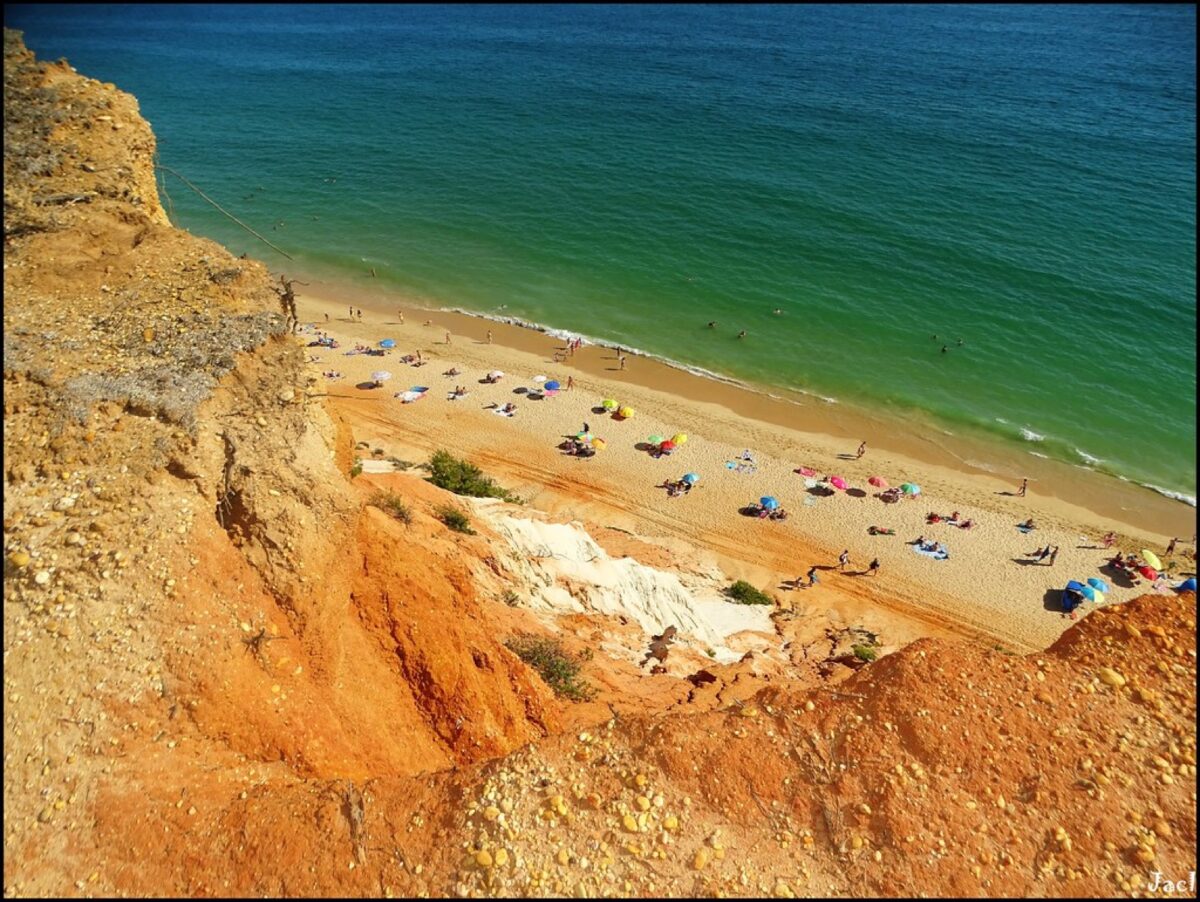
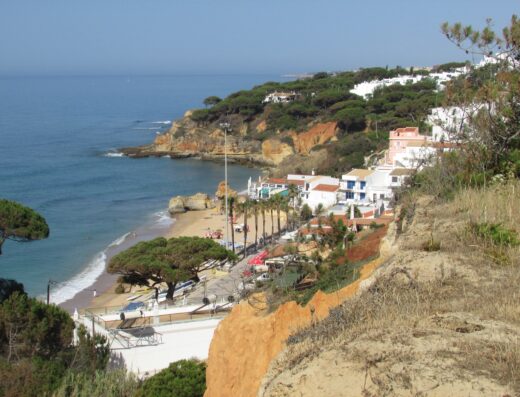
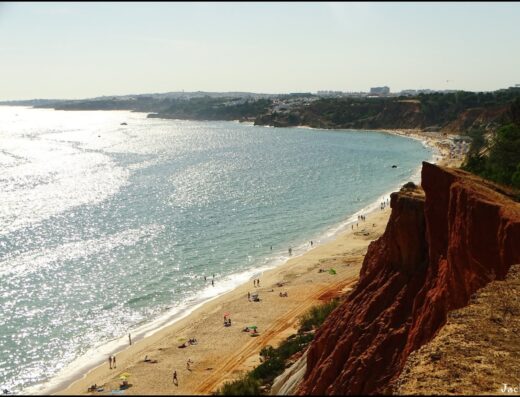
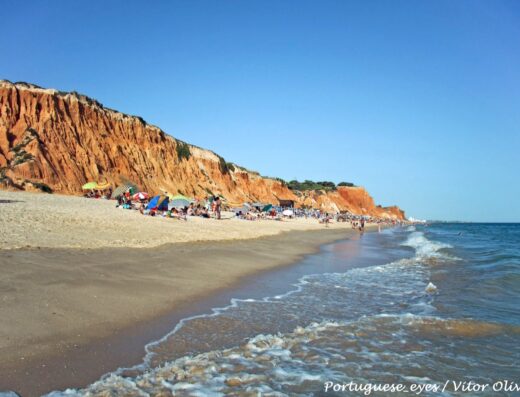
The name is the tell: belharucas is the local word for the bee-eaters that nest in holes in these red cliffs, and in late spring you’ll hear them before you see them. This is the western end of the great red-cliff run that peaks at Falésia, the same rust-and-gold walls topped with umbrella pines, with a fraction of the traffic, because access is by wooden stairways from the clifftop paths east of Olhos de Água rather than a big signposted car park.
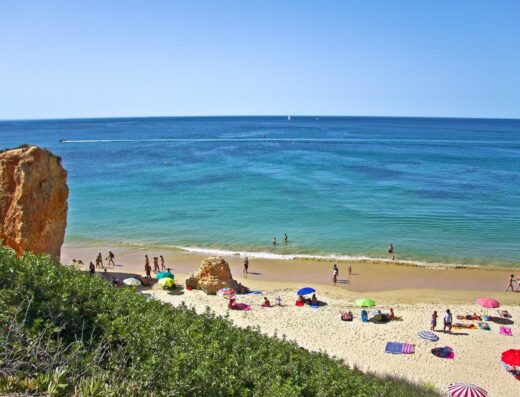
The beach is long, straight and generous, and it works two ways: as a quieter landing on a famous stretch of coast, and as a corridor: at low tide you can walk along the base of the cliffs toward Falésia proper with the colour scrolling past like a reel.
When to go: the cliffs catch low-angle light hard: the first and last hours of sun are when the red really burns, and midday goes chalky. Late spring adds the bee-eaters and green scrub on the clifftop; summer brings hotel guests down the stairways, but the density thins fast as you walk.
Who it’s for: photographers who want Falésia’s palette without Falésia’s numbers; birders with a long lens in May; long-beach walkers who measure a beach in kilometres, not sunbeds.
About This Spot
-
General AreaNear Olhos de Água, Albufeira
-
Coverage BadgeArchive
-
Difficulty2 Moderate
Getting There & Access
-
Getting ThereWooden stairways drop from the clifftop paths east of Olhos de Água; at low tide the beach also connects along the sand to its neighbours.
-
Access TermsFree Public
Photography Notes
-
Light & Sun NotesRed cliff faces that saturate in the first and last hour of sun and go chalky at midday.
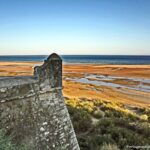
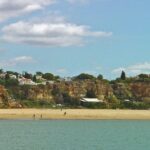
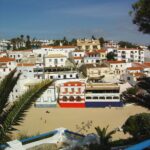
Visitor photos


Location
Log in free to see the exact pin and directions.

Leave a Reply
Been here? Add your shots.
Photos you add appear on this page with your name on them, next to the community gallery. Tell the next photographer what you found: the light, the crowds, whether it was worth the trip.
A free account also unlocks the exact pin, how to get there and the best time of day, on every spot.