
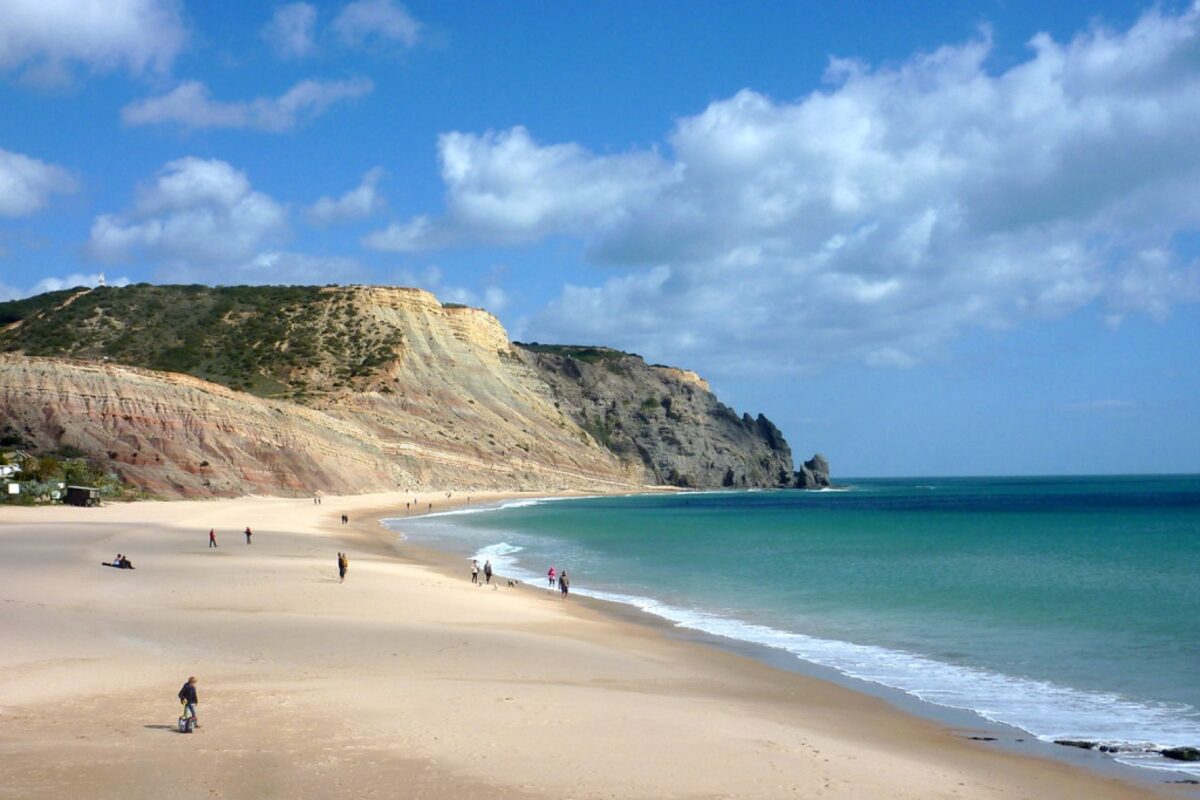
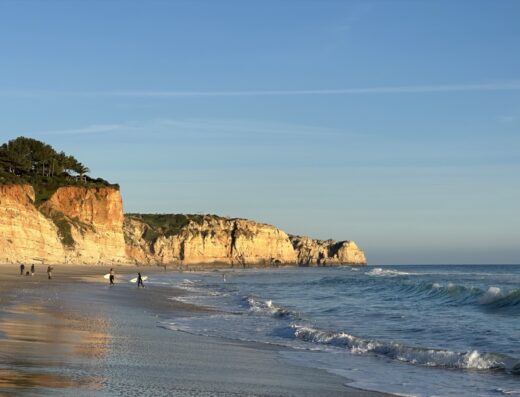
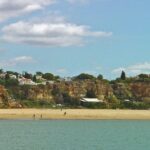
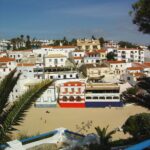
Luz wears two identities at once: a working resort town with sun beds in rows, and one of the west’s most quietly photogenic bays, because whichever way you point the camera, Rocha Negra finds its way into the frame. The black volcanic headland closes the beach’s eastern end like a full stop, and the contrast it makes with pale sand, white town and blue water is what keeps this bay on photographers’ cards long after the sun beds empty.
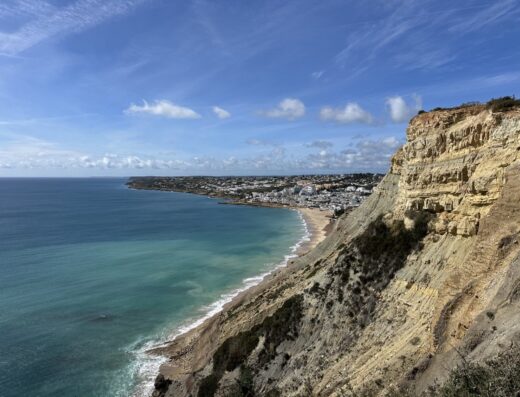
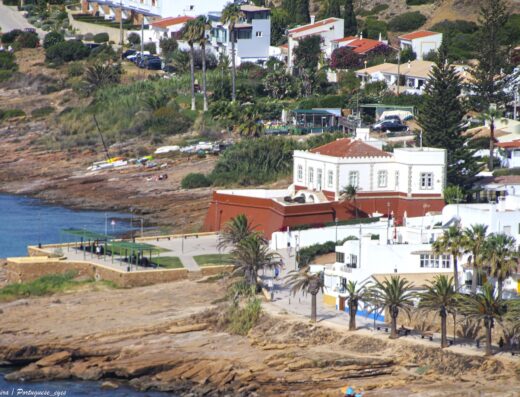
The classic frame is from the seafront promenade or the sand itself: the bay’s curve leading the eye to that dark wall of rock. Walk the shoreline east at low tide and the wet sand doubles everything; head up the low golden cliffs at the western end and you get an elevated angle back across the whole sweep. The white seafront church a few steps off the beach anchors the town side of the scene, palms and calçada included.
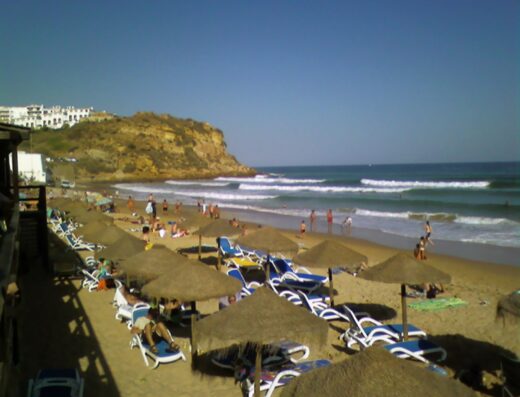
When to go: sunset is the honest answer. The light comes down the bay from the west and Rocha Negra turns to silhouette; in summer the after-beach hour empties the sand just as the colour arrives. Mornings are calmer, which is kinder for families and for clean, people-free frames. By mid-morning in high season the beach fills comprehensively; this is a resort town and it behaves like one.
Who it’s for: photographers who want a composed, walk-up beach scene with a dramatic anchor, and families who want the same beach without the drama. Pair it with the Rocha Negra clifftop itself, a separate spot, for the view from above.
About This Spot
-
General AreaNear Luz, Lagos
-
Coverage BadgeArchive
-
Difficulty1 Easy
Getting There & Access
-
Getting ThereLuz is signed from the N125 west of Lagos; the beach fronts the town and the promenade is a short walk from anywhere in the centre.
-
Access TermsFree Public
-
ParkingTown parking fills fast in season. Arrive early or walk in from the edges.
-
Best TimeSunset
-
Crowd LevelBusy
Photography Notes
-
Shooting NotesRocha Negra anchors the composition from almost anywhere on the bay. Low tide doubles the scene in the wet sand; the low cliffs at the western end give an elevated angle back across the sweep.
-
Light & Sun NotesEvening light runs down the bay from the west. Rocha Negra silhouettes at sunset. Mornings are soft and calm.
-
ConditionsSheltered compared with the west coast; summer haze can flatten the headland's contrast by midday.
Visitor photos


Location
Log in free to see the exact pin and directions.

Leave a Reply
Been here? Add your shots.
Photos you add appear on this page with your name on them, next to the community gallery. Tell the next photographer what you found: the light, the crowds, whether it was worth the trip.
A free account also unlocks the exact pin, how to get there and the best time of day, on every spot.