
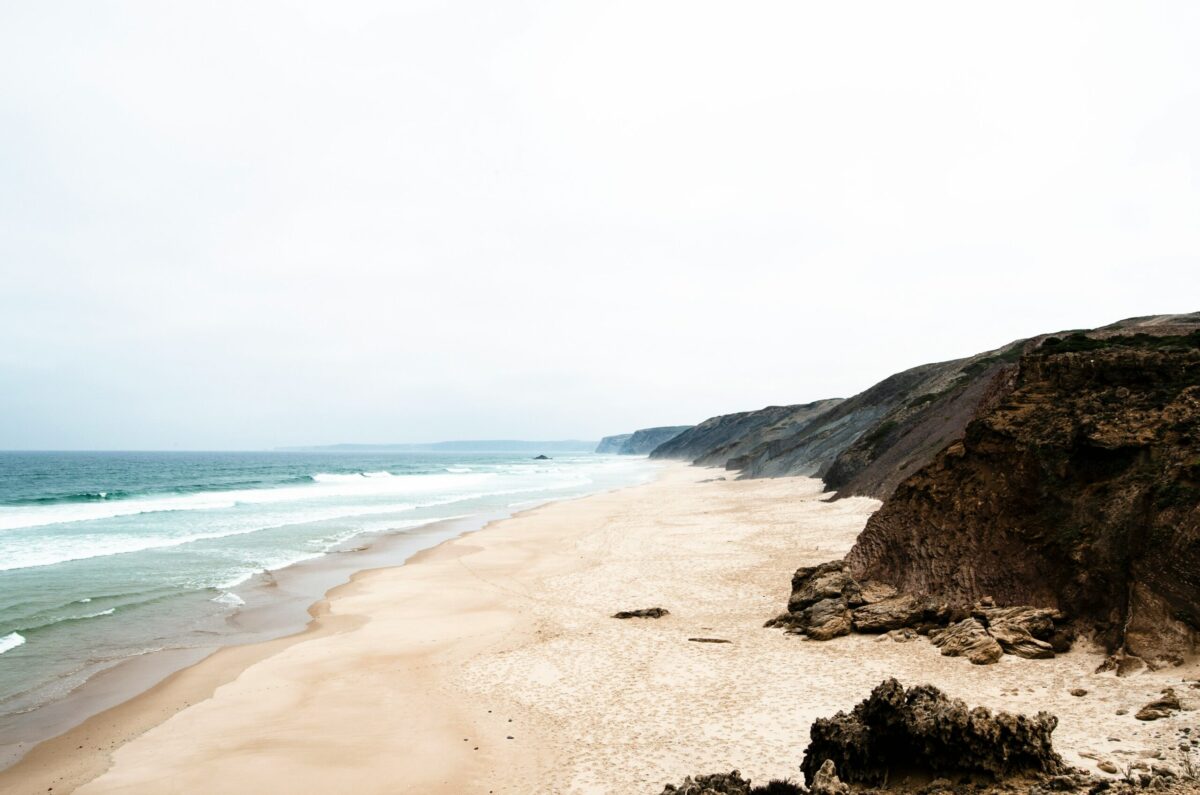
Praia da Bordeira sits at the end of a dirt track road in the Costa Vicentina Natural Park, 8 kilometres from the village of Carrapateira, and it looks nothing like the rest of the Algarve. In summer, when the sand is at its widest and the Atlantic is calm, it could almost pass for a Mediterranean beach. The rest of the year (and especially in spring, when the prevailing northwesterly Atlantic swell is at its most powerful) it looks like something from the Atlantic coast of Ireland: a three-kilometre sweep of exposed sand backed by high dunes, with nothing between you and West Africa but open ocean.
This is the beach that surfers in the know drive two hours from Lagos to reach. It is the beach that families with young children avoid because the Atlantic here is unpredictable and the sand is vast enough to lose people in. It is the beach that birdwatchers come to for the dune habitats and the wetland margins. And it is, by any honest measure, one of the most striking stretches of coastline in southern Europe: completely undeveloped, completely free, and completely indifferent to the resorts 30 kilometres to the south.
Praia da Bordeira is a wave-dominated beach (what coastal geomorphologists call a “dissipative” system), meaning the wide, gently sloping sand platform absorbs wave energy across a broad zone rather than concentrating it at the shoreline. This is what makes it simultaneously one of the most powerful and one of the most dangerous beaches in the region. The waves break far from shore, the currents are strong and variable, and the beach is not lifeguarded.
In autumn and winter, the Atlantic swells that arrive from the north and west can produce wave faces of 3 to 4 metres. The surf is consistent and hollow: excellent for experienced surfers, completely unsuitable for anyone else. The beach has a reputation, and it is well-earned.
Spring is the transition season. The big winter swells still arrive, but less frequently, and between them there are windows of smaller waves that are manageable for intermediate surfers. The wind, which in summer comes predominantly from the north and creates flat, clean conditions, starts to shift toward the more variable patterns of the shoulder seasons. The beach is empty compared to August. The light is lower and more interesting for photography. And the landscape (the high dunes, the flat wet sand, the cliffs at the southern end) is at its most dramatic before the summer grass greens everything out.
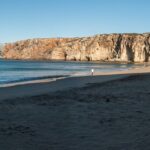
For non-surfers, the beach is simply one of the finest walking stretches in the region. Three kilometres of sand, no kiosks, no sun-loungers, no vendors. Walk north toward the cliff at the end of the beach and you find tidal pools and rock formations. Walk south toward the dune system and you find silence.
The southern third of Praia da Bordeira is defined by a substantial dune field, one of the most significant in the Costa Vicentina Natural Park. The dunes here are stabilised by marram grass and other specialist dune plants, and they support a distinct ecosystem that is different from both the beach and the inland scrubland. In spring, the dune margins bloom with yellow horned poppies, sea daffodils, and the purple of sea lavender.
The dune ecosystem is fragile: the plants that hold the sand in place are easily damaged by trampling, and the Costa Vicentina park management has fenced sections to allow regeneration. Walkers should stay on the beach and avoid walking through the dune grass. The beach itself is free to walk on and there is more than enough space.
The village of Carrapateira (a 15-minute drive from Bordeira) is one of the quieter spots on the Costa Vicentina coast and worth spending time in. It has two small cafés, a simple guesthouse, and a surf school. The local miradouro (viewpoint) on the road into the village looks north across the coastal plateau and is a good orientation stop before heading to the beach.
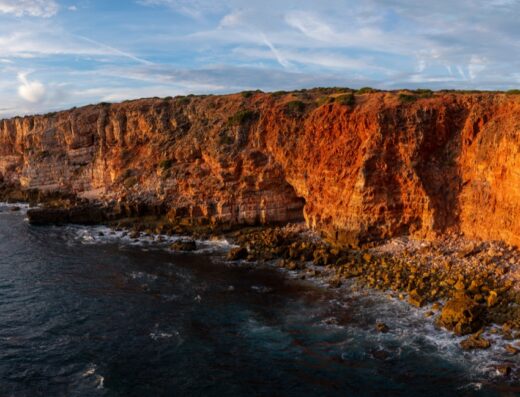
A smaller and more intimate cove beach ten minutes north of Carrapateira is also worth combining with a Bordeira visit. It sits beneath dramatic red cliffs and is different in character: smaller, more enclosed, with a different swell pattern. The two beaches together give a good picture of the diversity of the Costa Vicentina coast.
Praia da Bordeira is not a safe swimming beach for most people for most of the year. The Atlantic here is powerful and the currents are unpredictable. There are no lifeguards. Even in summer, when the swell is smaller, the waves break far from shore and the sand shelf is so gently sloping that the water can be deeper than it looks 20 metres from the waterline. If you want to swim, choose a day with a small swell and stay close to shore.
The surf at Bordeira is for experienced surfers only outside summer. If you are not an experienced surfer, do not attempt to surf here in autumn, winter, or spring. The beach has had rescues and, tragically, fatalities. Respect the ocean.
Bring water, sunscreen, and something to sit on: there are no facilities at the beach. The best months to visit are May and June, or September and October: the swell is smaller, the wind is less extreme, and the beach has space for everyone.
About This Spot
-
General AreaNear Carrapateira, Aljezur
-
Coverage BadgeArchive
-
Best SeasonSpring
-
Difficulty1 Easy
Getting There & Access
-
Getting ThereFrom Lagos, take the EN120 west toward Cabo de São Vicente. At Carrapateira village, follow the signs for Bordeira: a dirt track road heads south from the village centre for approximately 8 kilometres, ending at a basic car park near the beach. The road is passable for all vehicles in dry weather; in wet weather the low-lying sections near the beach can flood and the track becomes difficult for low-slung cars; 4WD or good ground clearance is an advantage in winter. No public transport; the nearest bus stop is in Carrapateira village, from where a taxi or bicycle is needed for the final 8 kilometres. From the car park, a short track leads to the beach: a 3 to 5 minute walk; sturdy shoes recommended as the track can be rough in places.
-
Access TermsFree Public
-
ParkingLarge informal free car park at the beach end of the track. Fills on summer weekends but rarely full in spring.
-
Crowd LevelQuiet
Photography Notes
-
Shooting NotesHigh dunes, flat wet sand and the cliffs at the southern end are at their most dramatic in spring, before the summer grass greens everything out. Tidal pools and rock formations at the northern cliff end; in spring the dune margins bloom with yellow horned poppies, sea daffodils and sea lavender.
-
Light & Sun NotesIn spring the light is lower and more interesting for photography than in summer.
-
ConditionsDissipative, wave-dominated beach: waves break far from shore, currents strong and variable, no lifeguards. Autumn/winter swells produce 3 to 4 m wave faces; summer north winds bring flat, clean conditions. Not a safe swimming beach for most people most of the year: water can be deeper than it looks 20 m from the waterline.
Visitor photos


Location
Log in free to see the exact pin and directions.

Leave a Reply
Been here? Add your shots.
Photos you add appear on this page with your name on them, next to the community gallery. Tell the next photographer what you found: the light, the crowds, whether it was worth the trip.
A free account also unlocks the exact pin, how to get there and the best time of day, on every spot.