The First Two Weeks of April: When the Algarve Delivers Its Best Walking Weather
The first two weeks of April occupy a narrow band on the Algarve calendar — a window that regular visitors describe in almost reverential terms. The wildflower bloom that began in February is reaching its final, most spectacular chapter. The Atlantic ocean is starting to warm from its winter lows. The summer heat that makes afternoon walking miserable from June onward has not yet arrived. And the land — the hillsides, the river valleys, the dune habitats — still holds the deep green of a winter-long accumulation of rain.
This is the best walking weather the Algarve produces all year. The question is not whether to come in early April. The question is how to plan around it.
The April Temperature Reality
Daytime temperatures in the first half of April typically range from 14°C to 22°C across the region. The central and eastern Algarve — around Silves, Tavira, the Barrocal — sit at the warmer end of that spectrum. The west coast, particularly around Carrapateira and Sagres, can be several degrees cooler when the north Atlantic wind is blowing.
Morning starts are genuinely cold by Algarve standards — expect 8-11°C before 9am in the interior. By mid-morning, conditions are usually ideal: clear light, mild temperature, light wind. By noon, you want shade or a completed walk, particularly on exposed coastal trails where there is no cover.
Nights remain cool enough for a light jacket on evening stargazing walks or post-dinner waterfront strolls in towns like Tavira or Lagos.
The Wildflower Final Act
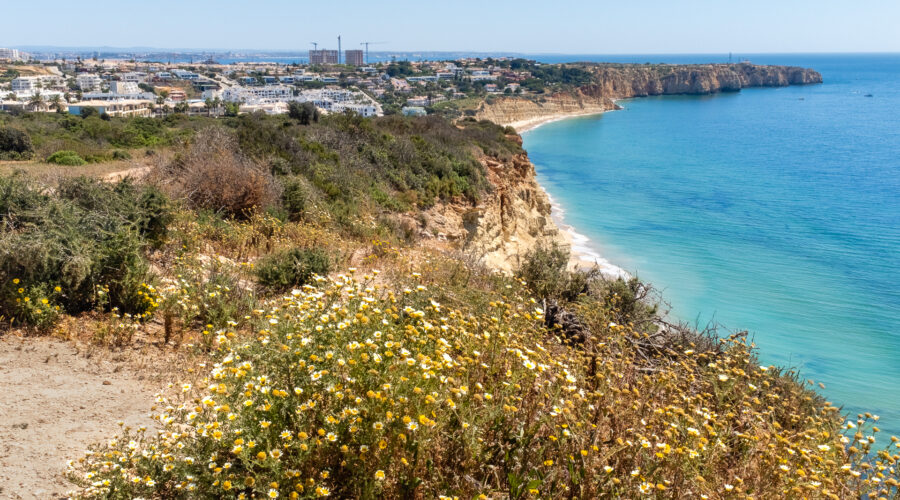
The orchids and anemones that drew visitors in February and March are largely past their peak by early April, but what replaces them is equally striking. The coastal cliffs around Sagres and the Rota Vicentina display a second wave of flowering — a second wave of flowering, with purple and yellow coastal blooms that thrive in the sandy soils of the Vicentine system. Inland, the Barrocal zone between Loulé and São Brás de Alportel remains rich with spring wildflowers.
Birdwatching remains excellent. Spring migration is in full passage — the raptor count at Cape St. Vincent can be spectacular in the right conditions, with honey buzzards, booted eagles, and occasionally black storks passing through.
The Trail Conditions Shift
April marks the transition from the wet-season trail conditions of January through March to the dry-season conditions that dominate from May onward. clay-heavy sections — particularly on the Via Algarviana inland sectors and the Silves to Monchique walk — begin to dry out in the first week of April, making them far more walkable than they were even two weeks earlier. By the second week of April, most of the region’s trails are at their best: firm underfoot, good grip, minimal mud.
The river valleys that were running high in March — the Ribeira de Odelouca, the Ribeira de Quarteira upper reaches — are still flowing but beginning to recede. Waterproof boots remain advisable on the lower sections of the Rota Vicentina’s Shoreline Trail, where crossings can still be tricky.
Practical Planning for Early April
The Easter week crowds arrive in the second half of April, which means the first two weeks offer substantially lower occupancy rates at accommodations and shorter queues at popular trailheads like the Seven Hanging Valleys boardwalk or the Rota Vicentina’s Arrifana start point. Booking accommodation for the Easter period itself should already be done — it is one of the most-booked weeks in the Algarve calendar.
Parking at the most popular coastal trailheads fills by 10am on fine weekends from mid-April onward. Arrive early or use public transport where available — Lagos and Portimão railway stations provide reasonable access to several trailheads by bus or taxi.
Where to Walk in Early April
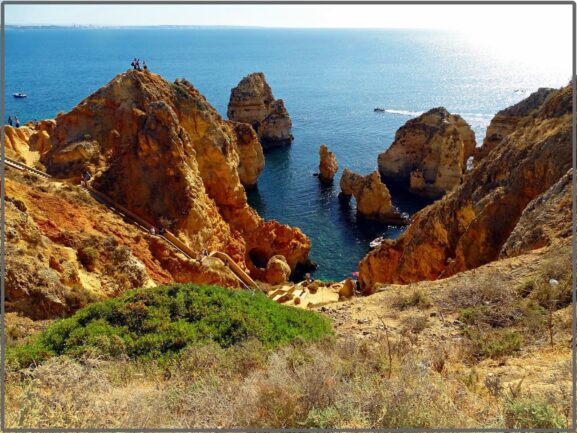
The Rota Vicentina’s Fishermen’s Trail is at its finest in early April — the wildflowers on the cliff-top sections are still vivid, the wind is manageable, and the ocean views are unobstructed by the haze that arrives with summer heat. The full trail is roughly 230 kilometres, but individual day segments between villages are easily walked independently.
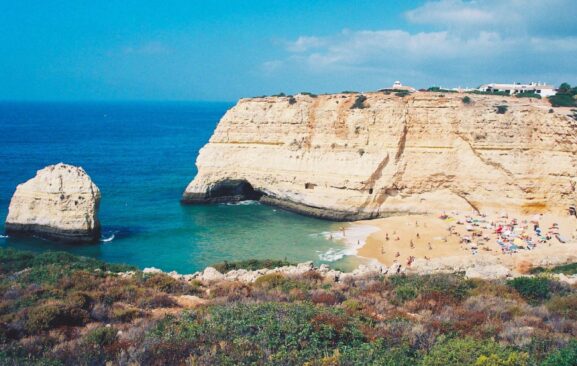
The Seven Hanging Valleys Trail between Carvoeiro and Benagil works well at this time of year, with the morning light hitting the cave formations from the east and afternoon shade arriving by 3pm on the exposed sections.
For something quieter, the Salgados lagoon boardwalk near Guia offers a morning birding walk — flamingos and waders are present, and the new hide overlooking the water provides free viewing without disturbing the birds.
The Local Safety Note
April marks the return of higher ultraviolet index values across the Algarve. The sea haze that reduces summer visibility also filters UV radiation, but in April the sky is often clear and the UV index can reach 7-8 by mid-morning. Apply sunscreen before starting any morning walk, particularly on the west coast and at elevation on the Via Algarviana’s Foia sector. The brief cloud cover that can appear in the afternoon often disappears quickly — do not assume overcast conditions will persist through a full day’s walk.
—
This guide covers the period from 1 to 14 April 2026. Current trail conditions should always be checked with the Rota Vicentina or ICNF before starting any long-distance walk.