Kayaking the Sea Grottos Near Lagos: Which Caves to Paddle and How to Get There
Photo: Portuguese_eyes · Flickr · CC BY-SA 2.0
Benagil gets the most attention, but sea grottos and cliff caves near Lagos, Lagoa and Portimão are also accessible by kayak. Smaller coves near Carvoeiro may offer a quieter paddle. Here is the practical breakdown of which areas to consider and how to reach them.
What you will encounter
The caves along this stretch of coast are karst formations, created as water eroded the limestone over millions of years. They range from small overhangs to large arched chambers that you can paddle into when conditions and access rules allow. Some have openings where you can swim at low tide. Others are inaccessible from the water and visible only from the cliff path above.
Zones and access points
Near Lagos: Ponta da Piedade and the Lagos grottos
The coves around the Ponta da Piedade lighthouse are the main grotto area near Lagos. Water access depends on the swell, with calm mornings providing the more reliable window. Several small grottos and arches are visible from the water.
Departure: Launch options include Lagos marina and Praia de São Roque. Confirm current equipment availability locally and allow enough time for an unhurried circuit.
Conditions: Morning is generally preferable before the afternoon wind develops. Check the swell and local forecast before launching, including during summer.
Near Benagil: choosing a launch point
Algar de Benagil is accessible only by water. Kayaks and paddleboards can launch from Praia de Benagil next door, while licensed boat trips depart from nearby harbours. Rules governing entry and stopping inside the cave have changed in recent years, so check the current restrictions locally before setting out.
From Portimão or Praia da Rocha: This is a substantially longer coastal route than launching at Praia de Benagil. Confirm the route distance, weather, swell and landing options locally before attempting it. Do not treat it as a casual alternative when conditions are uncertain.
From Praia de Benagil: This is the closest launch for the cave. Parking above the beach is very limited and fills early during the main season. Be prepared to park farther along the approach and walk down.
The Benagil cave itself: Calm water is essential because meaningful swell makes the entrances dangerous. Tide level affects the space inside, and seasonal traffic can be heavy. Check current access rules before entering or stopping in the cave.
Near Carvoeiro: smaller coves
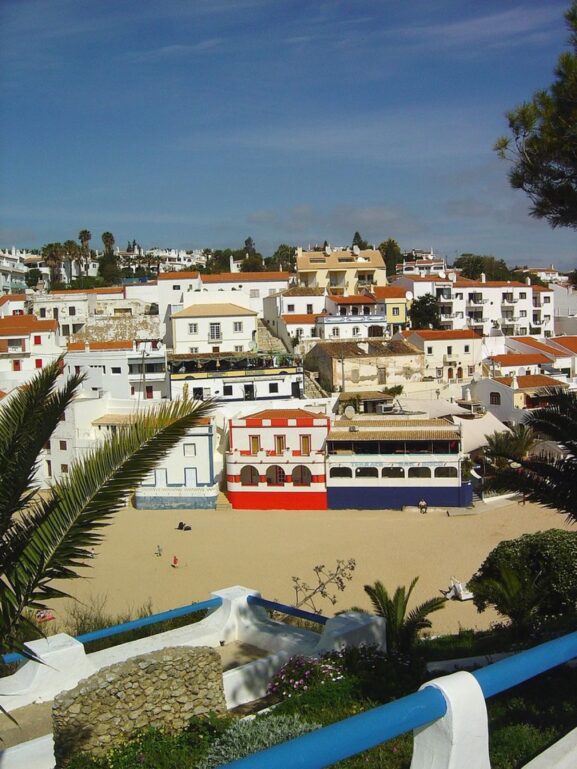
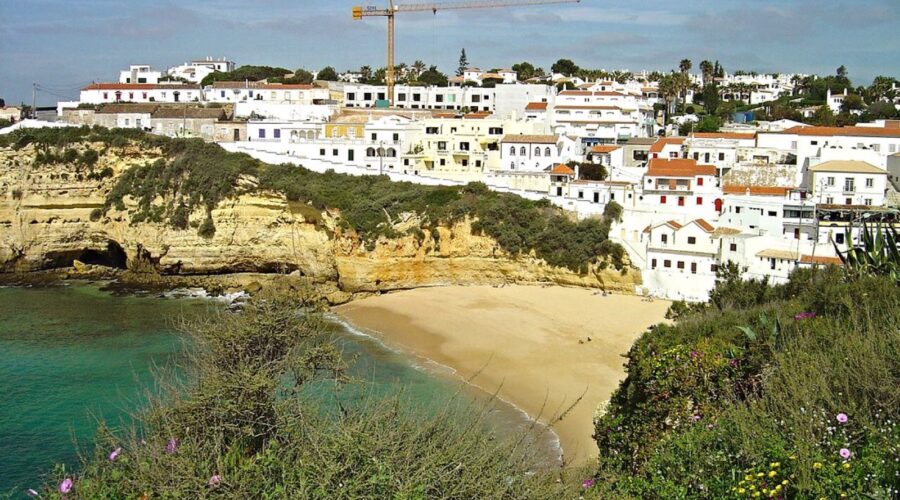
Several smaller grottos are tucked into the cliff base between Benagil and Carvoeiro. They do not have the scale of Algar de Benagil, but they may be less congested. From Praia de Benagil, follow the coastline toward Carvoeiro and choose a turnaround point based on swell, wind and your remaining energy.
Estômbar is not a coastal turnaround point for this route. Keep the paddle within the Benagil and Carvoeiro shoreline and identify a safe return point before launching.
Near Albufeira: Olhos de Água and the route toward Vilamoura
From Olhos de Água, near Albufeira, you can paddle along the coast toward Vilamoura when conditions allow. The caves here are smaller than those near Benagil, but the beach provides a practical local launch for people staying around Quarteira or Vilamoura. Low tide is useful around Olhos de Água because it exposes the freshwater springs. Check the rocks, wind and swell before launching.
What you need
- Kayak or paddleboard: Equipment may be available around Lagos marina, Portimão marina, Praia da Rocha and Praia de Benagil. Check availability, rental periods and current pricing locally. A paddleboard is harder to manage when swell or wind develops.
- Waterproof bag: Protect your phone, keys and anything else that must remain dry. Paddle spray reaches most exposed equipment.
- Water shoes or sandals: Wear suitable footwear when launching or landing on rocky shores, where sharp rock and barnacles can cut bare feet.
- Sun protection: There is no shade on the water. Take a hat, sunscreen and a long sleeved shirt if you burn easily.
- Dry clothes: Carry a change of clothes in a waterproof bag for the return journey.
Tide and season considerations
Smaller grottos may become inaccessible as the tide rises, while the available space inside larger caves changes with tide and swell. Check tide tables before departure and reassess conditions at the launch. A favourable tide does not make an exposed entrance safe when there is significant swell.
Season: Late spring through early autumn often brings more suitable paddling opportunities, but conditions vary from day to day. Summer is also the busiest period around Benagil. For a quieter attempt, launch early in the morning and check current access restrictions before leaving shore.
Coasteering as an alternative
Coasteering combines swimming, jumping and climbing in coastal areas near Sagres and elsewhere on the western Algarve coast, including around Arrifana. It is a scrambling and swimming activity through the intertidal zone, not a paddling route. It has different equipment and safety requirements, so it should be planned separately from a kayak trip.
Decision guide
Choose Benagil if: Seeing Algar de Benagil is the main purpose of the trip. Praia de Benagil is the closest kayak or paddleboard launch, but parking is limited and the water can be crowded. Check the cave access rules and sea conditions locally.
Choose Ponta da Piedade if: You are staying in Lagos and want a local morning paddle without driving to Benagil. Launch from Lagos marina or Praia de São Roque and go only when the swell permits safe water access.
Choose the coves near Carvoeiro if: You want smaller grottos and a route that may be quieter than the main Benagil approach. From Praia de Benagil, paddle toward Carvoeiro and set the turnaround point according to conditions.
Choose Olhos de Água if: You are based around Albufeira, Quarteira or Vilamoura and want a closer local launch. Check the tide, rocks and weather before setting out.
Benagil offers the familiar landmark cave. The smaller coves may be the better decision when crowd levels, sea conditions and convenient access matter more than seeing a particular formation.