Reading the Cliffs of Praia da Falésia: A Geological Story in Sandstone Layers
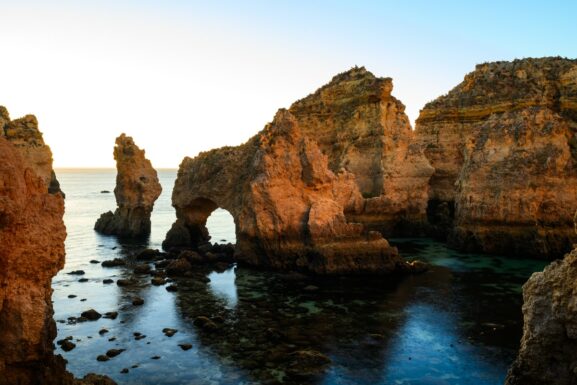
Photo: Kolforn · Wikimedia Commons · CC BY-SA 4.0
This article was last updated in April 2026. The cliff face is most vivid in morning and late-afternoon light; midday sun reduces the colour contrast.
Why Praia da Falésia is more than a beach
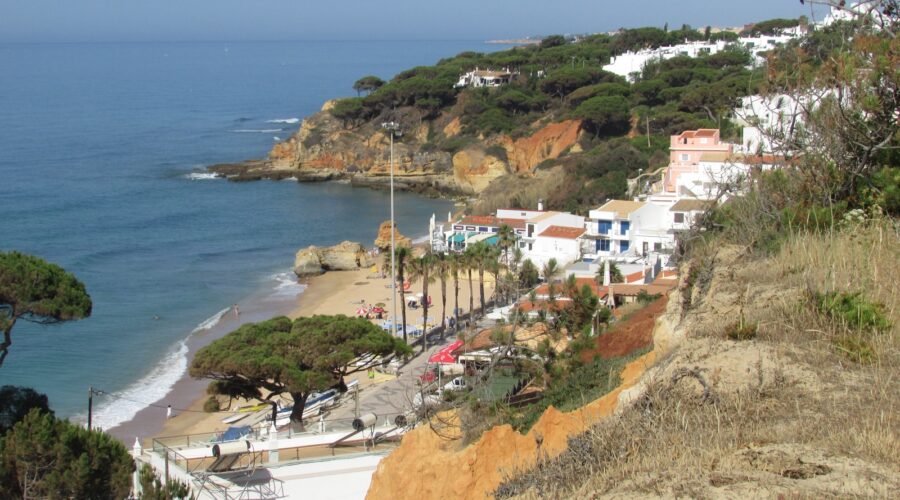
Praia da Falésia is a long stretch of sand backed by a layered cliff face between Olhos de Água and the Vilamoura area. Most visitors come for the beach. The cliffs offer a second reason to pay attention.
The exposed face records successive periods of sediment deposition. Differences in grain size, mineral content, water movement and weathering have produced visible bands in shades of red, orange, ochre and pale cream.
Reading the cliff is optional, but it changes how you look at the beach.
What you are seeing: the basic geology
The cliffs consist largely of layered sandy and clay-rich sediments. Erosion and weathering expose cross-sections of those deposits, making changes in colour and texture easy to see from the beach.
Key features to look for:
- Colour changes: Iron-bearing minerals contribute to the red and orange staining, while sandier sections tend to appear paler.
- Irregular boundaries: Some bands are level, while others curve, narrow or end abruptly. These shapes reflect changes in the way sediment was deposited and later disturbed.
- Staining patterns: Water moving through the cliff carries minerals and leaves streaks or patches of stronger colour.
- Slumping: Sections of the upper cliff sometimes collapse onto the beach. Water can weaken the sediment, particularly after rain.
Where to stand for clear views
The beach can be approached from the Olhos de Água side at the western end, from access points along the central section and from the Vilamoura side at the eastern end. Conditions vary with the tide, weather and season.
From the Vilamoura side: Walk west along the sand and look back across the longer cliff line. Late-afternoon light can strengthen the contrast between the coloured bands.
From the Olhos de Água side: Walk east for views along the base of the cliffs. Check the tide before relying on continuous passage along the sand.
Clifftop paths provide another perspective, but access and barriers vary. Stay well back from exposed edges.
Photography notes
- Time of day: Early morning or late afternoon usually reveals more texture than midday light.
- Season: Spring and autumn can offer comfortable conditions for walking, although weather and beach access remain variable.
- Lens: A wide-angle lens can include the beach and the full cliff face. A telephoto lens can isolate individual bands, erosion patterns and mineral staining.
- Weather: Overcast light can make subtle layers easier to distinguish. Direct sunlight creates stronger shadows but can reduce detail in pale sections.
How Praia da Falésia compares with other Algarve cliffs
Praia da Falésia should not be treated as a continuation of the limestone scenery found on parts of the central and western Algarve coast. Its softer, coloured sediments create a different profile from the pale limestone cliffs and rock formations seen elsewhere in the region.
This makes the beach useful for comparison: at Praia da Falésia, look for colour bands, mineral staining, gullies and slumped sediment rather than caves, arches and sharply cut limestone stacks.
Visiting logistics
- Beach access: There are several access points along the beach, but some involve long stairways or steep approaches. Check the chosen access point if steps are a concern.
- Parking: Parking availability and restrictions vary by access point and season. Arrive earlier during busy summer periods and check signs locally.
- Facilities: Facilities vary along the beach and may be seasonal. Check locally before setting out.
- Walking conditions: Sand, stairs and exposed clifftop sections can make the route unsuitable for some visitors. Wind, heat and tides should be considered before a longer walk.
Bottom line
Praia da Falésia rewards a slower look. Instead of treating the cliffs as a backdrop, use the changes in colour, texture and shape to follow how the exposed sediments vary along the beach. Even a short walk from an access point is enough to compare several sections.
Know before you go: Do not stand directly below the cliff face. Material can fall without warning, especially after rain. Keep a safe distance from the base, obey warning signs and barriers, and stay well back from clifftop edges. Check tide and weather conditions before walking far along the sand.