
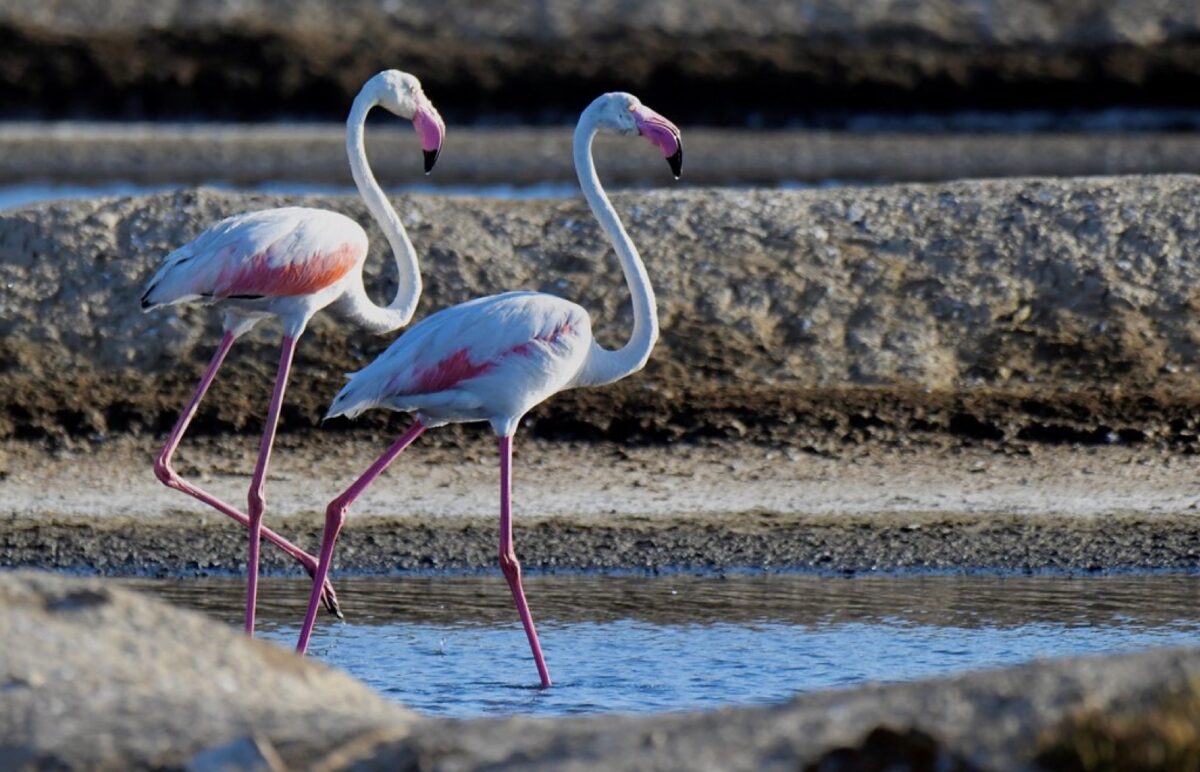
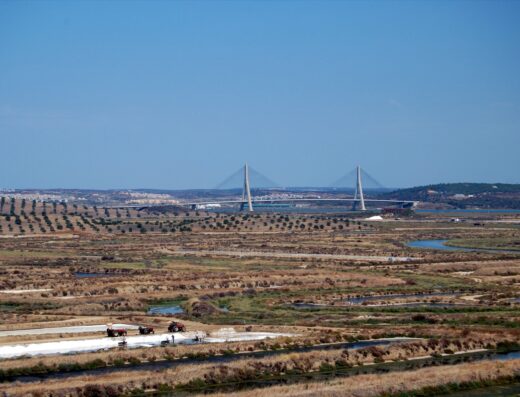
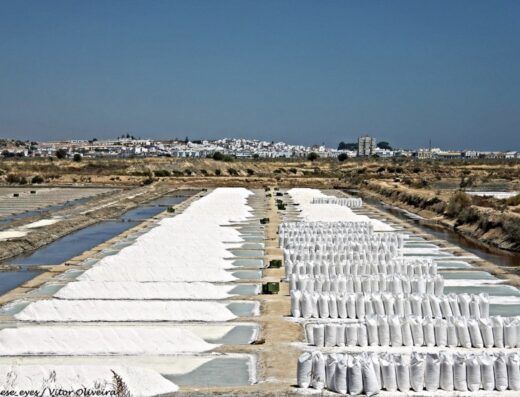
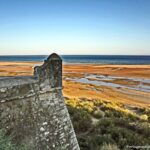
Portugal’s first nature reserve is not a mountain range or a forest. It is this marsh. The Sapal de Castro Marim e Vila Real de Santo António was protected back in 1975, and the reason is easiest to see from behind a long lens: flat tidal marshland and old salinas spreading toward the Guadiana, worked by flamingos, spoonbills, black-winged stilts and wintering waders in numbers the coast’s busier lagoons struggle to match.
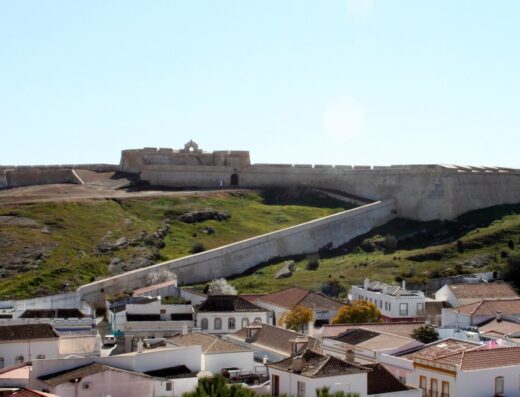
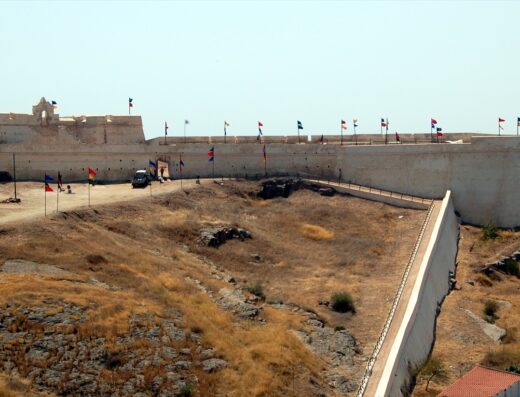
The signature frame is layered: a flock of flamingos lifting pink off the water with the walls of Castro Marim’s castle and forts stacked on the skyline behind: birds, marsh and border fortress in one exposure. Between those moments the reserve is about patience and geometry: channels, dykes, salt-tolerant scrub in rust and olive, and a horizon that goes on.
When to go: winter is the strong season: flamingo flocks at their biggest and the light low all day. Spring adds nesting storks and green edges. Summer is harsh: no shade, heavy heat haze by mid-morning, and quieter water.
The walking is flat and easy but completely exposed: dirt tracks, no cover, and the birds keep their distance, so bring the longest lens you own and work the early hours before the haze builds.
Who it’s for: bird photographers first, patient landscape shooters second, and anyone who wants proof that the eastern Algarve’s flatlands hold more life than the postcard coast.
About This Spot
-
General AreaNear Castro Marim, Castro Marim
-
Coverage BadgeArchive
-
Best SeasonWinter
-
Difficulty2 Moderate
Getting There & Access
-
Getting ThereThe marsh spreads between Castro Marim village and the Guadiana; flat dirt tracks lead into the reserve from the village edges.
-
Access TermsFree Public
-
Best TimeMorning
-
Crowd LevelQuiet
Photography Notes
-
Shooting NotesThe layered signature: flamingos lifting off the water with Castro Marim's castle and forts stacked on the skyline behind. Long-lens territory. The birds keep their distance.
-
Light & Sun NotesWinter keeps the light low all day; in warmer months heat haze builds over the flats by mid-morning, so work the early hours.
-
ConditionsCompletely exposed: no shade, and wind runs unchecked across the flats. Bird numbers peak with the wintering flocks.
Visitor photos


Location
Log in free to see the exact pin and directions.

Leave a Reply
Been here? Add your shots.
Photos you add appear on this page with your name on them, next to the community gallery. Tell the next photographer what you found: the light, the crowds, whether it was worth the trip.
A free account also unlocks the exact pin, how to get there and the best time of day, on every spot.