
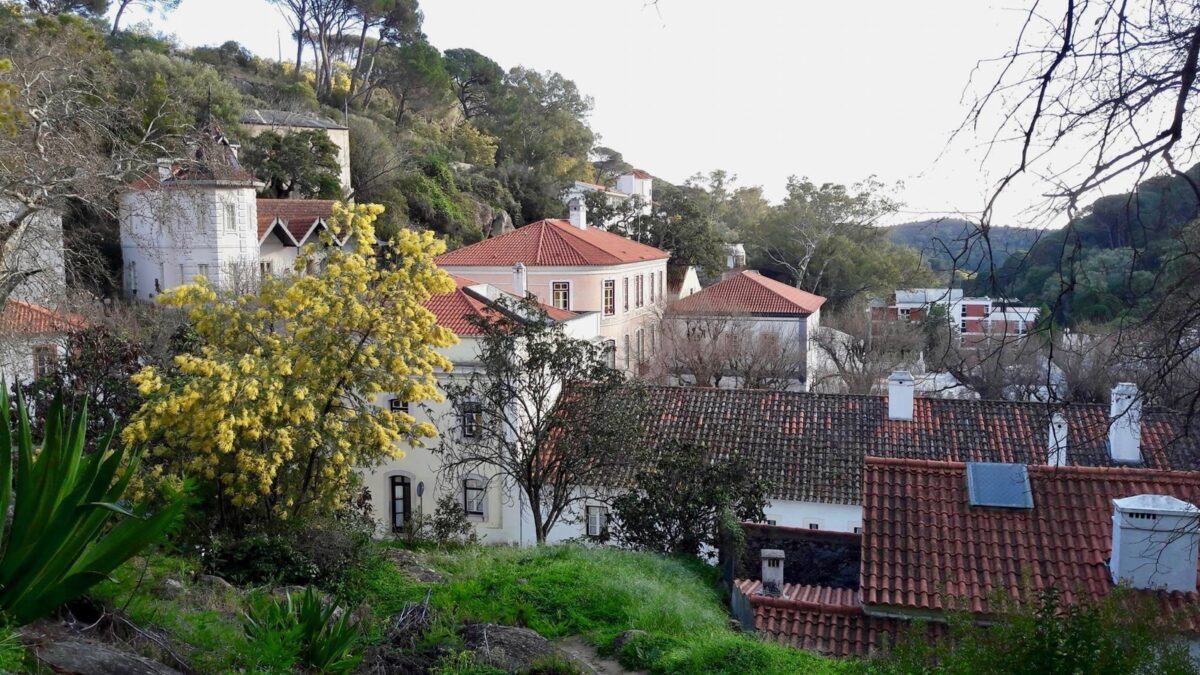
Caldas de Monchique feels imported from somewhere further north: a tiny thermal hamlet tucked into a steep, wooded ravine on the climb up to Monchique, all pastel façades, ornamental verandas and big old trees closing overhead. The Romans took the waters here; the current architecture is mostly a 19th-century spa fantasy, and the whole ensemble has a faded storybook quality that photographs unlike anywhere else in the Algarve.
The heart of it is the small central square under the canopy (dappled light, painted buildings, café tables) with lanes and stairs winding off into the greenery. Below the hamlet, paths drop into the stream valley, where the woods turn genuinely lush: this ravine holds moisture the rest of the region only dreams about.
When to go: morning or late afternoon, when low light slips under the canopy instead of fighting it. In high summer the shade makes it one of the coolest places in the Algarve on a hot day; after autumn rain the ravine is at its greenest and the stream actually sounds like one.
It’s a stop, not a day: an hour covers the hamlet and a walk into the woods, and it pairs naturally with Fóia and Monchique town on the same climb. The centre is pedestrian; expect uneven cobbles and stairs.
Who it’s for: architecture and detail shooters, anyone building a Monchique day trip, and travellers who want the Algarve’s odd corners rather than its beaches. Romantics do well here; minimalists may find it kitsch. Honestly, it’s a bit of both.
About This Spot
-
General AreaNear Caldas de Monchique, Monchique
-
Coverage BadgeArchive
-
Difficulty1 Easy
Getting There & Access
-
Getting ThereSigned just off the main road that climbs from the coast to Monchique. Leave the car at the edge of the hamlet. The core is pedestrian.
-
Access TermsFree Public
-
ParkingSmall lots at the edge of the hamlet.
Photography Notes
-
Shooting NotesThe canopy-covered central square is the set piece (pastel façades, café tables, dappled light), with lanes and stairs winding into the greenery. Paths below the hamlet drop into the lush stream valley.
-
Light & Sun NotesMorning or late afternoon, when low light slips under the canopy instead of fighting it.
-
ConditionsDeep shade keeps it cool on the hottest days; after autumn rain the ravine is at its greenest and the stream runs properly. Cobbles and stairs are uneven.
Visitor photos


Location
Log in free to see the exact pin and directions.


Leave a Reply
Been here? Add your shots.
Photos you add appear on this page with your name on them, next to the community gallery. Tell the next photographer what you found: the light, the crowds, whether it was worth the trip.
A free account also unlocks the exact pin, how to get there and the best time of day, on every spot.