Cape St. Vincent: Where Europe’s Edge Meets Its Most Spectacular Coastal Wildflowers
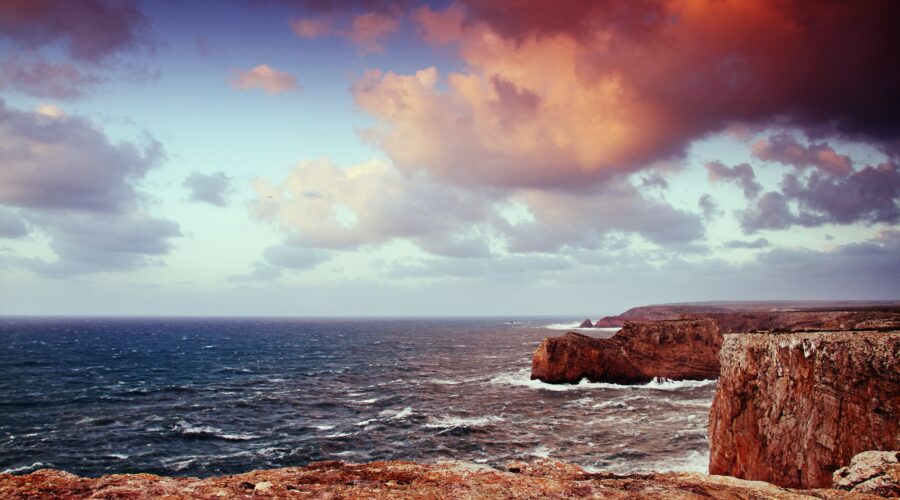
At the southwestern edge of Europe, where the Atlantic crashes against 60-meter cliffs, something extraordinary happens in spring. The salt-sprayed dunes and wind-battered shrubs explode into color — creating one of Portugal’s most unlikely floral displays.
This is Cape St. Vincent in March. And it’s unlike anywhere else in the Algarve.
Why This Works Now (March 2026)
- Peak wildflower season — March-April, the sand dunes and ‘matos’ (coastal shrub) burst with blooms
- Unique ecosystem — “probably the best place to see the full potential of coastal plants in challenging conditions”
- Shoulder season — fewer tourists, comfortable temperatures, dramatic spring skies
- Iconic location — Europe’s most southwesterly point, 200m cliffs, historic lighthouse
The Location
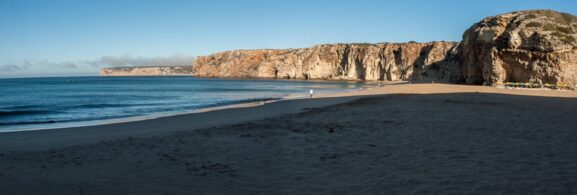
Cabo de São Vicente (Cape St. Vincent) marks the southwestern tip of Europe. The protected natural park here preserves a remarkable landscape where:
- Marram grass stabilizes the dunes
- Evergreen Candytuft forms “brilliant white pincushions”
- Sea stock paints the cliffs pink
- Purple snapdragons cling to rocky crevices
- The lovely white-flowered Cistus palhinhae dominates
What Makes This Walk Special
- Dramatic geology — 60m cliffs, sea caves, dramatic rock formations
- Unique flora — coastal plants adapted to salt spray and wind
- Historical significance — ancient lighthouse, strategic military location, Saint Vincent’s tomb
- Photography — wildflowers with dramatic cliff backdrop, Atlantic horizon
Practical Walk Information
- Distance: 3-5km loop from the parking area
- Difficulty: Easy to moderate, some steep sections
- Starting point: Parking near the lighthouse (paid, ~€3)
- Best time: Early morning (wind less strong, better light)
- What to bring: Layers (windy!), camera, water
Getting There
- From Sagres: 8km west, ~15 minutes by car
- From Lagos: ~30km west via the N268 coastal road
- Parking: Paid lot near the cape (cash/card)
The Experience
Walk the perimeter trail in late March and you’ll see:
- Yellow Lotus creticus dotting the dune base
- White Candytuft blanketing sheltered pockets
- Pink sea stock along the cliff edges
- Storks nesting on the lighthouse structures
- Seabirds wheeling in the updrafts below
Local Safety Note
- Stay on marked paths — cliff edges can be unstable
- Wind can be fierce — hold onto anything loose
- Don’t approach cliff edges in wet conditions
- Watch birds during for nesting breeding season