Praia da Amoreira: The River-and-Ocean Beach Day That Feels Like Two Trips in One
Why Praia da Amoreira Feels Like a Secret (Even When It Isn’t)
If the Algarve had a mood ring, Praia da Amoreira would be that warm, golden hue somewhere between lazy and adventurous. It’s the beach you end up falling a little bit in love with without quite realising when it happened.
Set on the wild west coast near the village of Aljezur, Amoreira is where the river Ribeira de Aljezur curls gently into the Atlantic. That means you get two completely different vibes in one place: soft, family-friendly shallows in the river, and wide, wave-washed ocean on the other side. It’s the kind of spot where everyone in a mixed group mysteriously stops complaining and just… settles into holiday mode.
Where Exactly Is Praia da Amoreira?
Praia da Amoreira sits just north of Aljezur, in the Costa Vicentina Natural Park on the western edge of the Algarve. It’s noticeably wilder than the postcard bays of the south coast, with big skies, rolling dunes, and cliffs where the wind actually has opinions.
- Closest town: Aljezur (about 10–15 minutes by car)
- From Lagos: around 35–40 minutes by car
- From Faro: roughly 1 hour 30 minutes by car
The road down from Aljezur winds through countryside and ends in a small cluster of beachside buildings and car parks. It’s very much a “drive almost to the sand” kind of place, which is perfect if you’re hauling kids, coolers, or half a Decathlon store’s worth of beach gear.
Who Will Love This Beach?
Praia da Amoreira is one of those rare Algarve beaches that manages to work for completely different types of travellers:
- Families with kids: The river side usually has calmer, shallower water that’s perfect for paddling, sandcastle engineering, and small inflatable armada launches. At low tide it turns into a giant natural paddling pool.
- Beginner surfers & bodyboarders: On the ocean side, the sandbank can serve up friendly, rolling waves on many days. You’ll often see surf schools using it as a classroom.
- Walkers & daydreamers: The surrounding dunes and cliffs hide short walking trails with big views. It’s easy to grab a path up from the parking area and do a little loop above the beach.
- People who like their beaches a bit wild: There are facilities, but not too many. You still feel like you’re in nature, not a resort brochure.
What to Expect When You Arrive
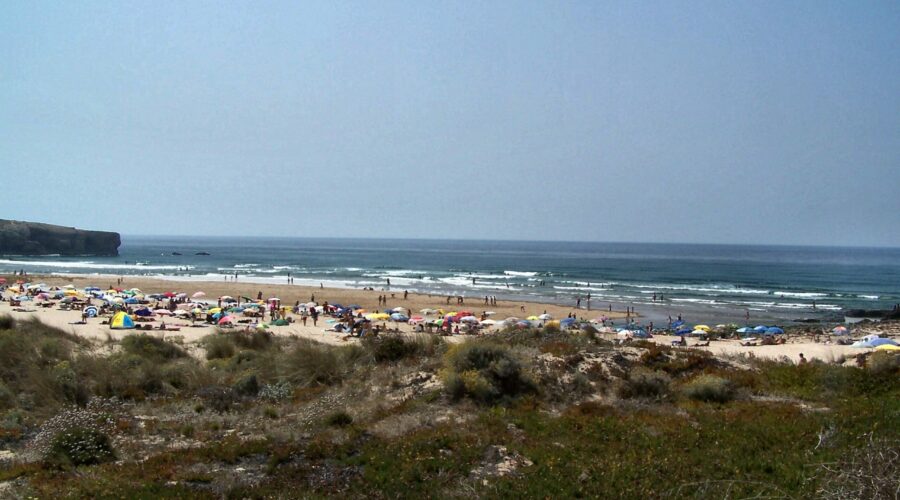
From the car park, the views open up quickly: tawny dunes, a broad strip of sand, the river snaking in behind it, and the Atlantic doing its dramatic Atlantic thing in the background.
The beach itself is long, wide, and sandy, especially at low tide. You can walk for ages along the waterline, watching the waves roll in on one side and the river curling on the other. On busy summer days it gets lively near the main access points, but you can almost always find space if you’re willing to walk a little further.
Facilities are simple but welcome:
- Several parking areas close to the sand (they can fill up in August — arrive earlier if you can).
- One or two beach restaurants / cafés depending on the season, usually serving grilled fish, petiscos (snacks), and the all-important cold beer and coffee.
- Toilets near the main access and establishments (summer only).
Outside of July and August, the whole place calms right down. You might share the sand with a few surfers, a dog walker or two, and a couple of vanlifers making coffee with absurdly good views.
Swimming, Surfing, and Staying Safe
This is the wild west coast, so the ocean side of Praia da Amoreira can have strong waves and currents. In summer there are usually lifeguards on duty in the main bathing area, and it’s always worth following their flags and advice.
- River side: Generally calmer and better for kids and less confident swimmers, especially at lower tide levels.
- Ocean side: Great for playing in the waves, bodyboarding, and beginner surfing on the right days, but always keep an eye on conditions.
- Footwear tip: At low tide, little rock pools appear and the sand can hide the odd shell or pebble, so water shoes aren’t a bad idea for sensitive feet.
Small Local Tips from Someone Who Lingers
- Time your visit with the tide: Low tide = more sand, easier river paddling, and room to spread out. High tide pushes the water much closer to the dunes, which feels dramatic but can be a bit tighter on space.
- Stay for sunset if you can: The sun drops straight into the ocean here, painting the cliffs and dunes in ridiculous gold and pink. Bring a jumper — the breeze cools down quickly after the sun disappears.
- Combine it with Aljezur: Spend the morning exploring the old town and castle in Aljezur, then roll down to Amoreira for a lazy afternoon swim and dinner by the sea.
- Pack for a mini-microclimate: It can be noticeably cooler and windier here than on the south coast. A light layer and something to weigh down your beach towel will earn you instant “I’ve done this before” status.
Why Amoreira Ends Up in People’s Personal Top 5
Praia da Amoreira doesn’t shout for attention. It just quietly offers you a river, an ocean, dunes, cliffs, big sunsets, and enough space to breathe. It’s the sort of beach where you come for a quick look and end up cancelling your dinner plans because the light is too good and your toes are too happily sandy to move.
If you’re building your Algarve itinerary and wondering whether the west coast is worth the detour: yes. Start with Praia da Amoreira, and let it gently adjust your definition of “perfect beach”.