Praia da Arrifana: Surfers’ Cliffside Hideaway
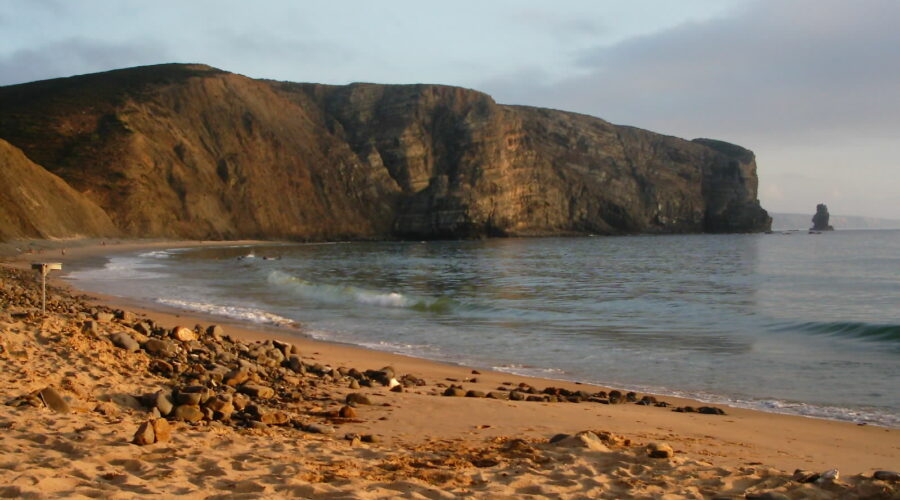
If the Algarve had a secret level just for daydreamers and wave-chasers, it would probably look a lot like Praia da Arrifana. Tucked into a deep bay on the wild west coast near Aljezur, this beach feels more like a tiny amphitheatre carved into the cliffs than a typical resort stretch of sand. It’s dramatic, a bit rugged around the edges, and absolutely gorgeous.
Arrifana sits on the Costa Vicentina, that wilder, wind-brushed side of the Algarve where the Atlantic really makes itself known. As you approach, you don’t see the beach straight away; instead, you wind through the village and then suddenly the land just drops away. Below you: a long crescent of golden sand, white foam lines rolling in, and a scattering of surfers waiting patiently just beyond the break. It’s the kind of view that makes you stop mid-sentence and reach for your camera.
Where exactly is Praia da Arrifana?
Praia da Arrifana is about a 10–15 minute drive from the town of Aljezur, in the north-west of the Algarve. From Lagos you’re looking at roughly 40–45 minutes by car, mostly along quiet country roads. This is not a ‘hop off the motorway and onto the sand’ kind of place – it feels deliberately out of the way, which is half the magic.
The village of Arrifana itself clings to the cliffs above the beach, with whitewashed houses, a couple of laid-back cafés and surf shops, and one of the best sunset viewpoints on this coast. You can park up near the top and walk down to the beach via a steep but well-maintained road and set of ramps. Your legs will notice it on the way back up, but there are worse places to stop for a breather than in front of an ocean panorama.
Who is it good for?
Surfers and surf-curious travellers: Arrifana is one of the west coast’s surfing darlings. On many days you’ll see surf schools running lessons in the whitewash while more experienced surfers sit further out, picking off the cleanest sets. If you’ve ever fancied learning to surf in Portugal but don’t love the idea of being on display on a crowded town beach, this feels much more relaxed.
Couples and sunset seekers: The cliff views here are ridiculously romantic, especially around golden hour. The tiny harbour and ruined fortress on the northern headland add a touch of drama, and on clear evenings the sky turns that hazy sherbet mix of pink and orange that feels almost unreal.
Active travellers and hikers: Arrifana is also a brilliant stop on the Rota Vicentina and other local walking routes. You can link coastal paths north towards Monte Clérigo and south towards Praia do Canal, always with that restless Atlantic as your soundtrack.
Families with older kids: If your crew is happy with waves, sand, and a bit of a climb back to the car, Arrifana can work well. Very young children or pushchairs may find the combination of Atlantic swell and steep access a bit much, so this isn’t the easiest ‘bucket and spade’ beach in the Algarve – but for bodyboarding teens it’s heaven.
What to expect on the beach
Down at sand level, Arrifana feels long and narrow, squeezed between towering dark cliffs. There’s plenty of room at low tide to spread out, but at high tide the water can push quite far up the beach, so it’s worth checking the tide times if you’re planning a full day there.
The vibe is very much surf-town casual: think bare feet, sandy boards, and people wandering around with towels slung over their shoulders rather than polished beach clubs and sunlounger queues. In summer there’s usually a simple beach bar or kiosk set up for snacks and cold drinks, and you’ll often spot surf school vans lined up behind the sand.
Facilities are basic but perfectly workable: expect seasonal lifeguards, toilets, and showers, but not much in the way of polished infrastructure. This is still the wild west coast, after all – windswept hair is part of the dress code.
Little tips to make it better
- Arrive early in high season: Parking at the top is limited and the road down to the beach is narrow. Turning up before the late-morning rush makes everything more relaxed.
- Pack layers: Even on sunny days, the wind on this side of the Algarve can have a cool Atlantic bite, especially outside midsummer. A light jumper or windbreaker is a good idea if you’re planning to stay for sunset.
- Footwear matters: Flip-flops are fine for the sand, but the walk back up the steep access road can feel more comfortable in trainers or sandals with a bit of support.
- Book surf lessons ahead: If you’re visiting in July or August and want a lesson, it’s worth messaging a local surf school in advance – slots can fill quickly on the best swell days.
- Stay for the sky show: If you can, linger on the cliff-top after the sun dips; the colours often get better 10–15 minutes after official sunset, and the view back over the bay is unforgettable.
Why Arrifana feels different
The Algarve has plenty of beautiful beaches, but Arrifana has that slightly wild, end-of-the-world energy that’s harder to find on the more built-up south coast. You feel properly pinned between land and ocean here: cliffs at your back, waves marching in front of you, and a sense that the next stop, if you kept sailing, would be somewhere far across the Atlantic.
It’s also a place where you can mix days easily: surf in the morning, hike a clifftop trail in the afternoon, then head back to Aljezur or Lagos for dinner. Or, if you’re staying in the village, simply wander a few minutes from your guesthouse to watch the last light drain away over the water.
If your idea of the Algarve is all polished marinas and poolside cocktails, Praia da Arrifana will gently rewrite the script. It’s salty, dramatic, a little bit untamed – and once you’ve watched the sun drop into the Atlantic from those cliffs, it’s very hard not to start planning your next visit before you’ve even left.