
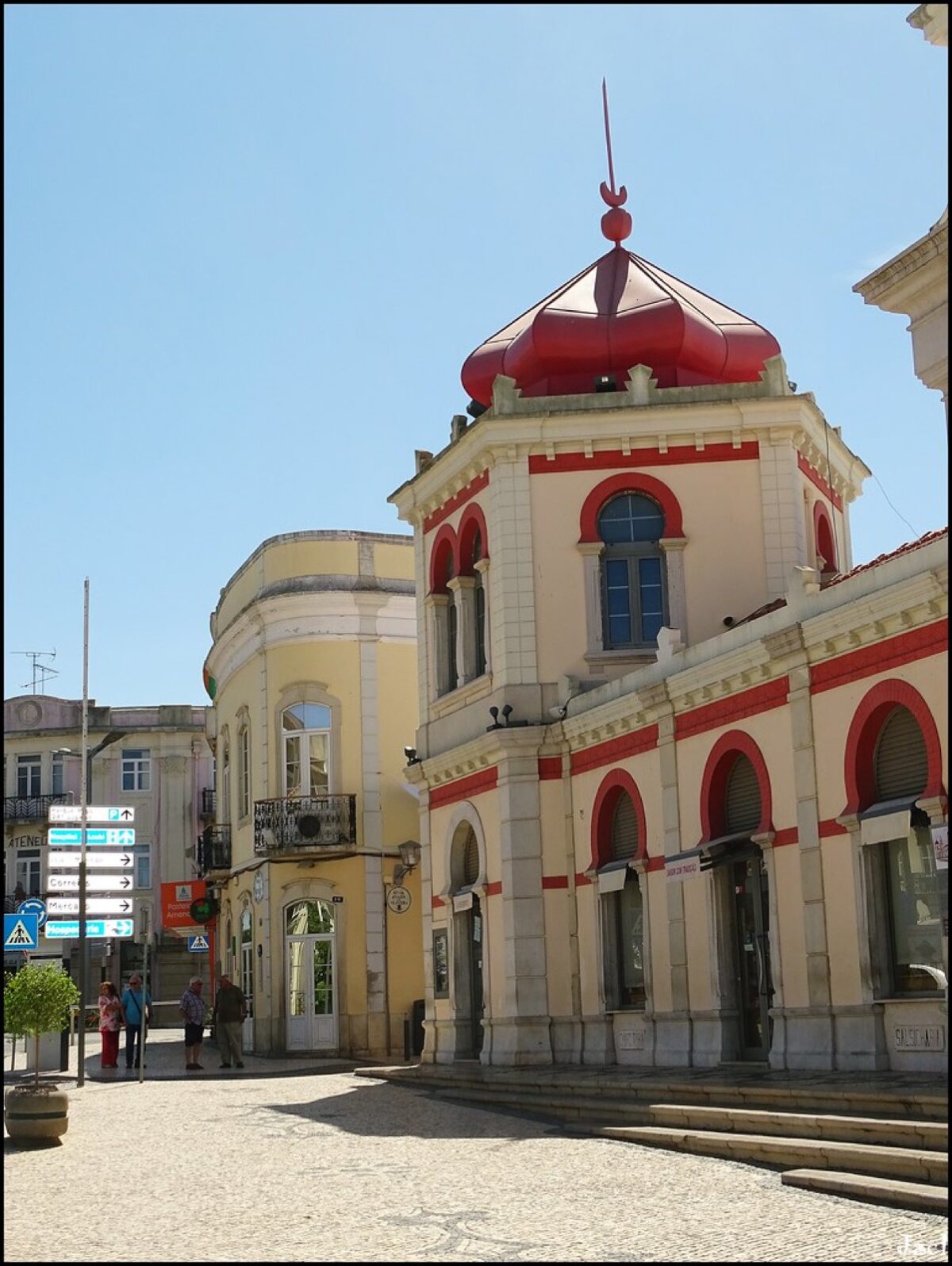
Loulé’s market building is the architectural one-off of the inland Algarve: a 1908 Moorish-revival hall in deep red and white, its corner domes and horseshoe arches borrowing from North Africa by way of Belle Époque optimism. Outside, it’s a graphic gift: symmetry, repetition, that unmissable red against a blue sky. Inside, it’s a working market: fish counters, produce stalls, dried figs and medronho, the daily commerce that keeps the building honest.
The two shots are really one subject. The facade and domes give you the architecture; the stalls give you the life. The interior is where the better pictures usually hide: light falling through the arches onto fish scales and citrus, vendors who’ve worked the same counter for decades, the choreography of a real market rather than a curated one.
When to go: morning, full stop. The market runs on morning energy and winds down after lunch; Saturdays are the big day, when stalls spill into the surrounding streets and the town fills. Go early on a Saturday for the peak of it, or a quieter weekday morning for cleaner frames.
Ask before photographing vendors up close; most are used to cameras, and a purchase buys goodwill faster than any lens. The streets around the market carry the scene outward: cafés, tiled facades, and Loulé’s workaday town life.
Who it’s for: street and architecture photographers in one stop. Travellers who want the Algarve that existed before tourism: buying, selling, arguing over fish. If your Algarve is only beaches, this is the correction.
About This Spot
-
General AreaNear Loulé, Loulé
-
Coverage BadgeArchive
-
Difficulty1 Easy
Getting There & Access
-
Getting ThereThe market sits in the centre of Loulé, signed from every approach into town: easiest reached on foot once you've parked on the town's edge.
-
Access TermsFree Public
-
ParkingTown-centre parking is tight on Saturday mornings. Park on the edge of town and walk in.
-
Best TimeMorning
-
Crowd LevelVaries
Photography Notes
-
Shooting NotesFacade symmetry and the red corner domes from outside; inside, work the arches, stall light and vendor portraits. Ask first.
Visitor photos


Location
Log in free to see the exact pin and directions.

Leave a Reply
Been here? Add your shots.
Photos you add appear on this page with your name on them, next to the community gallery. Tell the next photographer what you found: the light, the crowds, whether it was worth the trip.
A free account also unlocks the exact pin, how to get there and the best time of day, on every spot.