
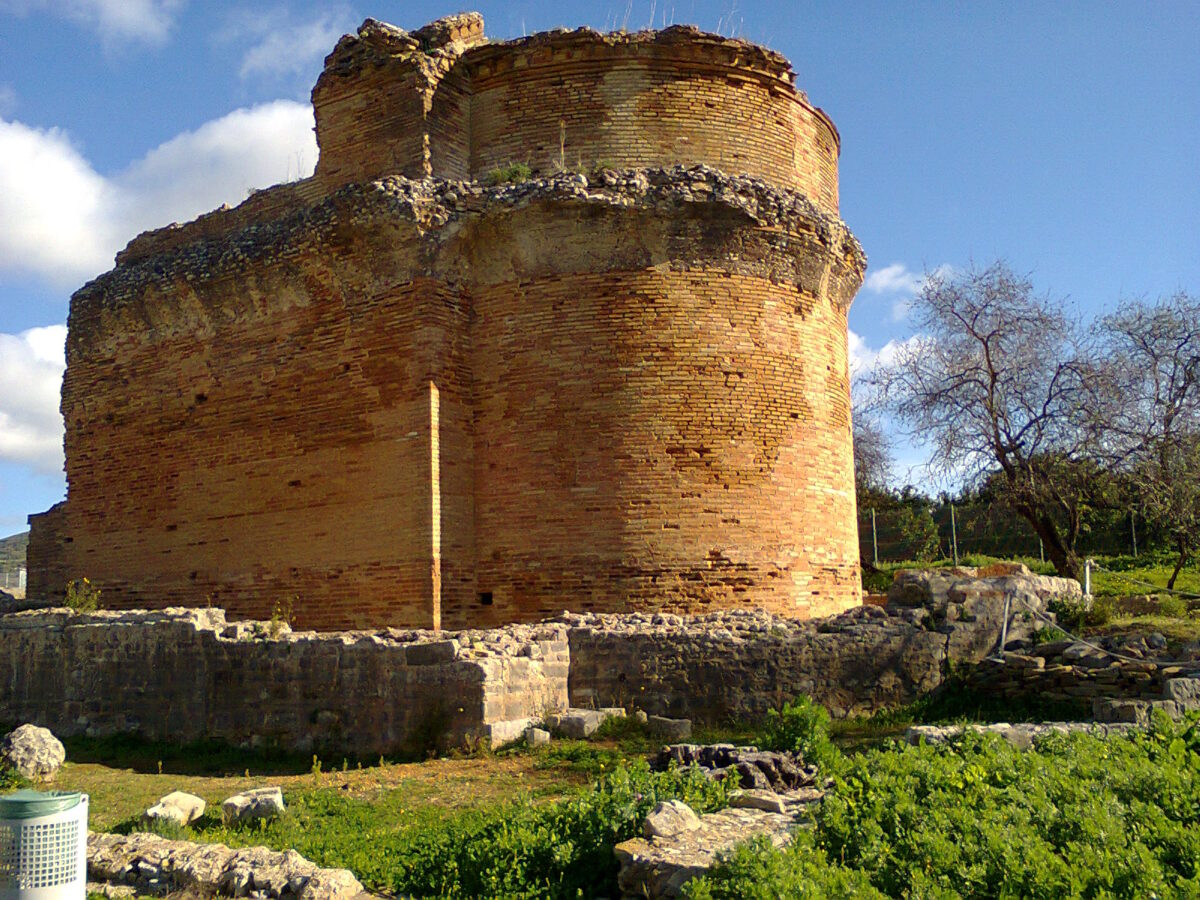
Most visitors driving through the countryside north of Faro pass within a few kilometres of one of the most significant Roman archaeological sites in the Algarve without knowing it exists. The Ruínas de Milreu sit beside the village of Estói, about ten kilometres north of Faro, and they represent the largest and best-preserved Roman villa complex in southern Portugal. What remains (baths, a temple, mosaic floors, the outlines of an estate that once anchored the region’s agricultural economy) is enough to reshape how you think about the Algarve’s Roman history. The site is small enough to visit in an hour and large enough to reward a slower, more careful visit. It is free to enter, which puts it in a small category of genuinely significant historical sites in Portugal that do not require an admission fee. That alone makes it worth knowing about.
What the ruins tell you: Milreu was a Roman agricultural estate, a villa, dating from the 1st century AD, which expanded over the following centuries into a complex that included residential quarters, an elaborate bathing complex, and a temple whose podium still dominates the site. The estate’s wealth came from the surrounding countryside: olive oil, wine, and the produce of the fertile Barrocal. Its signature is the marine imagery: the mosaics of fish and sea creatures that decorate the temple podium and the bath complex are the emblem of the site, and finding this much sea in the decoration of an inland farm estate says something about how the Roman Algarve saw itself.
The bathing complex is the most visually coherent part of what survives. You can still see the hypocaust system (the underfloor heating that made Roman baths possible), the changing rooms, the cold plunge, and the hot rooms with their characteristic terracotta tile patterns. The mosaic floors show geometric and figural motifs, and several panels have been preserved under protective shelters that allow close examination. The temple platform on the rising ground is the religious centre of the estate, and its scale, unusual for a private villa, hints at how important this place was in its landscape.
Visiting in spring: the site has limited shade, and summer temperatures in the region regularly exceed 35°C, making the midday hours uncomfortable for a visit that benefits from unhurried exploration. April and May provide warm but manageable temperatures with longer daylight. The ruins are at their greenest in spring, with wild herbs colonising the gaps between the stones. The contrast between grey ruin and green growth gives the site a quality that summer’s baked ground cannot match.
Allow 60 to 90 minutes for a full visit, including the information panels in Portuguese and English. The small museum at the entrance, included in the free admission, adds another 20 to 30 minutes and holds artefacts recovered from the excavation.
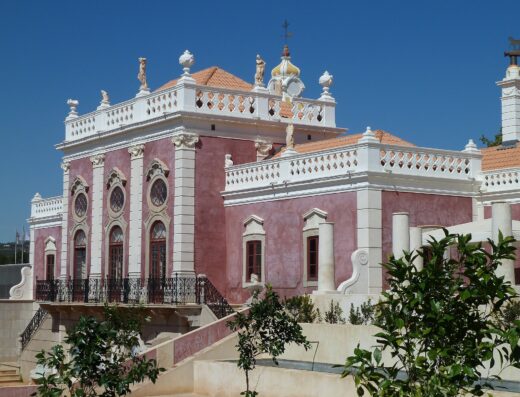
Combining with Estói and Faro: Milreu pairs naturally with the village it belongs to. The Palácio de Estói (the pink Rococo palace with its formal gardens, now a pousada) is a ten-minute walk away and makes the two sites a natural half-day. Faro’s old town, with its walled centre and cathedral, is a fifteen-minute drive south; done as a sequence (Milreu early, palace gardens mid-morning, Faro for lunch), this is one of the best culture half-days in the eastern Algarve. Arrive at Milreu at opening time: the first hour is the quiet window before any groups arrive.
The Ruínas de Milreu are a reminder that the Algarve’s Roman period was not a brief occupation but a sustained, centuries-long integration into the Roman economic world. The site is not dramatic in the way an amphitheatre is dramatic. But it is legible, walkable, and genuinely educational, and it costs nothing. In a region where the default assumption is that everything worth seeing requires an admission fee, that is worth knowing.
About This Spot
-
General AreaNear Estói, Faro
-
Coverage BadgeArchive
-
Best SeasonSpring
-
Difficulty1 Easy
Getting There & Access
-
Getting ThereOn the edge of Estói village, about 10 km north of Faro; signed from the village centre; a short walk from Estói's palace gardens. (Verify on-site: source article's directions were misattributed to Tavira.)
-
Access TermsFree Public
-
Best TimeMorning
-
Crowd LevelVaries
Photography Notes
-
Shooting NotesThe mosaic panels preserved under protective shelters allow close-up work; the hypocaust and bath rooms are the most visually coherent structures on site.
-
Light & Sun NotesMorning before 11 am is the recommended window for light; in spring, green growth against the grey stone gives a contrast summer's bleached ground can't match.
-
ConditionsVery limited shade: eastern Algarve summer temperatures regularly exceed 35°C, making midday uncomfortable; uneven stone surfaces in the archaeological area require care.
Visitor photos


Location
Log in free to see the exact pin and directions.

Leave a Reply
Been here? Add your shots.
Photos you add appear on this page with your name on them, next to the community gallery. Tell the next photographer what you found: the light, the crowds, whether it was worth the trip.
A free account also unlocks the exact pin, how to get there and the best time of day, on every spot.