The Equinox in the Algarve: Where the Light Changes Everything
The Equinox in the Algarve: Where the Light Changes Everything
There are two moments each year when the sun rises due east and sets due west, and day and night are exactly the same length. The astronomers call it the equinox. The Portuguese have a simpler word: equilíbrio. Balance.
In the Algarve, the March equinox (March 20th, 2026) marks a turning point. Not just astronomically — though that’s dramatic enough — but in the feel of the place. The last of the winter rain has usually passed. The wildflowers are peaking. The days are getting longer, warmer, more insistent.
And there’s something about standing on a cliff at sunrise on the equinox that makes you feel part of something larger.
Why the Equinox Matters Here
The Algarve sits at 37° north latitude — far enough south that the sun’s path across the sky is noticeably different between winter and summer. At the winter solstice, the sun barely climbs above the horizon before descending again. At the summer solstice, it arcs high and stays there.
The equinox is the midpoint. The sun rises at 6:30 AM and sets at 6:30 PM — twelve hours of light, twelve hours of dark. It’s the day the Mediterranean rhythm reasserts itself.
But here’s what’s special: because the Algarve’s eastern and western horizons are so clear — no mountains blocking the view — you can actually watch the sun rise due east and set due west. It’s one of the few places in Europe where the equinox geometry is visible without obstruction.
Three Equinox Sunrise Spots
1. Praia da Luz (Lagos)
The beach at Luz faces east, directly toward the point where the sun rises over the Atlantic on the equinox. There’s something profound about watching daybreak from a beach — the sand cool beneath your feet, the waves rhythmically shuffling, the sky turning from black to gold.
The cliffs on either side of the beach frame the view. At the equinox, the sun rises directly between them.
- Access: Park in the village (free before 8 AM in March) and walk down to the beach. Be there by 6:15 AM.
- The moment: First light appears on the horizon at about 6:30 AM. The sun breaks the surface three minutes later. The entire beach turns gold.
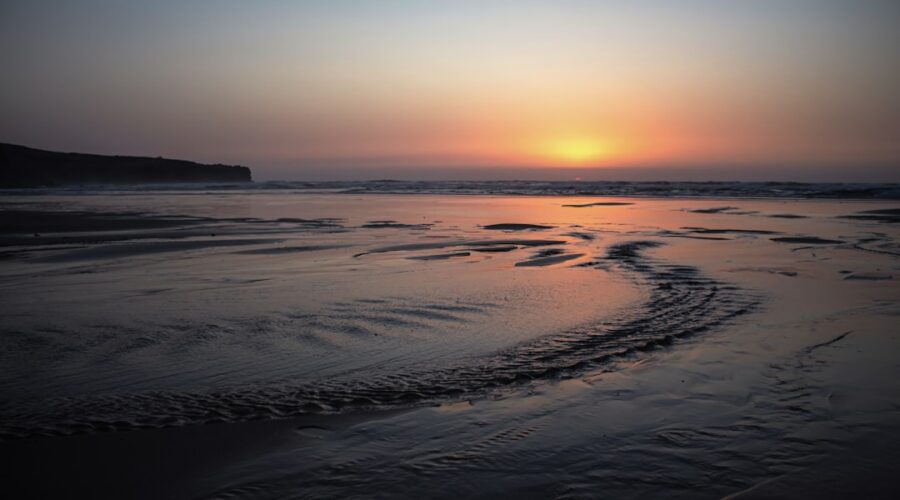
- Practical tip: Check the tide table. High tide at sunrise means the beach is narrower but the reflections off the wet sand are spectacular.
2. Ponta da Piedade (Lagos)
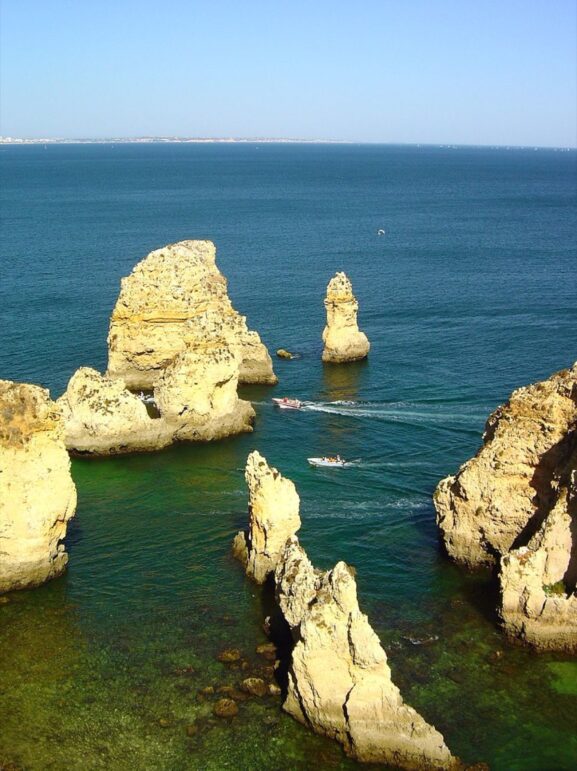
The iconic rock formations of Ponta da Piedade face southeast — not perfectly east, but close enough. And the drama of the cliffs, the sea caves, and the stacks makes this the most photographed sunrise spot in the Algarve.
On the equinox, the first rays of light illuminate the western faces of the cliffs while the eastern sky is still dark. It’s a contrast that doesn’t happen at any other time of year.
- Access: Drive to the viewpoint car park (5€ or free before 7 AM on the small side road). Walk down the stairs to the cliff edge. Find a spot facing southeast.
- The moment: As the sun rises, the light creeps down the cliff faces in layers. First the top of the highest stack. Then the middle. Then the base. It’s like watching a curtain being drawn.
- Practical tip: Arrive early (6:00 AM) to secure a spot. The equinox brings people. Bring a jacket — it’s cold on the cliffs at dawn.
3. Monte Clérigo (Carrapateira)
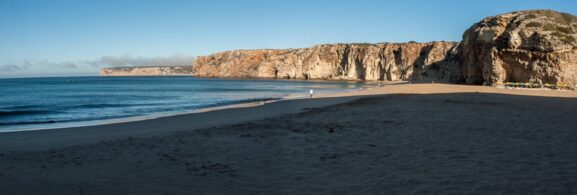
The clifftop path between the two beaches of Carrapateira — Prefácio and Monte Clérigo — offers a 180-degree view of the Atlantic. At the equinox, the sun rises directly over the water to the east.
This is the wildest of the three spots. No facilities. No crowds (yet). Just you, the cliffs, and the ocean.
- Access: Park at the Pontal viewpoint (small dirt area). Walk west along the cliff path for 200 meters. Find a spot on the cliff edge.
- The moment: The horizon is unbroken. There’s nothing between you and Africa but water. The sun rises as a perfect circle, with no mountains to interrupt its path. It feels ancient.
- Practical tip: Stay well back from the cliff edge. The winds here are unpredictable. The ground is soft — don’t venture near the edges.
The Equinox Sunset
If sunrise feels too early, the equinox sunset is equally powerful — and easier to get to.
Cape St. Vincent (Sagres)
The westernmost point in Europe faces the Atlantic with nothing to stop the view. At the equinox, the sun sets due west, straight into the ocean.
This is Europe’s edge. Where the day literally ends.
The lighthouse creates a silhouette against the sunset. The cliffs below are gilded. The seabirds circle in the last light.
- Access: Drive to the cape. Park in the main lot (5€). Walk to the cliff edge facing west.
- The moment: Sunset is around 6:45 PM in late March. The sky passes through gold, orange, pink, purple, and then dark. The whole process takes about 20 minutes.
- Practical tip: Stay after sunset. The twilight on the cliffs is magical. But leave before full dark — the car park is poorly lit and the road is winding.
What the Equinox Means
In Portuguese culture, the equinox has always been significant. The agricultural calendar — still important in the Algarve’s interior — pivots on these dates. Winter’s work is done. Spring planting begins.
In the Monchique mountains, old-timers will tell you that the equinox is the day you should plant your tomatoes. In the Ria Formosa, the fishermen mark it as the beginning of the new season.
There’s no ceremony. No celebration. Just a recognition that the world has tilted back toward summer.
Photography Notes
If you’re shooting the equinox:
- Arrive 30 minutes early. The best light is before the sun breaks the horizon.
- Shoot into the east for sunrise. The foreground will be dark, but the sky will be spectacular.
- Use a tripod. Early morning means low light.
- Include something in the foreground. A rock, a tree, a person — it gives scale.
- Don’t leave when the sun rises. The golden hour continues for another 30 minutes.
The Verdict
The equinox is one of those moments when the machinery of the solar system becomes visible. Not through a telescope or a simulation — just by standing on a cliff and watching.
In the Algarve, you’re spoiled for choice. Any east-facing beach works. Any west-facing cliff works. But the three spots above are the best of the best.
Set your alarm. Watch the light change.
It’s what this place is for.