The Dawn Chorus: Waking Up With the Birds in the Algarve
There is a place in the Algarve where the alarm clock is a serin. Where the first light does not come from a phone screen but from a sky turning from black to violet to gold. Where the most sophisticated music you will hear all day is not from a speaker — it is from a small brown bird perched on a cork oak branch.
This is the dawn chorus. And in the Algarve, it happens every morning from mid-March through May.
Why March Is the Best Month
The dawn chorus peaks in late March and April across the Iberian Peninsula. The summer migrants have arrived — warblers, swifts, nightingales — but have not yet begun their frantic summer breeding routines. The resident birds are establishing territories. The air is still cool enough that the sound carries.
Most visitors to the Algarve never hear it. They are sleeping in after the previous night’s dinner, or they are on the beach by 10 AM, or they have booked a sunrise excursion to Benagil that takes them to the wrong place at the wrong time.
But if you set your alarm for 6 AM — 5:30 AM if you want to catch civil twilight — and walk to any of the spots below, you will hear something that most humans in the developed world never experience: a living, breathing symphony of birdsong.
Three Dawn Chorus Spots
1. Quinta do Lago Boardwalks (Loule)
The Ria Formosa wetland comes alive at dawn in a way that the midday crowds never see. The boardwalks through the salt marshes are empty. The flamingos are feeding in the shallows. And the air is filled with the calls of spoonbills, herons, and the smaller passerines hiding in the samphire.
Park at the Quinta do Lago visitor center (free parking). Walk onto the boardwalk heading east toward the beach. By 6:30 AM in late March, the chorus is in full swing.
What you will hear: The descending scale of the cetti’s warbler (one of the loudest birds in Europe, despite being the size of your thumb). The scratchy song of the serin. The bubbling call of the hoopoe. And if you are lucky, the ethereal warble of a nightingale beginning its dawn performance.
When to go: Mid-March through late April. May brings too many day-trippers.
Practical tip: Bring binoculars. The best birding is from the first hide, about 800 meters from the parking area.
2. Rocha da Pena (Silves)
The special protection area above the limestone ridge hosts one of the densest populations of breeding birds in the Algarve. The rocky slopes are home to blue rock thrushes, the scrubby vegetation holds Dartford warblers, and the open ground hosts the occasional eagle.
The walk to the summit from the north parking area takes about 45 minutes at dawn. Start from the base at 6 AM and you will reach the top as the sun breaks over the Serras de Monchique.
What you will hear: The powerful song of the woodlark (one of the most distinctive sounds in Mediterranean nature). The trill of the rock sparrow. The alarm call of the peregrine falcon circling below. And everywhere, the constant backdrop of goldfinches.
When to go: March and April. The wildflowers make the walk even more spectacular.
Practical tip: The north parking area is a rough dirt track. A 4×4 is not necessary but high-clearance helps. Arrive by 5:45 to start walking in the dark — headlamp required.
3. Cape St. Vincent (Sagres)
This might seem like an unlikely dawn chorus spot — it is windier than anywhere else in the Algarve, and the vegetation is sparse. But the seabird colonies on the cliffs below the lighthouse are active at dawn in ways they never are during the day.
Gulls, shearwaters, and the occasional peregrine falcon make their rounds. And the lack of trees means the sound carries differently — it feels more exposed, more elemental.
What you will hear: The haunting call of the yellow-legged gull. The chatter of the pallid swift. The wind. And in the distance, the rhythmic boom of the waves against the cliffs 100 meters below.
When to go: April and May are best. March can still be too cold and windy.
Practical tip: Stay inside the lighthouse grounds. The cliff edges are dangerous in the dark. Watch from the perimeter fence.
The Technique of Listening
Birding by ear is a skill. Here is how to start:
- Stop moving. The moment you stop walking, the birds relax. The chorus will resume within 30 seconds.
- Be patient. The first five minutes will seem like chaos. Then your brain will start picking out individual voices. It is like learning a language — at first it is noise, then suddenly you hear words.
- Close your eyes. Without visual distraction, your brain processes sound differently. You will hear more.
- Do not rush to identify. The goal is not to name every bird. It is to listen. Let the sound wash over you.
- Return to the same spot. The dawn chorus changes daily — different species sing at different times, and the intensity varies. Returning to the same location over several days reveals patterns.
What to Bring
- Headlamp or torch. Essential for walking in the dark. Red light mode preserves your night vision.
- Layers. Dawn in March is cold — expect 10-12C. You will warm up once you start walking, but standing still while listening will chill you.
- Water. The air is dry. Bring at least 500ml.
- Binoculars. Not essential for the listening experience, but useful if you want to spot what you are hearing.
- Notebook. Jot down what you heard. Over time, you will recognize species by sound.
The Bigger Picture
The dawn chorus is not just a nice sound. It is an indicator of ecosystem health. In much of Europe, it is in decline — habitat loss, pesticide use, light pollution have all taken their toll.
In the Algarve, it is still robust. The Ria Formosa is one of the last great coastal wetlands in Europe. The Monchique mountains still host breeding populations of species that have vanished from northern Europe. The Rota Vicentina trails still pass through landscapes that look much like they did a hundred years ago.
Listening to the dawn chorus is not just a recreational activity. It is a reminder of what we have.
The Moment
Here is what happens:
You arrive at your spot in the dark. You stand still. The first light appears — not the sun, but the faint glow on the eastern horizon. The sky turns from black to navy to purple.
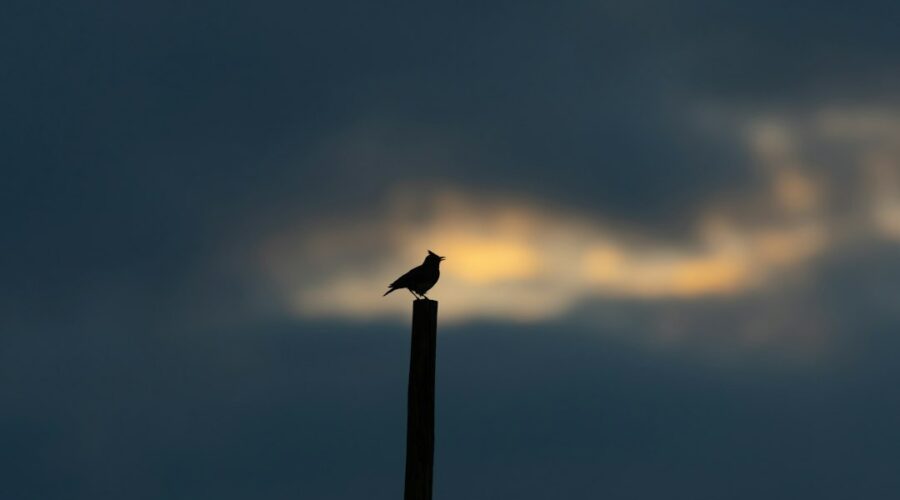
And then, from somewhere in the cork oaks, a single bird starts to sing.
Within minutes, another answers. Then another. Within five minutes, you are standing in the middle of a symphony that evolved over millions of years, that exists in no concert hall, that can never be recorded or replicated.
That is the dawn chorus in the Algarve. That is what March gives you.
Set your alarm. Go find it.