The Algarve’s Secret Night Sky: Stargazing Spots Away From the Resort Lights
The Night the Sea Disappears
There’s a moment after sunset in the Algarve when the land finally exhales. The last rental car pulls away from the beach parking lot. The restaurant terraces go quiet. And if you’ve positioned yourself correctly — away from the resort glow of Albufeira and Vilamoura — something extraordinary happens.
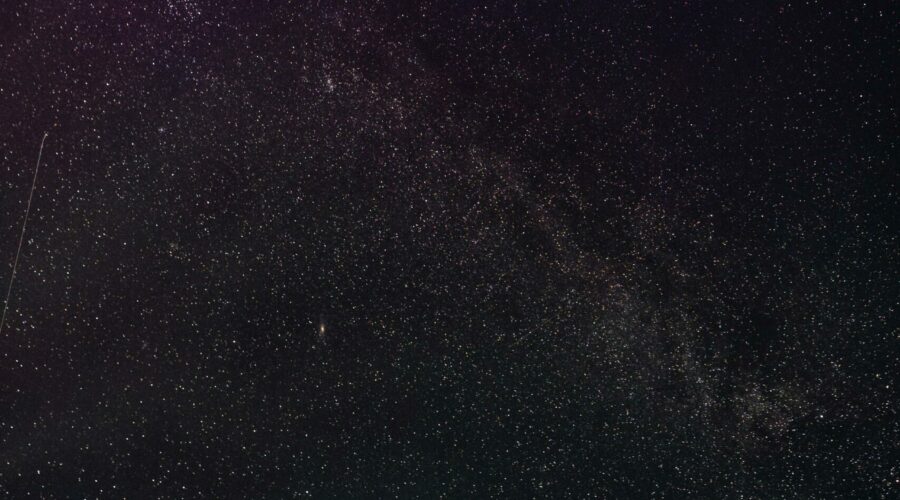
The Atlantic horizon becomes a line of absolute darkness. Above it, a river of light unfurls that most visitors never see because they never stay.
This is the Algarve’s second life. The one that happens after the beach chairs go up.
Why March Nights Are the Clearest
Late March presents a sweet spot for stargazing in the Algarve. The summer haze hasn’t arrived yet. Humidity is low after the dry winter months. The nights are still long enough to get proper darkness — sunset around 6:45 PM means by 8:30 PM, you’re in proper night sky territory.
More importantly, you’re not competing with the peak season crowds. The same beaches that will be packed in July are yours alone in March. And the dark sky spots below require no special equipment, no advance booking, no anything other than a willingness to stay up past dinner.
Three Public Access Dark Sky Spots
1. Cabo de São Vicente (Sagres)
This isn’t a secret — everyone knows the sunset spot. But what most people don’t realize is that the same dramatic clifftop becomes one of the darkest places in southern Europe after dark. The lighthouse creates a ring of light around it, but turn your back to it and you’re staring into the Milky Way.
Access: Free, public car park at the cape. Park after sunset and walk toward the cliff edge (west). The light pollution from the lighthouse takes about 15 minutes to fade from your vision.
What you’ll see: The full Milky Way band, zodiacal light, and if you’re patient, occasional meteor outbursts from spring meteor showers.
Safety note: Stay well back from the cliff edge. The winds here are relentless and don’t care that you’re trying to appreciate the cosmos.
2. Pontal da Carrapateira
Between the two beaches of Carrapateira (Prefácio and Monte Clérigo), this clifftop point offers views straight out over the Atlantic with zero artificial light for kilometers in any direction. The tiny village of Carrapateira has only a handful of streetlights.
Access: Drive to the Pontal viewpoint parking area (signed). There’s a small turnaround where you can pull off. The best viewing is from the western edge of the parking area.
What you’ll see: Southern hemisphere stars you can’t see from most of Europe — Orion sets in the west. The Milky Way runs overhead. On very clear nights, the Andromeda Galaxy — the nearest major galaxy to our own, 2.5 million light-years away — is visible to the naked eye as a faint fuzzy patch if you know where to look.
Safety note: The ground is uneven. Bring a blanket or mat. March nights can be cold — expect 10-12°C at 10 PM.
3. Foia (Monchique)
The highest point in the Algarve — all 902 meters of it. From here, you can see the glow of Faro on one side and nothing but darkness on the others. On really clear nights, the silhouette of the Sierra de Aracena in Spain marks the northern horizon.
Access: Drive to the summit. There’s a small cafe with a parking area. For the best views, continue past the cafe on the dirt road another 200 meters to the communication towers (stay clear of them) where the light pollution drops further.
What you’ll see: The advantage of altitude. Less atmospheric distortion. The Milky Way appears three-dimensional, like you could reach up and touch it. The winter constellations are still visible in early March, transitioning to spring ones.
Safety note: The road is paved but winding. Drive slowly. The summit can be windy — secure anything loose.
The Experience
Here’s what actually happens: you lie back on your car hood or a blanket. The first ten minutes, you see a few bright stars. Your eyes adjust. Then it hits you — the sky isn’t black. It’s filled with thousands upon thousands of stars, and a luminous band of light that ancient peoples called the road of the souls.
In the Algarve, where everything is about the next beach, the next restaurant, the next activity, the night sky offers something different. It reminds you that you’re on a planet, spinning through space, and that the Atlantic extends not just to the horizon but to the edge of the known world.
That feeling — standing at Europe’s edge under a sky full of stars — is free. It always has been. You just have to stay past sunset.
Practical Tips
- Check the moon phase. The new moon week (around March 14–21) is ideal. A full moon washes out everything but the brightest stars.
- Let your eyes adjust. No phone screens. No flashlights. Give it 20 minutes.
- Bring layers. March coastal temperatures drop to 10-15°C after midnight.
- Consider a red flashlight if you need to move around — red light preserves night vision.
- Go with someone. It’s more fun, and safety in numbers is smart when hiking in the dark.
The Alternative: Skip the Drive, Watch from Your Beach
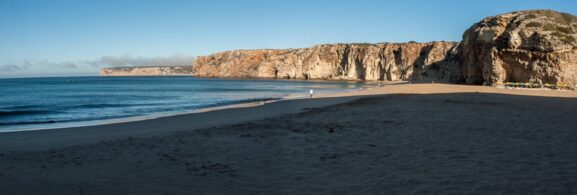
If driving to dark sky spots feels like too much effort, here’s the lazy person’s guide: any west-facing beach in the Carrapateira/Bordeira stretch works. Wait for a clear night. Bring a thermos of something warm. Sit on the sand and watch the stars come out over the Atlantic.
You’re not going to see the faintest galaxies. But you’ll see the Milky Way, the major constellations, and probably more shooting stars than you’ve ever seen in your life.
The Algarve hides its best self after dark. Most people never discover it.
This is the Algarve without the crowds, without the resort, without the guidebook. Just the sky, the sea, and you.