Ria Formosa in Spring: Portugal’s Wildest Coastal Wetland (Free Guide)
Ria Formosa: The Natural Wonder Hidden in Plain Sight
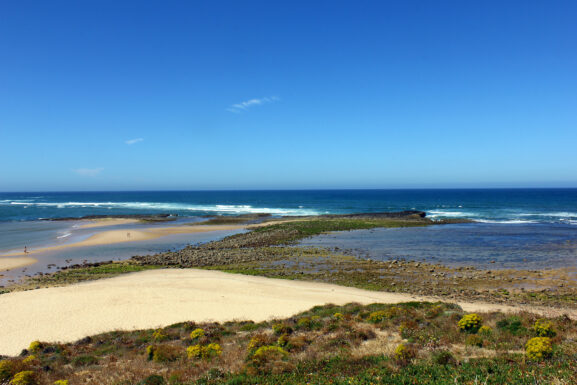
The Ria Formosa stretches for 60 kilometres along the southern Algarve coast, from Manta Rota in the east all the way past Faro and Olhão to Ancão in the west. You’ll cross part of it on the motorway coming from Faro airport without necessarily knowing it’s there — a sweep of low water, sandbars, channels, and marshland visible below the road, broken here and there by the long thin barrier islands that keep the Atlantic at bay.
It’s one of Portugal’s 7 Natural Wonders, a Ramsar-protected wetland of international importance, a nursery for fish and shellfish that supplies much of the country’s seafood, and — in spring especially — one of the most spectacular wildlife spectacles in southern Europe.
Most of the people driving past it have absolutely no idea.
That gap between what this place is and how much attention it gets is part of what makes a spring visit so special. The Ria Formosa is vast, public, and almost entirely free to explore. You just need to know where to start.
What Happens Here in Spring
The Ria Formosa holds approximately 30,000 birds at any given time across its salt marshes, lagoon channels, mudflats, and dune systems. In spring — peak migration is March through May — that number swells as species move north through Europe after wintering in West Africa and further south.
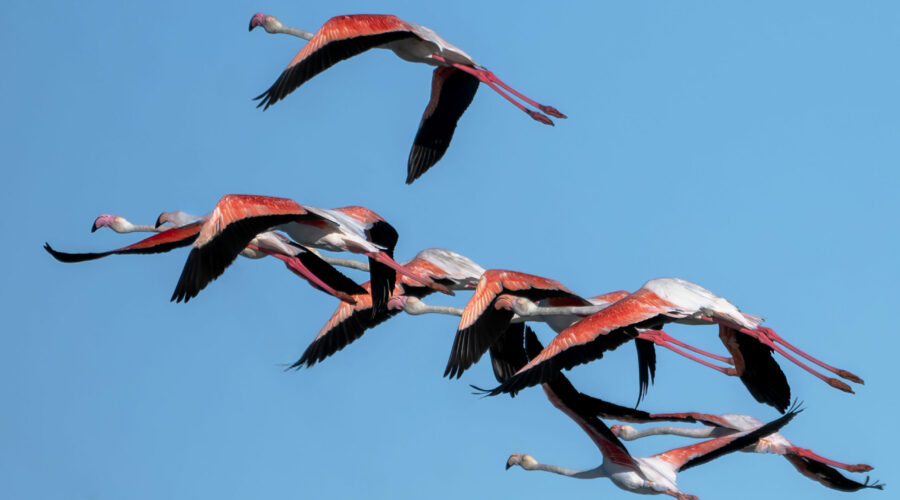
What this means in practice: flamingos wading through the shallows in improbable pink. Purple herons holding perfectly still in the reeds. Spoonbills sweeping their bills through shallow water in that distinctive sideways motion. Oystercatchers, avocets, little egrets, black-winged stilts. If you have even a passing interest in birds, the Ria Formosa in March and April will do something genuinely alarming to your heart rate.
And even if birds aren’t your thing, the landscape itself — wide and flat and deeply Portuguese, with the distant line of barrier islands and the occasional fishing boat and whitewashed town — has a quiet, almost meditative quality that’s increasingly rare in this part of the world.
Where to Access the Park
The Ria Formosa Natural Park has multiple public access points, and none of them charge an entry fee. Here are the best starting points:
Faro Boardwalk
The most accessible entry is from Faro itself — the city’s eastern waterfront has a walking and cycling path that skirts the edge of the lagoon. From here you can look out across the channels and mudflats and spot waders and waterfowl without travelling more than 10 minutes from the city centre. Early morning is best: the light is better, the birds are more active, and the handful of birdwatchers already here will confirm, with raised binoculars, that you’ve arrived at the right time.
Olhão
Olhão is the fishing town most deeply connected to the Ria Formosa — the working harbour, the market, the smell of the sea, and the view out toward the barrier islands (Ilha da Armona and Ilha da Culatra) are all free to take in from the town’s seafront gardens and promenade. The ferry to the islands runs from the public quay (there’s a fee for the ferry itself, but wandering the quayside and lagoon edge is free). The islands are primarily sand, dune, and lagoon — no cars, no overdevelopment.
Tavira
Further east, Tavira’s connection to the Ria Formosa is a public footpath and bridge to Ilha de Tavira, one of the barrier islands. Walk out across the footbridge (free), through the dunes, and you’re on a long, wild strip of beach and lagoon with exceptional birdwatching potential. In spring you’re often sharing it with nobody in particular.
Fuseta
Fuseta is a small, genuinely local fishing village that most visitors to the Algarve never reach. The waterfront here looks directly over the lagoon and onto the barrier islands, and the birdwatching from the village edge is excellent with no walking required. It’s also just a nice place to stand and breathe for a while.
What You Might See (Bird Edition)
You don’t need to be a committed birdwatcher to appreciate the Ria Formosa in spring, but a basic awareness of what’s out there helps:
- Greater flamingo: Pink, improbable, and more numerous than you’d expect. They congregate in the shallower lagoon sections near Olhão and Faro.
- Purple heron: Taller and darker than the grey heron, with a rust-and-purple neck that’s genuinely striking if you get close enough.
- Eurasian spoonbill: Unmistakable in flight and while feeding — that spatula-shaped bill sweeping through shallow water is one of those sights you don’t forget.
- Black-winged stilt: Impractically long pink legs, sharp black-and-white plumage. They pick their way through the shallows with delicate precision.
- Little egret: Bright white, resident year-round, and useful for calibrating how to spot other waders against the glare.
- Common tern: Arrives in spring and you’ll hear them before you see them — sharp, energetic calls overhead as they patrol for fish.
A pair of binoculars (7×42 or 8×42 is ideal for wetland birding) makes an enormous difference, but even without them the larger species — flamingos especially — are hard to miss.
Practical Tips for Your Visit
- Go early: Bird activity peaks in the first two hours after sunrise. The light is also better for photography and the lagoon is at its most still and beautiful.
- Tides matter: At high tide, the birds concentrate on smaller patches of exposed mud, making them easier to observe. At low tide they spread out across wider flats. Both conditions produce wildlife — just different images.
- Bring your own food and water: In spring, the café scene near the park access points is still waking up from winter. It’s much easier and more pleasant to settle on a bench with your own supplies than to go hunting for coffee.
- Best months: March and April for sheer migration volume. May still excellent. February also surprisingly strong for flamingos specifically.
- Footwear: The Faro boardwalk is paved. Tavira and Fuseta paths can be sandy. Trainers or comfortable walking shoes are all you need — no special gear required.
- Entry cost: Zero. The natural park has no entry fee. Ferries to barrier islands have a small charge (around €2–3 return depending on route) but the mainland sections are fully free.
The Best Single Spot If You Only Have an Hour
If you’re passing through and only have limited time, the stretch of Faro waterfront east of the old town — running along the Ria Formosa edge toward the camping park — gives you the lagoon views, the bird activity, and a sense of the landscape without needing a car or a boat or any preparation at all. It’s a ten-minute walk from the city centre. An hour there in the morning in March will show you something you won’t see on any beach.
Why It Matters That You Go
The Ria Formosa is an extraordinary, protected, publicly accessible natural space in the middle of one of southern Europe’s most visited tourist regions. Most of the people visiting the Algarve never set foot in it. That’s not a criticism — the beaches are exceptional, and we understand the pull — but it is a gap worth closing.
Spending a morning here, watching a spoonbill work the shallows while a flamingo wades by in the background, with a barrier island visible across the water and the sound of terns overhead, gives you a version of the Algarve that’s harder to put on a postcard but much harder to forget.
Take the boardwalk out of Faro. Follow the lagoon edge from Fuseta. Walk the bridge path to Ilha de Tavira. And bring the binoculars — or borrow them from someone who knows why they packed them.